Vietnam Travel Guide: Practical travel tips about transport, accommodation, weather, visas, safety, motorbike travel, food, packing, SIM cards, and planning your trip around Vietnam.
Plan but stay flexible
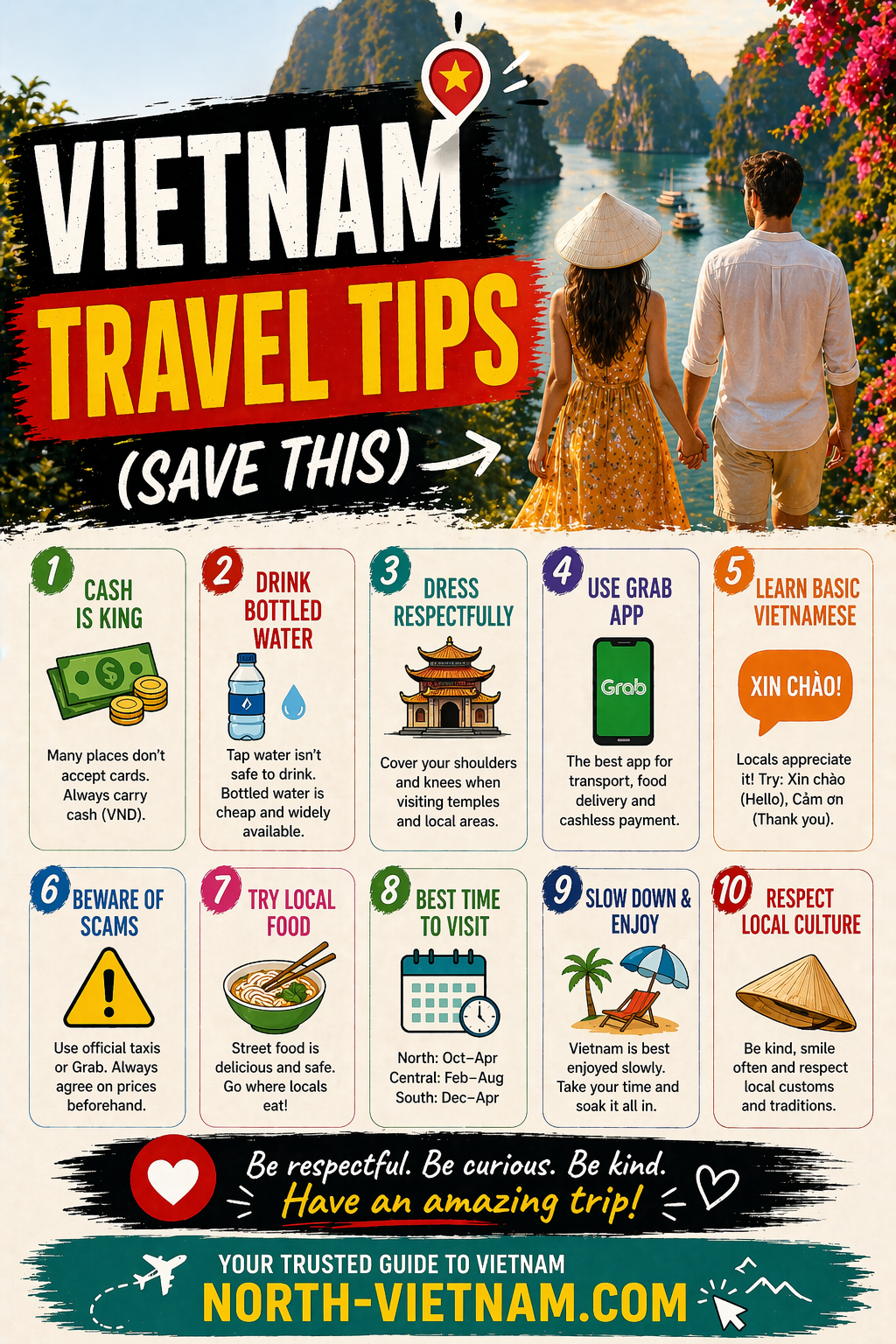
Create an itinerary but allow changes due to weather
Use local transport
Buses and trains are cheap and easy to arrange
Don’t rush everything
Focus on one region instead of rushing across country
Check the weather
Weather varies a lot between north and south regions
Quick answer: Traveling in Northern Vietnam is affordable, safe, and best experienced with a flexible plan. Expect varied weather, long travel distances, and a mix of buses, trains, and motorbike routes. Plan your itinerary in advance, pack for changing conditions, and book transport and accommodation online before your trip.
Overview:
- 📅 Best time to visit: October to April for cooler, drier weather; summer is hot and rainy.
- 🚌 Transport: Sleeper buses, trains, and motorbikes are the main options.
- 🗺️ Planning: Distances are longer than they seem, so allow enough travel time.
- 💰 Costs: Northern Vietnam is budget-friendly for food, transport, and accommodation.
- 🎒 What to pack: Layers, rain protection, and comfortable trekking shoes.
- 📲 Booking: Flights, buses, trains, and hotels can be booked online in advance.
Last updated in May 2026
Best for first-time visitors: Hanoi, Ninh Binh, Ha Long Bay, Sapa and Da Nang are among the easiest and most popular destinations for travelers visiting Vietnam for the first time.
Essential Vietnam Travel Tips & Practical Information
Vietnam is one of the most diverse and exciting destinations in Southeast Asia, offering mountains, beaches, islands, historic cities, motorbike routes, local streetfood, and unique cultural experiences. This Vietnam travel guide contains practical travel tips, transport advice, safety warnings, weather information, accommodation recommendations, and useful planning tips for first-time visitors and independent travelers.
The goal of this guide is to help you avoid common travel mistakes, better understand transportation in Vietnam, prepare for changing weather conditions, and plan your itinerary more efficiently. You will also find useful information about trains, buses, domestic flights, motorbike travel, accommodation, SIM cards, food, packing essentials, and traveling in northern Vietnam.
Traveling in Northern, Central & Southern Vietnam
It is important to know that northern, central, and southern Vietnam have very different climates, landscapes, transport conditions, and travel experiences. Northern Vietnam is famous for mountains, rice terraces, motorbike routes, and ethnic minority villages, while central and southern Vietnam offer beaches, islands, tropical weather, and larger modern cities. Planning your route carefully will help you enjoy Vietnam more comfortably and avoid unnecessary travel stress.
1. Transport Options in Vietnam
Transportation in Vietnam is affordable, diverse, and suitable for different travel styles. You can travel by sleeper bus, train, plane, private taxi, ferry, or motorbike. Distances can be longer than expected, so it is recommended to plan your route carefully and book tickets online in advance.
🚌 Sleeper Buses
Best for: budget travelers
Good to know: buses are cheap and connect almost every tourist destination in Vietnam.
🚆 Trains
Best for: long-distance travel
Useful tip: trains are safer and more comfortable than buses on longer routes.
✈️ Domestic Flights
Best for: saving time
Important: flights between Hanoi, Da Nang, and Ho Chi Minh City are frequent and affordable.
🛵 Motorbike Travel
Best for: flexible exploration
Good to know: northern Vietnam is one of the best regions in Southeast Asia for motorbike trips.
🚕 Private Taxi / Car
Best for: comfort and families
Useful tip: private transfers are useful for remote places without direct public transport.
Travel tip: Transport in Vietnam can take longer than expected due to traffic, mountain roads, or weather conditions. Sleeper buses are the cheapest option, trains are usually more comfortable, and domestic flights are ideal for long distances. Flights, buses, trains, ferries, and private transfers can all be easily searched and booked online before your trip.
➡️ Baolau
Search and book trains, buses, ferries, and flights across Vietnam and Southeast Asia.
➡️ 12go.asia
Popular booking platform for buses, ferries, taxis, trains, and flights in Vietnam and nearby countries.
2. Accommodation Guide in Vietnam
Accommodation in Vietnam is generally affordable and widely available across the country. Travelers can choose from budget guesthouses, hostels, homestays, boutique hotels, luxury resorts, or traditional village stays. Prices and quality vary depending on the region and tourist demand.
🏡 Homestays
Best for: local experience
Good to know: homestays are popular in Sapa, Ha Giang, Mai Chau, and other mountain regions.
🛏️ Guesthouses (Nha Nghi)
Best for: budget travelers
Good to know: simple local guesthouses are available almost everywhere in Vietnam.
🏨 Hotels & Resorts
Best for: comfort and services
Good to know: luxury hotels and beach resorts are common in larger tourist destinations.
🎒 Hostels
Best for: backpackers and solo travelers
Useful tip: hostels are cheap, social, and often include tours or transport services.
📍 Tourist vs Local Areas
Best for: choosing the right location
Worth knowing: accommodation in tourist areas is usually more modern but also more expensive.
📲 Online Booking
Best for: saving time
Good to know: hotels, hostels, and homestays can be easily searched and booked online in advance.
Accommodation tip: In popular destinations like Hanoi, Sapa, Ha Long Bay, or Da Nang, it is recommended to book accommodation early during weekends and high season. Budget guesthouses in Vietnam often include Wi-Fi, hot water, air-conditioning, and private bathrooms even at low prices.
Check Hotel Deals in Vietnam ➜

3. Visa & Entry Tips for Vietnam
Vietnam uses an electronic visa (e-visa) system for most international travelers. The official Vietnam e-visa is available online for tourism and business trips, with single-entry and multiple-entry options up to 90 days. Passport validity, correct application details, and selected entry points are very important when applying online.
🛂 Vietnam E-Visa
Best for: most travelers
Good to know: Vietnam offers 90-day e-visas with single or multiple entry options.
📅 Processing Time
Standard processing: about 3–5 working days
Important: apply at least 2 weeks before departure to avoid delays.
📘 Passport Rules
Requirement: passport valid for at least 6 months
Good to know: your passport should also have at least one blank page.
🚪 Entry & Exit Points
Important: choose your correct arrival point
Good to know: airports, land borders, and seaports must match your application.
⚠️ Application Mistakes
Most common issue: incorrect passport details
Good to know: names and numbers must exactly match your passport.
🌍 Visa-Free Entry
Available for: selected countries only
Useful tip: some European and Asian countries have visa-free stays up to 45 days.
Visa tip: Always apply through the official Vietnam immigration website and avoid unofficial visa agencies with hidden fees. Double-check your passport number, full name, entry point, and travel dates before payment. Flights, accommodation, and onward tickets can all be searched and booked online before your trip.
4. Motorbike Travel in Vietnam
Traveling by motorbike is one of the most popular ways to explore Vietnam, especially in the northern mountain provinces. It offers flexibility, access to remote areas, and unforgettable scenic routes. However, traffic conditions, weather, road quality, and driving experience should always be considered before renting a bike.
🛵 Renting a Motorbike
Best for: flexible travel
Good to know: motorbike rentals are available in almost every tourist city in Vietnam.
🪪 International License
Important: valid driving permit recommended
Good to know: insurance may not cover accidents without a proper license.
🏔️ Northern Vietnam Routes
Best for: scenery and adventure
Good to know: Ha Giang, Cao Bang, Sapa, and Mu Cang Chai offer spectacular mountain roads.
⛽ Fuel & Road Conditions
Important: plan mountain routes carefully
Useful tip: petrol stations can be limited in remote northern areas.
🌧️ Weather & Safety
Important: weather changes quickly
Good to know: fog, rain, and landslides can affect mountain roads during rainy season.
📲 Navigation Apps
Best for: route planning
Good to know: Google Maps and Maps.me are commonly used by travelers in Vietnam.
Motorbike tip: Vietnam is ideal for experienced riders looking for scenic road trips, especially in the north. Always check the brakes, tires, lights, and horn before renting a bike. Wear a helmet, avoid driving at night in mountain regions, and travel slowly on narrow or wet roads.

5. Weather & Seasons in Vietnam
Vietnam has a diverse climate that changes significantly between the north, center, and south of the country. Mountain areas in northern Vietnam can be cold and foggy, while southern regions stay warm most of the year. Weather conditions can strongly affect transport, trekking, beaches, and overall travel experience.
🍂 Best Travel Season
Recommended months: October to April
Useful tip: this period is usually cooler, drier, and more comfortable for travel.
🌧️ Rainy Season
Important: heavy rains possible
Good to know: summer months can bring flooding, storms, and landslides in some regions.
🏔️ Northern Vietnam
Best for: mountains and trekking
Important: Sapa and Ha Giang can become very cold during winter months.
☀️ Southern Vietnam
Best for: beaches and islands
Good to know: Ho Chi Minh City and Phu Quoc stay warm and humid throughout the year.
🌫️ Mountain Conditions
Important: weather changes quickly
Good to know: fog and rain can reduce visibility on mountain roads in the north.
🎒 What to Pack
Recommended: layers and rain protection
Worth knowing: temperatures can vary greatly between regions and elevations.
Weather tip: Northern Vietnam often has the best travel conditions from October to April, while central Vietnam may experience typhoons and heavy rain later in the year. Always check regional forecasts before traveling, especially if you plan trekking, motorbike trips, or ferry transport.

6. Food & Streetfood in Vietnam
Vietnamese cuisine is one of the highlights of traveling in Vietnam. Streetfood is cheap, fresh, and available almost everywhere, from busy cities to small mountain towns. Travelers can enjoy noodle soups, grilled meats, rice dishes, seafood, tropical fruits, and regional specialties across the country.
🍜 Streetfood Culture
Best for: authentic local food
Good to know: the most traditional Vietnamese meals are often served directly on the street.
🥖 Famous Vietnamese Dishes
Most popular: Pho, Banh Mi, Bun Cha
Useful tip: every region in Vietnam has its own specialties and flavors.
☕ Vietnamese Coffee
Best for: coffee lovers
Good to know: Vietnam is famous for strong coffee, egg coffee, and iced milk coffee.
🦐 Seafood & Local Markets
Best for: coastal destinations
Good to know: fresh seafood is common in beach towns and island regions.
🌶️ Food Safety Tips
Important: choose busy food stalls
Important: places with many local customers are usually fresher and safer.
🥢 Vegetarian Options
Best for: vegetarian travelers
Good to know: vegetarian restaurants are common in tourist cities and Buddhist areas.
Food tip: Vietnamese streetfood is usually very affordable and often tastes better than tourist restaurants. Try regional specialties in different parts of the country and carry tissues or hand sanitizer when eating at local food stalls. Bottled water is recommended instead of tap water.

7. Safety & Warnings in Vietnam
Vietnam is generally considered a safe destination for travelers, including solo travelers and backpackers. However, traffic, tourist scams, theft, weather conditions, and road safety can still cause problems if you are not careful. Basic travel awareness and preparation are important, especially in large cities and remote mountain areas.
🚦 Traffic Safety
Most common risk: chaotic traffic
Good to know: crossing roads in Hanoi or Ho Chi Minh City can be difficult for first-time visitors.
🎒 Theft & Pickpocketing
Important: watch personal belongings
Worth knowing: tourist areas and night markets can attract pickpockets or bag snatchers.
🛵 Motorbike Risks
Important: drive carefully
Good to know: mountain roads may be wet, foggy, steep, or damaged during rainy season.
💸 Tourist Scams
Most common: unofficial ticket sellers
Useful tip: avoid buying transport tickets from random street agents near stations.
🌧️ Weather & Nature
Important: check forecasts regularly
Good to know: floods, typhoons, and landslides can affect transport in some regions.
📄 Passport & Documents
Recommended: carry photocopies
Good to know: some hotels or motorbike rentals may temporarily request your passport.
Safety tip: Vietnam is usually very safe for tourists, but it is recommended to use common sense, avoid isolated areas at night, and stay alert in crowded places. Keep valuables secure, use verified transport providers, and always travel with travel insurance when renting a motorbike or joining outdoor activities.

8. Travel Planning in Vietnam
Planning a trip to Vietnam is important because distances between destinations can be longer than expected and transport often takes more time than travelers anticipate. Vietnam offers mountains, beaches, islands, large cities, and remote countryside, so choosing the right route and travel style can significantly improve your experience.
🗺️ Choose Your Region
Best for: first-time visitors
Good to know: northern, central, and southern Vietnam are very different travel regions.
📅 Travel Duration
Recommended: avoid rushing
Useful tip: many travelers underestimate travel times between destinations.
🚍 Transport Planning
Important: book key routes early
Good to know: trains, sleeper buses, ferries, and flights can sell out during high season.
🏔️ Northern Vietnam Routes
Best for: nature and adventure
Good to know: Ha Giang, Sapa, Cao Bang, and Ninh Binh are among the top northern destinations.
🎒 Flexible Itinerary
Recommended: leave extra time
Important: weather, road conditions, or transport delays can change travel plans quickly.
📲 Online Reservations
Best for: saving time and stress
Good to know: accommodation, transport, tours, and flights can be booked online in advance.
Planning tip: Vietnam is best experienced at a slower pace instead of trying to see the entire country in a short time. Two weeks is usually enough for one region, while a longer trip allows you to combine mountains, beaches, cities, and islands more comfortably.
⚠️ Common travel mistakes: Trying to visit the whole country in 2 weeks, underestimating travel times, booking transport last minute during holidays, and ignoring regional weather differences.
Tourist sleeper trains to Lao Cai ➜

9. Packing Essentials for Vietnam
Packing for Vietnam depends on the season, travel style, and regions you plan to visit. Northern mountain areas can be cold and rainy, while southern Vietnam stays hot and humid most of the year. Lightweight clothing, rain protection, comfortable shoes, and basic travel accessories are recommended for most travelers.
🎒 Lightweight Clothing
Best for: tropical weather
Important: breathable clothes are ideal for hot and humid conditions in Vietnam.
🌧️ Rain Protection
Recommended: rain jacket or poncho
Good to know: sudden rain showers are common, especially during rainy season.
🥾 Comfortable Shoes
Best for: trekking and walking
Good to know: mountain trails, uneven sidewalks, and wet roads are common in Vietnam.
🧥 Warm Layers
Important: northern mountains can be cold
Useful tip: Sapa and Ha Giang may experience low temperatures during winter months.
🦟 Mosquito Protection
Recommended: insect repellent
Good to know: mosquitoes are common near rivers, rice fields, and tropical areas.
📄 Travel Documents
Important: passport and photocopies
Good to know: keep digital and printed copies of important travel documents.
Packing tip: Vietnam is easy for buying inexpensive clothes, toiletries, and travel accessories, so there is no need to overpack. However, personal medication, quality trekking shoes, and important electronics are usually better brought from home before your trip.
10. SIM & Internet in Vietnam
Internet access in Vietnam is generally fast, affordable, and widely available in cities and tourist areas. Travelers can easily buy prepaid tourist SIM cards with mobile data at airports, convenience stores, or official mobile shops. Wi-Fi is common in hotels, cafés, restaurants, and many homestays across the country.
📲 Tourist SIM Cards
Best for: mobile internet access
Tip: prepaid SIM cards are cheap and easy to buy after arrival in Vietnam.
📶 Mobile Coverage
Best for: traveling around the country
Good to know: coverage is good in cities and tourist regions but weaker in remote mountains.
🏪 Where to Buy a SIM
Most common places: airports and phone shops
Good to know: official providers usually offer safer and more reliable packages.
💬 Communication Apps
Most popular: WhatsApp, Messenger, Zalo
Worth knowing: internet calls are commonly used instead of traditional phone calls.
☕ Wi-Fi Availability
Best for: daily travel use
Good to know: free Wi-Fi is available in many cafés, hotels, restaurants, and hostels.
🔒 Internet Safety
Important: avoid unsecured networks
Useful tip: use caution when accessing banking or payment services on public Wi-Fi.
Internet tip: Vietnam offers some of the cheapest mobile data packages in Southeast Asia, making it easy to use maps, translation apps, online booking platforms, and transport services while traveling. It is recommended to activate your SIM card immediately after arrival for easier navigation and communication.
Useful apps for Vietnam: Grab (transport), Google Maps, Maps.me, WhatsApp, Zalo, Google Translate, and Baolau or 12go for booking trains, buses, ferries, and flights.

❓ Vietnam Travel FAQ: Transport, Safety & Useful Tips:
What is the best way to travel around Vietnam?
Sleeper buses are the cheapest option, trains are more comfortable, and domestic flights are best for long distances.
Is Vietnam safe for solo travelers?
Yes, Vietnam is generally safe for solo travelers, but basic caution is recommended in busy tourist areas and traffic.
When is the best time to visit Vietnam?
The best time is usually October–April, when temperatures are cooler and rainfall is lower in many regions.
Do I need an international driving permit for Vietnam?
Yes, an International Driving Permit is recommended if you want to legally rent and drive a motorbike.
What are the most beautiful places in northern Vietnam?
Popular places include Ha Giang, Sapa, Ninh Binh, Ha Long Bay, Cao Bang and Mu Cang Chai.
Can I use credit cards and ATMs easily in Vietnam?
Yes, ATMs are common in cities and tourist areas, but cash is still important in smaller towns and villages.
What should I avoid when traveling in Vietnam?
Avoid unofficial ticket sellers, unsafe driving, and rushing through too many places in a short time.
What is something unique travelers should experience in Vietnam?
Motorbike trips in Ha Giang, local homestays, ethnic markets, and streetfood in Hanoi are unforgettable experiences.
How many days do I need for traveling in Vietnam?
Two to three weeks is ideal for exploring one or two regions without rushing.