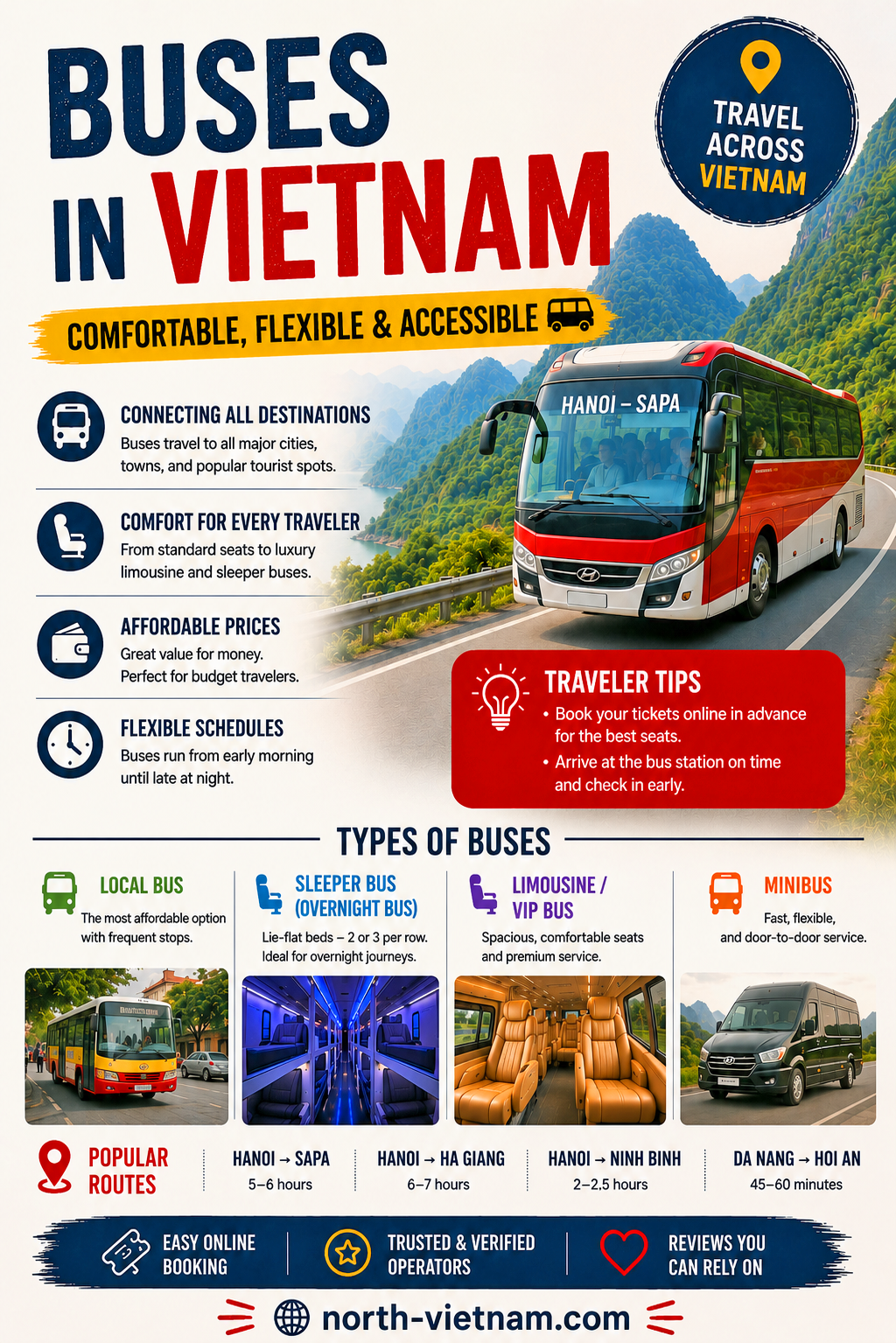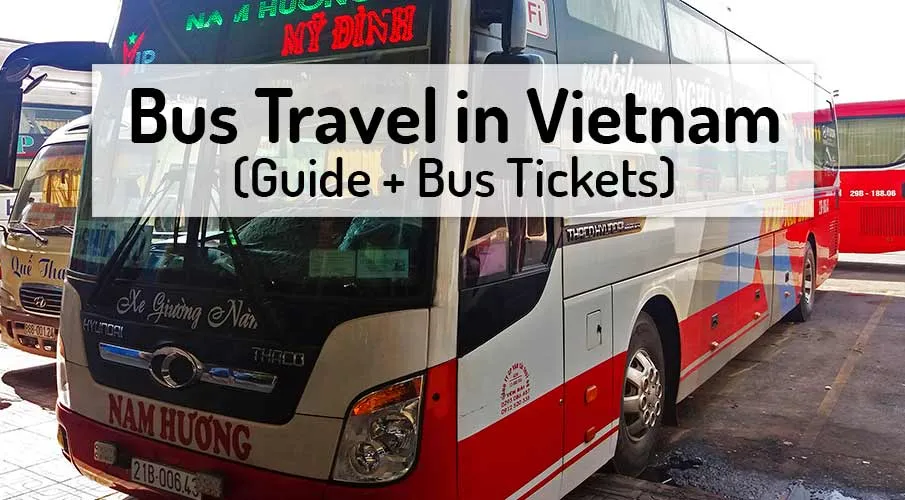
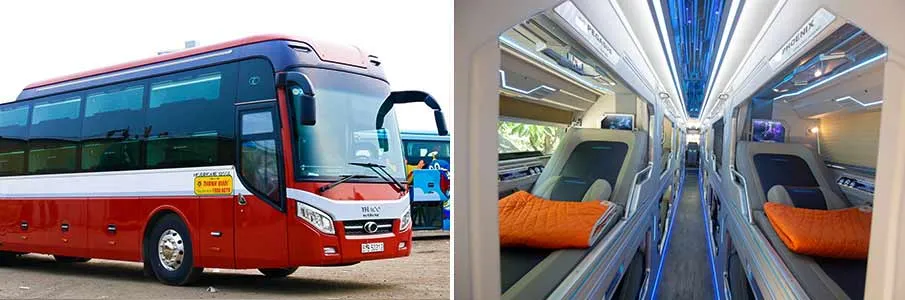
Sleeper bus
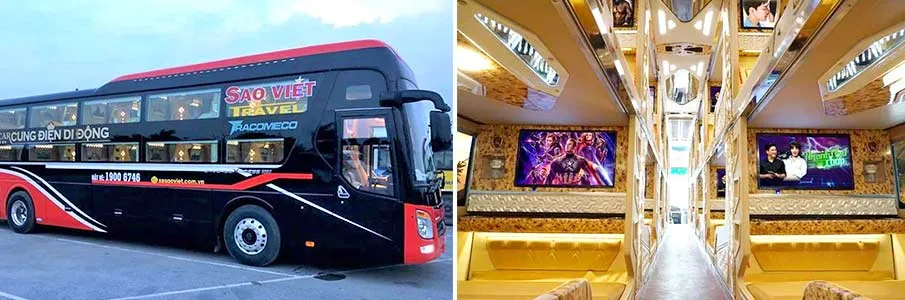
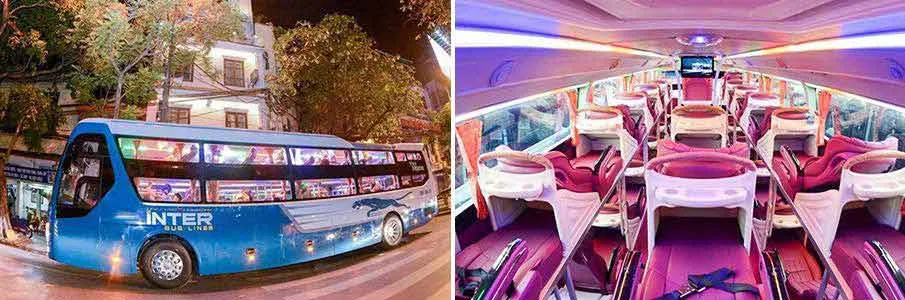
Popular for long distances, with beds instead of seats and overnight travel across Vietnam
Limousine / VIP van
Fewer passengers, more space and comfortable seats
Local / tourist bus
Very cheap and widely available, but with more stops and variable comfort
Unknown cheap companies
Lower reliability, delays and inconsistent service
Quick answer: Traveling by bus in Vietnam is both affordable and flexible, connecting major cities, remote villages and border crossings. You’ll find everything from standard coaches and sleeper vans to VIP services—with plenty of booking options online or at stations. It’s a great way to see the country while keeping costs down.
At a glance:
- 🚌 Network: Extensive system linking urban hubs and rural areas across Vietnam.
- 🎫 Ticketing: Buy online, through apps, at counters or hotels; classes vary from standard to sleeper/VIP.
- 📌 Tips: Book ahead for popular routes, check departure times, pick reputable companies.
- 🌍 International routes: Buses also cross into Laos, Cambodia and China from Vietnam.
Note: Comfort and amenities vary widely—from basic seating to fully-reclining sleeper vans—so choose based on your schedule and rest needs.
Last updated in August 2026
Which Bus Is Best in Vietnam?
| Bus Type | ⏱️ Journey | 💰 Price | Comfort | Best For |
|---|---|---|---|---|
| Standard / Tourist Bus | Short–long | Budget | ★★★☆☆ | Budget travelers |
| Express Bus | Medium–long | Budget–mid-range | ★★★☆☆ | Faster journeys |
| Sleeper Bus | Long / overnight | Budget | ★★★★☆ | Overnight travel |
| VIP Bus | Medium–long | Mid-range–higher | ★★★★★ | More comfort |
| Limousine Van | Short–long | Mid-range–higher | ★★★★★ | Comfort & small groups |
Rating: ★★★★★ excellent ★★★★☆ good ★★★☆☆ acceptable.
The sleeper bus is ideal for long overnight journeys. For more comfort and space, choose a VIP bus or limousine van. Standard and tourist buses are usually the most affordable options.
🚍 Bus Travel in Vietnam – Complete Guide:
▶️ 1. Introduction to Bus Travel in Vietnam
Bus travel in Vietnam is one of the easiest and most affordable ways to explore the country. Modern buses and sleeper coaches connect major cities, popular tourist destinations, and remote regions, making buses the most extensive transportation network in Vietnam.
🚌 Extensive Bus Network
Vietnam’s bus system connects Hanoi, Ho Chi Minh City, Da Nang, Hue, and hundreds of smaller towns and tourist destinations across the country.
🚍 Intercity & Sleeper Buses
Choose from standard coaches, limousine minibuses, and comfortable sleeper buses for both short journeys and overnight travel between Vietnam’s major cities.
💵 Budget-Friendly Travel
Bus tickets are inexpensive and available for almost every destination, making buses the most popular transport option for independent travelers.
🌏 Flexible Transportation
With frequent departures, multiple operators, and routes covering nearly the entire country, buses provide flexible and convenient transportation throughout Vietnam.
▶️ Why Choose Bus Travel in Vietnam?
Vietnam’s buses are popular with both locals and international travelers thanks to their affordability, wide route network, and access to destinations that trains and flights cannot reach.
🌏 Authentic Travel Experience
Traveling by bus lets you experience local life, rural landscapes, mountain roads, and coastal scenery while reaching destinations beyond Vietnam’s railway network.
💰 Affordable & Convenient
Low ticket prices, frequent departures, and extensive routes make buses one of the most economical and flexible ways to travel around Vietnam.
▶️ 2. Understanding Vietnam’s Bus Network
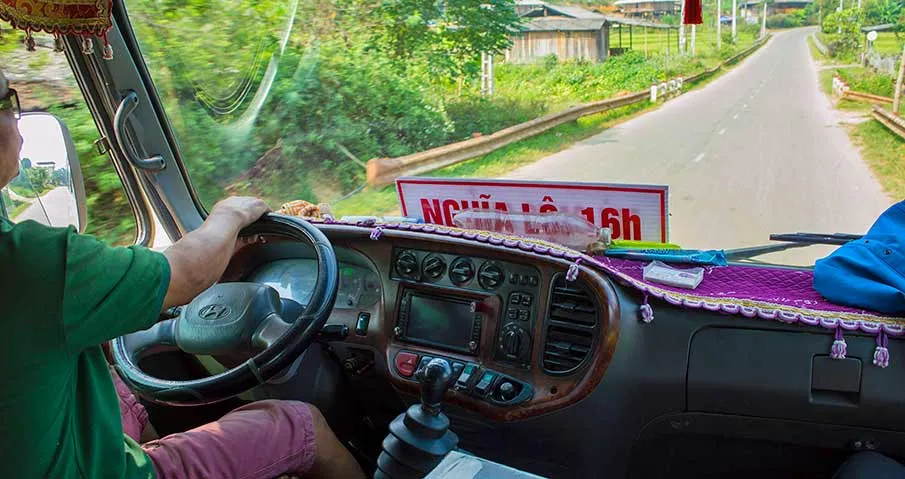
Vietnam has one of Southeast Asia’s largest bus networks, connecting major cities, tourist destinations, and remote provinces. Whether traveling within a city or across the country, buses provide reliable and affordable transportation.
🏙️ Urban Bus Systems
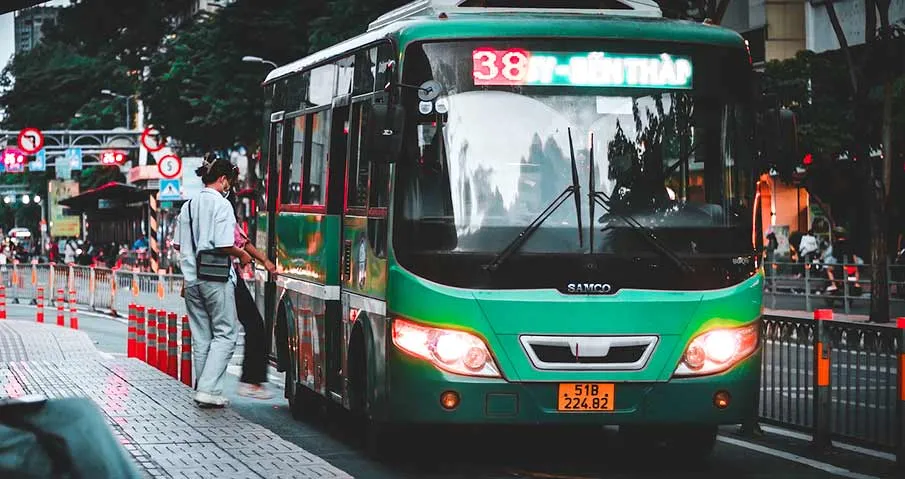
Cities such as Hanoi, Ho Chi Minh City, Da Nang, and Hue operate extensive public bus networks with frequent departures and low fares.
🛣️ Intercity Bus Routes
Long-distance buses connect destinations including Ha Long Bay, Sapa, Ninh Binh, Can Tho, Da Lat, Mui Ne, and Vung Tau.
🚌 Bus Types
Travelers can choose from standard coaches, express buses, limousine minibuses, luxury coaches, and comfortable sleeper buses for overnight journeys.
🎫 Booking & Tickets
Bus tickets can be booked online, through travel agencies, hotels, or directly at bus stations. Many operators also support convenient mobile e-tickets.
▶️ 3. How to Book Bus Tickets in Vietnam
Buying bus tickets in Vietnam is simple. Most travelers book online before departure, while tickets are also available at bus stations, travel agencies, and many hotels.
🎫 Where to Buy Tickets
Book bus tickets online, at bus terminals, through local travel agencies, or ask your hotel to arrange reservations for popular routes.
💳 Payment Options
Online bookings usually accept credit cards and digital payments, while many bus stations and smaller operators still prefer cash.
🚌 Ticket & Bus Classes
Choose from standard buses, VIP coaches, limousine minibuses, or comfortable sleeper buses depending on your budget and travel distance.
⏰ Departure Options
Most tickets are issued for a specific departure time. On busy routes, booking in advance is recommended, especially during weekends and holidays.
➡️ Baolau
Search and book trains, buses, ferries, and flights across Vietnam and Southeast Asia.
➡️ 12go.asia
Popular booking platform for buses, ferries, taxis, trains, and flights in Vietnam and nearby countries.
▶️ 4. Tips for Riding Buses in Vietnam
Traveling by bus in Vietnam is straightforward, but a few simple tips can make your journey more comfortable, safer, and stress-free.
🎫 Book in Advance
Reserve your bus tickets in Vietnam early on popular routes, during weekends, and public holidays to secure the best seats and departure times.
⏰ Check Departure Times
Long-distance buses usually leave at fixed times, while city buses operate more frequently. Always confirm your departure time before heading to the station.
🛡️ Choose Reliable Operators
Travel with reputable bus companies, wear your seat belt when available, and bring water, snacks, and a light jacket for longer journeys.
🗣️ Language Tips
Save your destination in Vietnamese or use a translation app, as English may be limited outside major tourist areas.
🎒 Keep Valuables Close
Store passports, phones, wallets, and other valuables in a small daypack and keep them with you throughout the journey.
🤝 Respect Local Etiquette
Be courteous to other passengers, keep noise to a minimum, and remove your shoes when requested on sleeper buses.
▶️ 5. Other Useful Travel Tips
These additional tips can help you plan a smoother journey and make traveling around Vietnam easier, whether you’re taking a bus or combining different types of transportation.
🚆 Combine Different Transport
Buses work well with trains, domestic flights, ferries, and private transfers, giving you flexible travel options throughout Vietnam.
🏨 Stay Near Bus Stations
Booking accommodation close to major bus stations can save time, especially before early morning departures or after late-night arrivals.
🥤 Bring Snacks & Water
Long-distance buses usually make rest stops, but carrying water, snacks, and a power bank makes the journey more comfortable.
📍 Explore Along the Way
Many bus routes pass famous destinations, national parks, beaches, and cultural sites, making it easy to include extra stops in your itinerary.
📱 Keep Important Contacts
Save your hotel details, emergency contacts, and travel documents on your phone, and consider travel insurance for additional peace of mind.
🎒 Travel Smart
Carry only what you need for the journey, keep valuables with you, and arrive at the departure point at least 20–30 minutes early.
▶️ 6. Private Minibuses & Minivans in Vietnam
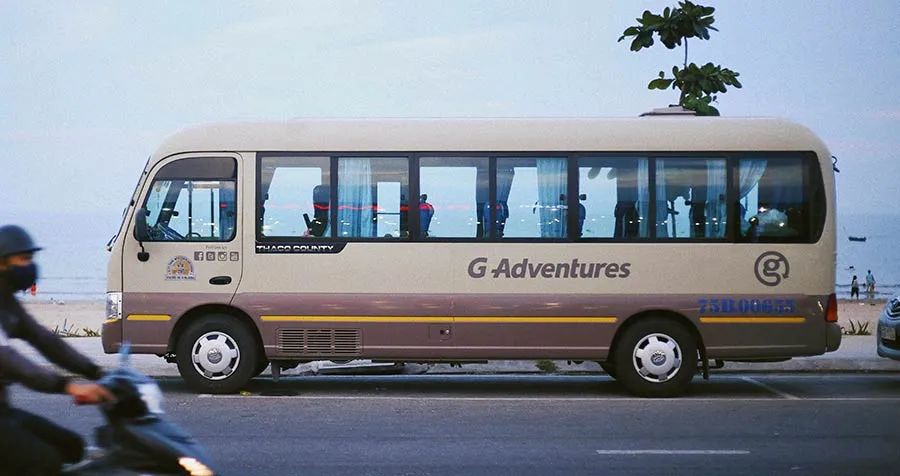
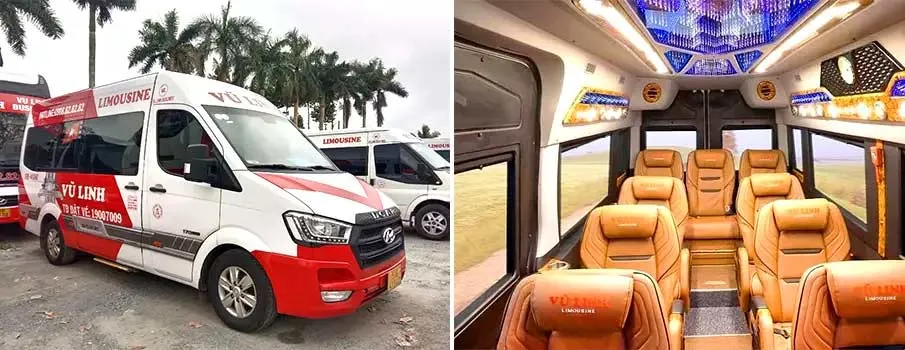
Private minibuses and modern limousine minivans have become one of the most popular ways to travel around Vietnam. They offer more comfort than regular buses, flexible schedules, and convenient hotel pick-up services on many tourist routes.
🚐 Comfortable Travel
Modern minivans feature comfortable reclining seats, air-conditioning, generous legroom, and fewer passengers, making them ideal for medium and long-distance journeys.
🏨 Hotel Pick-Up Service
Many operators offer convenient hotel pick-up and drop-off, allowing travelers to avoid busy bus stations and enjoy a hassle-free journey.
🗺️ Popular Tourist Routes
Private minivans operate on many popular routes, including Sapa, Ha Giang, Ha Long Bay, Ninh Binh, Da Lat, Mui Ne, Phu Quoc, and the Mekong Delta.
👨👩👧 Flexible & Private
Families and small groups benefit from flexible departure times, direct transfers, and greater privacy compared to public buses or trains.
🎯 Private Tours & Day Trips
Many companies provide customized sightseeing tours and private day trips, giving travelers the freedom to explore Vietnam at their own pace with personalized itineraries.
💰 Great Value for Groups
Hiring a private minivan is often the most economical option for families and groups, combining shared transportation, extra comfort, and lower costs than booking multiple taxis.
▶️ 7. International Bus Travel from Vietnam
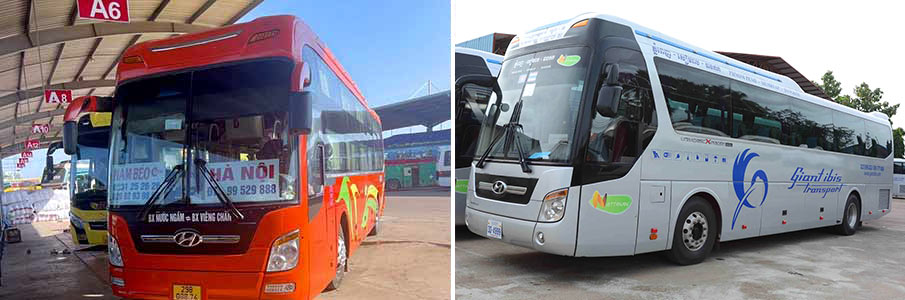
International buses provide a convenient and affordable way to travel from Vietnam to neighboring countries such as Laos, Cambodia, and China. These cross-border services connect major cities and popular tourist destinations, making overland travel simple for independent travelers. Most international routes include a scheduled stop at the border, where passengers complete immigration, customs, and visa formalities before continuing to their final destination.
🇱🇦 Vietnam → Laos
International buses connect Vietnam with Laos, including popular routes to Vientiane and Luang Prabang. The journey passes scenic mountain landscapes and traditional villages before crossing the border.
🇰🇭 Vietnam → Cambodia
Frequent cross-border buses travel to Cambodia, including routes to Phnom Penh, Siem Reap, and Sihanoukville, making it easy to explore Cambodia’s famous temples, beaches, and cultural attractions.
🇨🇳 Vietnam → China
International buses also operate between northern Vietnam and China, offering overland connections through major border crossings to destinations in southern China.
🛂 Border Crossing Tips
Carry a valid passport, check visa requirements before departure, and allow extra time for immigration and customs procedures. Bus operators usually assist passengers during the border crossing process.
➡️ Baolau
Search and book trains, buses, ferries, and flights across Vietnam and Southeast Asia.
➡️ 12go.asia
Popular booking platform for buses, ferries, taxis, trains, and flights in Vietnam and nearby countries.
❓ FAQ + Useful Tips – Bus Travel in Vietnam:
How reliable are buses in Vietnam?
Bus travel in Vietnam is generally reliable and widely used by tourists. Delays can happen because of traffic, weather, or road conditions, especially on long-distance routes.
Are buses safe for tourists in Vietnam?
Yes, most tourist buses in Vietnam are safe. Choose reputable companies, keep valuables with you, and use caution when boarding or leaving the bus.
What types of buses are available in Vietnam?
Vietnam offers standard buses, limousine vans, VIP buses, and overnight sleeper buses for long-distance travel between major cities and tourist destinations.
How to book bus tickets in Vietnam?
You can book bus tickets online, at travel agencies, hotels, or directly at bus stations. Online booking is the easiest option for tourists.
Which bus company should I choose in Vietnam?
Choose bus companies with good reviews, modern vehicles, air-conditioning, and reliable customer service. Tourist buses are usually more comfortable than local buses.
Should I book bus tickets in advance?
Yes, booking in advance is recommended for popular tourist routes, overnight buses, weekends, and holidays in Vietnam.
What amenities are available on buses in Vietnam?
Many buses offer air-conditioning, reclining seats or beds, WiFi, USB charging, blankets, water, and sometimes onboard toilets.
Are overnight sleeper buses comfortable?
Overnight sleeper buses are popular for long-distance travel in Vietnam. Comfort depends on the company and bus type, but VIP sleeper buses are usually more comfortable.
Can tourists travel by bus across Vietnam?
Yes, buses connect almost all major cities, beaches, mountains, and tourist destinations across Vietnam, including remote areas.
Can I bring luggage on buses in Vietnam?
Yes, luggage is usually included in the ticket price. Keep valuables, passports, and electronics with you during the trip.
How much does bus travel cost in Vietnam?
Bus travel in Vietnam is affordable. Prices depend on distance, bus type, and comfort level, with sleeper buses usually costing more.
Are there discounts for bus tickets?
Some bus companies offer discounts during promotions, for return tickets, or group bookings, especially on online booking platforms.
Do you tip bus drivers in Vietnam?
Tipping bus drivers or staff is not expected in Vietnam, but small tips for helpful service are appreciated.
What should I do if my bus is delayed?
If delays happen, contact the bus company or station staff. Traffic and weather delays are relatively common on some routes in Vietnam.
What etiquette should I follow on sleeper buses?
Keep noise low, remove shoes before entering sleeper buses, and respect other passengers during overnight journeys.