

ℹ️ Information – Mui Ne
🚍 How to get to Mui Ne
☀️ When to go to Mui Ne
🏡 Where to stay in Mui Ne
🔍 Sightseeing in Mui Ne
❓ FAQ + Travel Tips + Info
🎫 Book a Tour in Mui Ne
🎫 Book Ticket to Mui Ne
Quick answer: Mui Ne is a unique coastal destination in southern Vietnam where vast sand dunes meet peaceful fishing villages and vibrant beaches. Known for its water sports like kiteboarding and windsurfing, it also offers relaxing beach time, fascinating natural sights like the Fairy Stream and Cham Towers, and delicious fresh seafood. It’s a great spot for both adventure and chill vibes, easily accessible from nearby cities.
At a glance:
- 🏖️ Beaches: Long sandy shores for sunbathing and swimming.
- 🌅 Sand Dunes: Red and white dunes perfect for sandboarding and sunsets.
- 💧 Fairy Stream: Walk a shallow stream with colorful rock formations.
- 📜 Cham Towers: Ancient Hindu ruins with historical charm.
- 🎣 Fishing Village: Early markets and local life by the sea.
- 🌬️ Water Sports: Great kiteboarding and windsurfing spot.
- 🍽️ Seafood: Fresh grilled seafood along the beach.
- ✈️ Getting There: Bus, car, or train via Phan Thiet.
- 🕰️ Best Time: Dry season from November to April.
Last updated in November 2025
Location and Geography of Mui Ne:
-
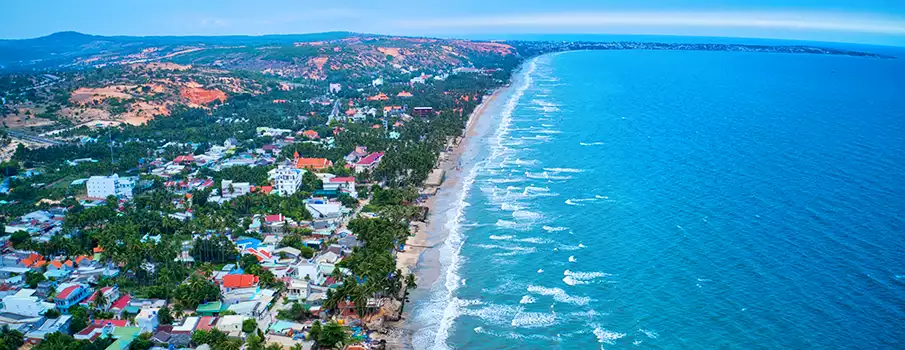
- Mui Ne is a coastal town located in the Binh Thuan province in southern Vietnam. It is situated on the southeastern coast of Vietnam, around 200 kilometers east of Ho Chi Minh City. The town is well known for its stunning beaches, sand dunes, and picturesque fishing villages, making it a popular destination for tourists.
- The geography of Mui Ne is characterized by a long stretch of coastline that extends for approximately 15 kilometers. The town is surrounded by vast sand dunes that offer visitors a unique desert-like experience. These dunes are constantly shifting due to the wind, creating an ever-changing landscape. The town is also surrounded by lush green hills and mountains that provide a scenic backdrop to the beaches and dunes.
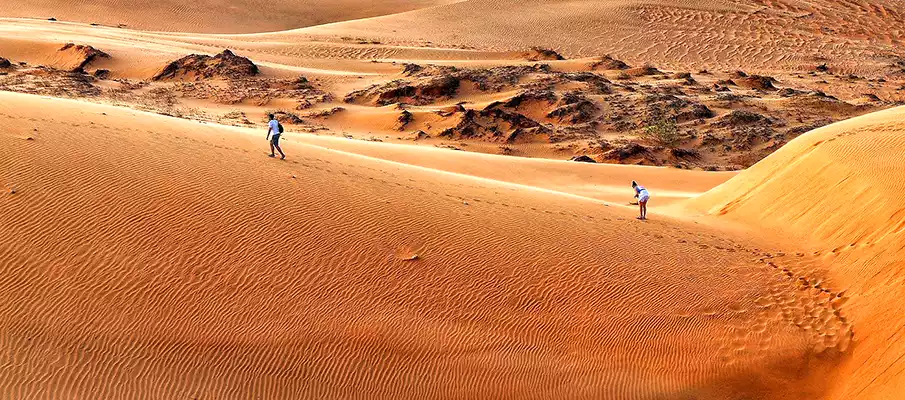
- One of the most popular attractions in Mui Ne is the Red Sand Dunes. These dunes are named for their reddish-brown color and are a popular spot for tourists to take photos and go sandboarding. Another popular attraction is the Fairy Stream, a shallow stream that winds through the sand dunes and is lined with colorful rock formations.
- Overall, Mui Ne’s location and geography provide a unique and picturesque setting for visitors to explore and enjoy. With its beautiful beaches, sand dunes, and natural attractions, it is no wonder why it has become a popular destination for tourists from all over the world.
Exploring the History and Culture of Mui Ne:
-
- The history and culture of Mui Ne is a rich tapestry that reflects the town’s evolution from a small fishing village to a popular tourist destination. The area has a long history of human habitation, with evidence of settlements dating back to the Cham period over 600 years ago. The town’s location on the coast made it an important trading center for the Cham people, who traded with merchants from all over Asia.
- In the 17th century, the area came under the control of the Nguyen Lords, who ruled over southern Vietnam. During this time, Mui Ne continued to grow as a center for fishing and trade, with many Chinese and Vietnamese merchants settling in the area.
- In the late 19th and early 20th centuries, Mui Ne was incorporated into French Indochina and became a popular destination for French colonial officials looking for a seaside retreat. During this time, many villas and hotels were built in the town, and it began to develop as a tourist destination.
- Today, Mui Ne is a multicultural town with a mix of Vietnamese, Cham, and Chinese influences. The local population is predominantly Buddhist, and there are many temples and pagodas throughout the town that reflect the region’s spiritual heritage. The Cham people, who are an indigenous ethnic group, have their own unique culture and traditions, which are evident in the town’s architecture, art, and music.
BOOK a TOUR / ACTIVITY in Mui Ne ➜
Festivals and Events in Mui Ne:
Mui Ne is a vibrant town that celebrates a variety of festivals and events throughout the year. Many of these events reflect the town’s cultural heritage and offer visitors a unique insight into the local way of life. Here are some of the most popular festivals and events in Mui Ne:
-
- Nghinh Ong Festival: This is the most significant festival in Mui Ne and takes place every year on the 16th day of the 8th lunar month. The festival is held in honor of the town’s patron saint, who is believed to protect the fishermen and their boats. The festival includes a colorful procession of boats, dragon dances, and other cultural performances.
- International Kite Festival: This is an annual event that takes place in January or February. The festival attracts kite enthusiasts from all over the world, who come to display their skills and fly their kites on the beach. The festival also features cultural performances, food stalls, and other entertainment.
- Mid-Autumn Festival: This festival is held on the 15th day of the 8th lunar month, usually in September or October. The festival is a time for families to come together and celebrate the harvest season. Children carry lanterns and participate in dragon dances, while adults enjoy mooncakes and other traditional foods.
- Nguyen Tieu Festival: This festival takes place on the 15th day of the 1st lunar month and celebrates the first full moon of the lunar year. The festival is a time for prayers, offerings, and cultural performances. Visitors can enjoy traditional foods and participate in lantern making and other activities.
- Whale Worship Festival: This festival is held in nearby Phan Thiet in February or March and is a time to honor the whales that are believed to protect the fishermen. The festival includes boat races, dragon dances, and other cultural performances.
Mui Ne’s Economy Thrives on Tourism and Fishing:
-
- The economy of Mui Ne is primarily based on tourism, with the town attracting visitors from all over the world who come to enjoy its beautiful beaches, water sports, and other attractions. The tourism industry has created a range of job opportunities in the town, from hotel and restaurant staff to tour guides, drivers, and water sports instructors.
- Fishing is also an important industry in Mui Ne, with many local people engaged in traditional fishing practices. The town’s location on the coast means that fresh seafood is readily available and is a popular choice for visitors to the area.
- Agriculture is another significant industry in Mui Ne, with farmers growing a range of crops, including dragon fruit, coconut, and rice. Many farmers sell their produce at local markets or to local businesses, helping to support the local economy.
- In recent years, there has been a trend towards eco-tourism and sustainable development in Mui Ne, with many businesses and organizations working to protect the environment and promote responsible tourism practices. This has created new opportunities for businesses that offer eco-friendly tours and activities, as well as for those that provide services and products that support sustainable living.
Book your Accommodation in Mui Ne ➜
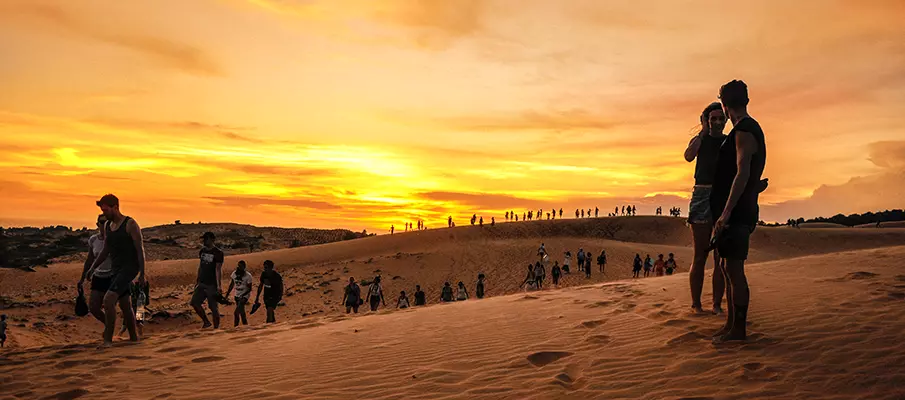
Mui Ne: A Popular Destination for Sun, Sand, and Sea:
-
- With its beautiful beaches, water sports, and cultural attractions, Mui Ne offers something for everyone, from adventure seekers to culture enthusiasts. One of the biggest draws of Mui Ne is its stunning beaches, which stretch for miles along the coast. These beaches offer a range of activities, from swimming and sunbathing to water sports such as kite surfing, windsurfing, and jet skiing. Many of the beaches are also lined with restaurants and cafes, making them a great place to relax and enjoy a meal or a drink.
- In addition to its beaches, Mui Ne is also known for its sand dunes, which are a unique and spectacular feature of the landscape. Visitors can explore the sand dunes on foot, or for those seeking an adrenaline rush, try sandboarding or quad biking. For those interested in the local culture and history, Mui Ne has several attractions to offer. The town is home to several ancient temples and pagodas, which are significant cultural and historical landmarks in the town. The Poshanu Cham Tower complex, located just outside of Mui Ne, is also a must-visit destination for those interested in the ancient Cham civilization.
- Mui Ne is also home to several traditional fishing villages, where visitors can experience the local way of life and sample fresh seafood dishes. The town’s night market is a great place to find local souvenirs and handicrafts, as well as enjoy street food and live entertainment. For those seeking relaxation and wellness, Mui Ne has several spa and wellness retreats that offer a range of treatments and programs.
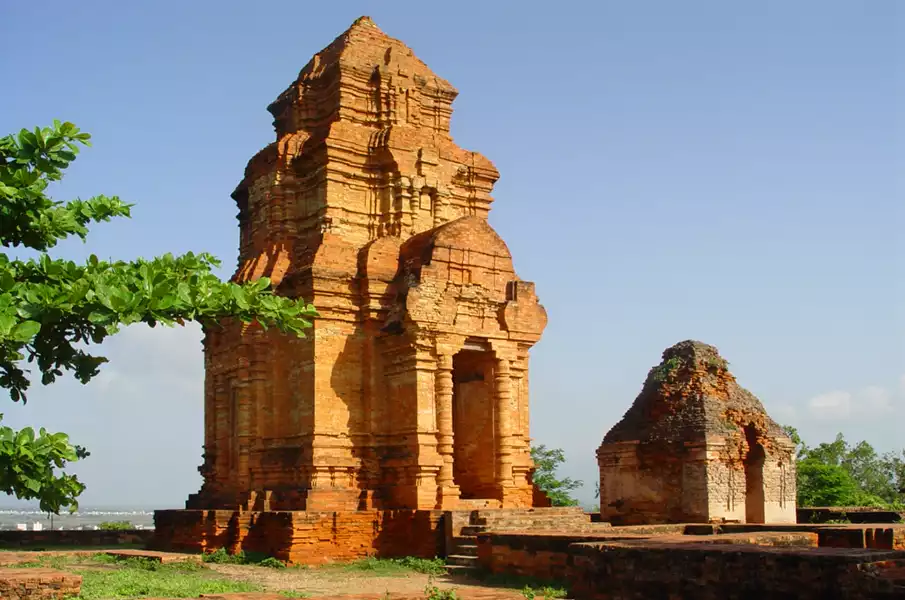
Discovering Ancient Cham Civilization at Poshanu Cham Towers:
-
- The Poshanu Cham Towers are a complex of ancient Hindu temples located just outside of Mui Ne in the Binh Thuan Province of Vietnam. These towers are a significant cultural and historical landmark in the region and are a must-visit destination for those interested in the ancient Cham civilization.
- The Poshanu Cham Towers were built between the 8th and 13th centuries by the Cham people, who were an ancient civilization that ruled much of Southeast Asia for several centuries. The Cham were known for their skills in sculpture, architecture, and arts, and their legacy can still be seen in the intricate carvings and sculptures that adorn the towers.
- The complex consists of four towers, each dedicated to a different deity. The towers were built using bricks and sandstone, and are decorated with intricate carvings and sculptures that depict scenes from Hindu mythology. The tallest tower, which stands at 15 meters, is dedicated to the goddess Bhagavati, who was believed to be the protector of the Cham people.
- Over the centuries, the Poshanu Cham Towers were damaged by war and natural disasters, and many of the sculptures and carvings were destroyed or damaged. However, in the 20th century, efforts were made to restore the towers, and today visitors can see the intricate carvings and sculptures that have survived the test of time.
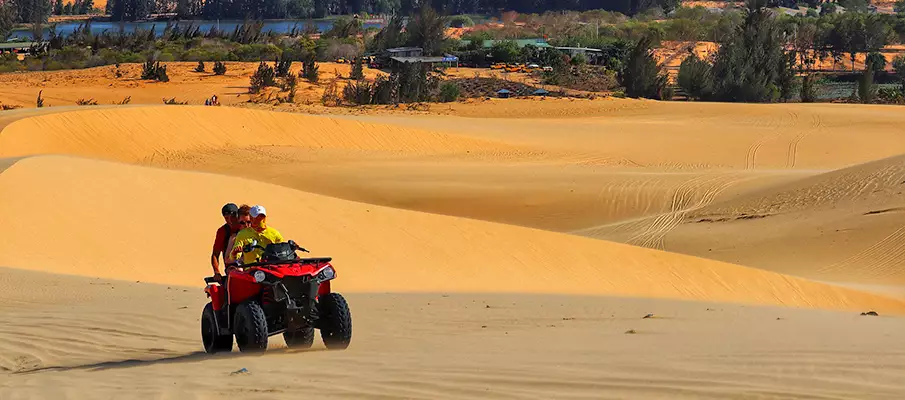
Explore the Natural Beauty of Mui Ne’s Red Sand Dunes:
-
- The Red Sand Dunes of Mui Ne are a unique and breathtaking natural wonder that draw visitors from all over the world. Located just outside the town of Mui Ne in Vietnam, these stunning sand dunes are a must-visit destination for anyone visiting the region.
- The Red Sand Dunes get their name from the distinctive reddish hue of the sand, which is caused by the iron oxide in the soil. The dunes are constantly shifting and changing shape, making each visit a unique experience. Visitors can explore the dunes on foot or by renting a quad bike or sandboard. One of the best times to visit the Red Sand Dunes is at sunrise or sunset, when the changing light creates a stunning display of colors across the landscape. The dunes are particularly popular with photographers, who come to capture the natural beauty of the landscape.
- In addition to their natural beauty, the Red Sand Dunes are also an important part of the local culture and history. For centuries, the dunes were an important source of sand for construction and pottery making, and local villagers still use the sand for these purposes today. Visitors to the Red Sand Dunes can also learn about the local culture and history by visiting the nearby fishing villages, where they can sample fresh seafood.
BOOK a TOUR / ACTIVITY in Mui Ne ➜
Discover the Best Beaches in and around Mui Ne:
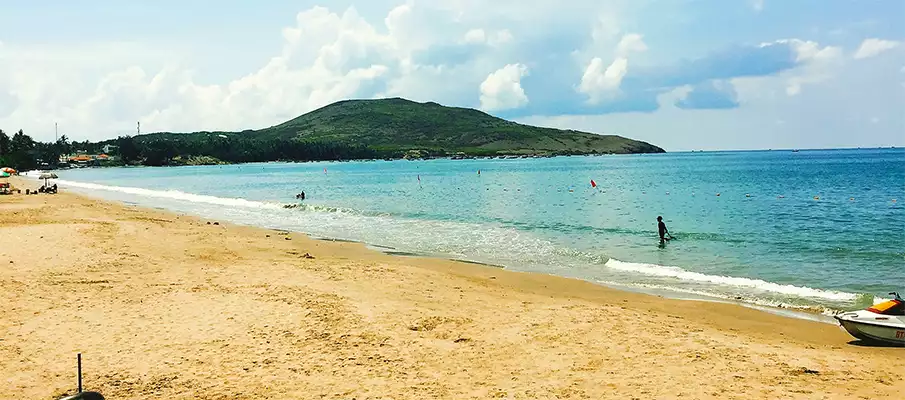
Mui Ne is home to several stunning beaches that offer visitors a chance to relax and soak up the sun while enjoying the natural beauty of the region. Here are some of the top beaches in Mui Ne:
-
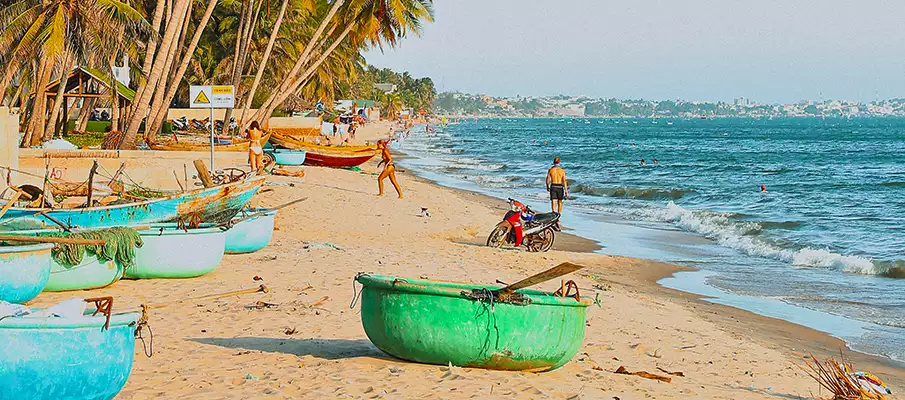
- Mui Ne Beach – This is the most popular beach in the area and is known for its long stretch of white sand and clear blue waters. It’s a great spot for swimming, sunbathing, and water sports such as kiteboarding and windsurfing.
- Hon Rom Beach – Located just south of Mui Ne Beach, Hon Rom Beach is a quieter and more secluded alternative. The beach is surrounded by lush greenery and is known for its calm and clear waters, making it a great spot for snorkeling and swimming.
- Bai Rang Beach – Located about 15 minutes north of Mui Ne, Bai Rang Beach is a beautiful and tranquil spot that is popular with locals. The beach is lined with palm trees and is a great place to relax and unwind.
- Ham Tien Beach – Just a short distance south of Mui Ne, Ham Tien Beach is a long and wide stretch of sand that is perfect for sunbathing and beach activities. The beach is known for its calm waters and is a popular spot for swimming and kiteboarding.
- Suoi Nuoc Beach – This beach is located about 20 minutes north of Mui Ne and is a hidden gem that is off the beaten path. The beach is surrounded by cliffs and lush greenery, giving it a secluded and peaceful feel.
No matter which beach you choose to visit in Mui Ne, you’re sure to be amazed by the stunning natural beauty of the region. So grab your sunscreen and get ready for a day of fun in the sun!
The Enchanting Beauty of Mui Ne’s Fairy Stream:
Nestled in the coastal town of Mui Ne, is a natural wonder that seems straight out of a fairy tale – the Fairy Stream. This hidden gem is a geological masterpiece that captivates visitors with its otherworldly charm.
-
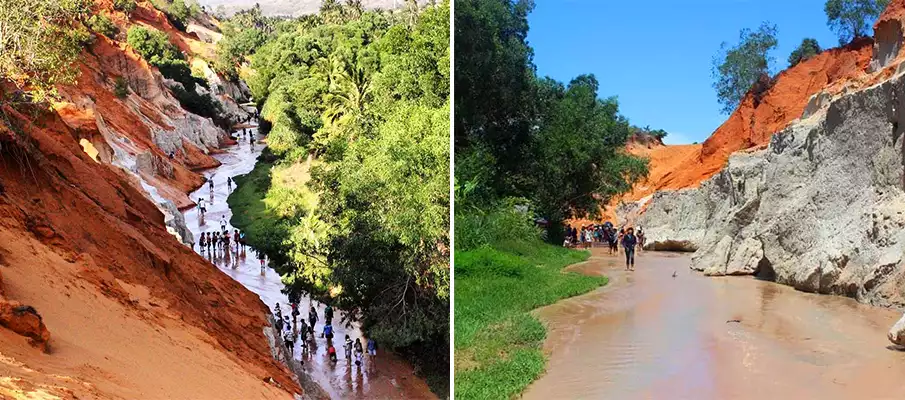
- A Geological Masterpiece: The Fairy Stream (Suối Tiên – Mũi Né), is a small, meandering water body that runs through a stunning landscape of red and white sand dunes. What makes this stream so unique is the vivid contrast between the reddish-brown sand and the crystal-clear waters. As you stroll along the stream, it feels like you are wandering through a dreamlike world.
- A Walk Through Time: Exploring the Fairy Stream is like taking a walk through time. The water’s gentle flow has carved intricate patterns and small canyons into the sand, creating a mesmerizing display of natural art. The layers of sediment in the rocks reveal the geological history of the area, allowing visitors to witness the Earth’s story etched into the landscape.
- Photographer’s Paradise: For photography enthusiasts, the Fairy Stream is a paradise. The vivid colors and unique formations provide endless opportunities for capturing stunning shots. The stream’s shallow depth makes it perfect for wading and capturing reflections in the water, creating surreal and enchanting images.
- Local Culture and Tranquility: The Fairy Stream is not only a geological marvel but also a place that is steeped in local culture and spirituality. It is believed to be a sacred site, and visitors are encouraged to be respectful of this cultural significance. You’ll find little shrines and offerings along the way, adding to the sense of mysticism. Despite its growing popularity, the Fairy Stream retains a sense of tranquility. It’s a perfect place to escape the hustle and bustle of city life and connect with nature. The soothing sound of the gently flowing water and the refreshing breeze from the ocean nearby create a peaceful atmosphere.
- How to Get There: The Fairy Stream is easily accessible from Mui Ne, and you can explore it at your own pace. It’s recommended to visit during the morning or late afternoon when the lighting is perfect for photography. Remember to wear comfortable shoes as you’ll be walking on the sandy banks of the stream.
Tranquility and Tradition: Exploring Thien Quang Pagoda in Mui Ne.
In the vibrant coastal town of Mui Ne, Vietnam, where the sand dunes meet the sea, lies a hidden gem of spiritual serenity and cultural richness: Thien Quang Pagoda, also known as Chùa Thiện Quang. This Buddhist temple offers a unique blend of tradition and tranquility, making it a must-visit destination for those seeking a deeper cultural experience.
-
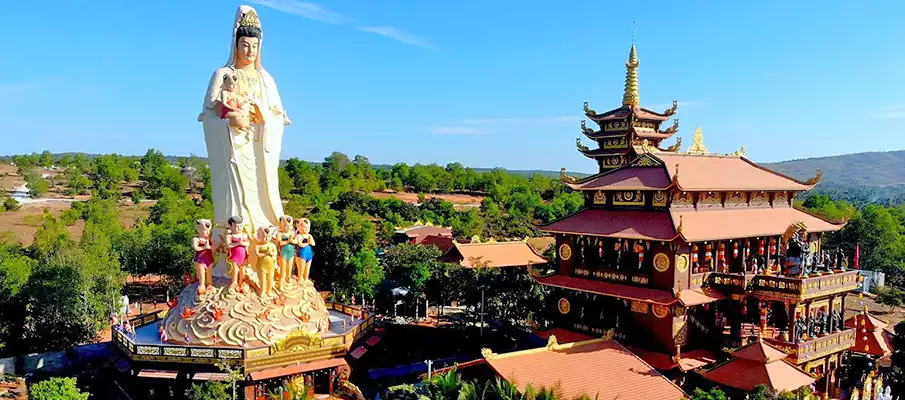
- A Glimpse of Tradition: Thien Quang Pagoda is a living testament to Vietnamese Buddhist culture and architecture. The pagoda’s design is a feast for the eyes, adorned with vibrant colors and intricate woodwork. The main hall of the pagoda houses statues of Buddha and Bodhisattvas, each telling a story of faith and devotion.
- Spiritual Haven: While this temple draws tourists, it remains an active place of worship for the local Buddhist community. The melodious chants of the resident monks and the rhythmic sound of the wooden fish drum create a serene atmosphere that’s perfect for meditation and reflection. Visitors are often welcomed to participate in or observe these spiritual practices, offering a chance to gain insight into Vietnamese Buddhism.
- Cultural Exploration: Thien Quang Pagoda provides an opportunity to immerse yourself in the local culture. As you explore the temple grounds, you’ll find devotees deep in prayer and offerings. The pagoda’s architecture, statues, and rituals all tell the story of a rich cultural heritage that has thrived in Vietnam for centuries.
- Tranquil Escape: The pagoda’s setting enhances its appeal. Surrounded by lush greenery, Thien Quang Pagoda offers a peaceful escape from the bustling beach scene of Mui Ne. It’s a place where visitors can find tranquility, not just through the spiritual practices but also through the serene natural surroundings.
- Visiting Practicalities: If you plan to visit Thien Quang Pagoda, it’s essential to dress modestly, covering your shoulders and knees as a sign of respect. Additionally, it’s customary to remove your shoes before entering the main hall. The temple usually opens during daylight hours, and checking specific opening times is advisable.
Why to visit or not to visit Mui Ne – Phan Thiet?
Here are some reasons why you may want to consider visiting Mui Ne – Phan Thiet, as well as some reasons why you might want to skip it:
👉 Reasons to visit Mui Ne – Phan Thiet:
-
- Beaches: Mui Ne is famous for its beautiful sandy beaches, which are perfect for sunbathing, swimming, and water sports like kiteboarding and windsurfing.
- Sand dunes: Mui Ne is also known for its unique sand dunes, which are a popular attraction in the area. The red and white sand dunes provide stunning views and are a great place to take photos and go sandboarding.
- Seafood: Mui Ne is a great place to enjoy fresh seafood, with a wide variety of restaurants serving delicious dishes like grilled squid, shrimp, and fish.
- Cham culture: The Binh Thuan province is home to the Cham ethnic minority group, and there are several Cham temples and sites in the area that are worth visiting. One of the most popular Cham sites is the Po Shanu Cham Towers.
👉 Reasons not to visit Mui Ne – Phan Thiet:
-
- Crowds: Mui Ne can get quite crowded, especially during peak tourist season, which may be a turnoff for some travelers who are looking for a more secluded and peaceful destination.
- Development: The area has seen a lot of development in recent years, which has resulted in a loss of some of its natural charm and beauty.
- Weather: The weather in Mui Ne can be quite hot and humid, which may not be ideal for some travelers who are sensitive to heat.
Overall, Mui Ne – Phan Thiet can be a great destination for travelers who are interested in beaches, sand dunes, seafood, and Cham culture. However, those who are looking for a quieter and less crowded destination or are sensitive to heat may want to consider other destinations in Vietnam.
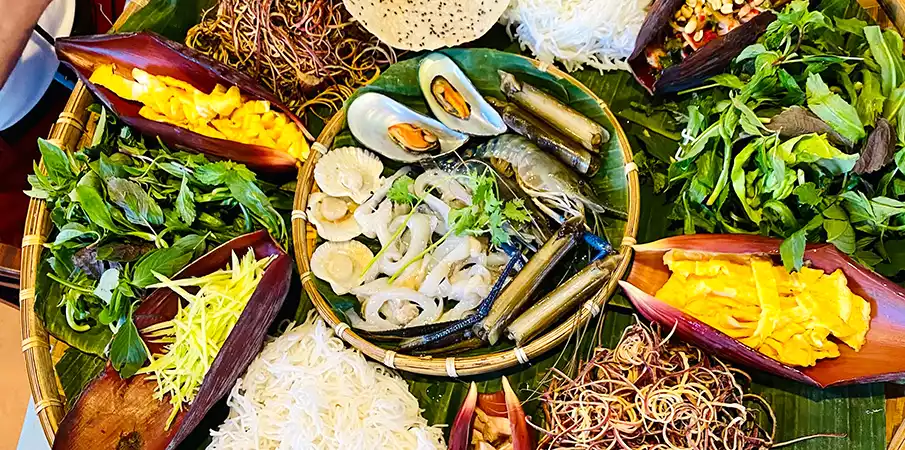
Culinary Delights: Exploring the Diverse Food of Mui Ne:
Mui Ne offers a diverse range of food and cuisine that reflects the region’s cultural and historical influences. Here are some of the top dishes and culinary experiences to try in Mui Ne:
-
- Seafood – As a fishing village, Mui Ne is known for its fresh and delicious seafood. Visitors can sample a variety of dishes such as grilled squid, crab, and shrimp, as well as traditional Vietnamese seafood soups and stews.
- Banh Xeo – This is a savory crepe made with rice flour and stuffed with pork, shrimp, and bean sprouts. It’s typically served with a side of fresh herbs and dipping sauce, and is a popular street food in Mui Ne.
- Goi Cuon – Also known as fresh spring rolls, Goi Cuon is a healthy and refreshing dish made with rice paper, shrimp, pork, and fresh herbs. It’s often served with peanut dipping sauce and is a popular appetizer or snack in Mui Ne.
- Nem Nuong – This is a grilled pork sausage that is a specialty of central Vietnam. It’s typically served with rice paper, fresh herbs, and dipping sauce, and is a must-try dish for meat lovers.
- Bahn Mi – This Vietnamese sandwich is made with a crispy baguette filled with various meats, pickled vegetables, and fresh herbs. It’s a popular and affordable lunch option in Mui Ne.
In addition to these dishes, visitors to Mui Ne can also sample a variety of international cuisines such as Italian, French, and Thai, as well as vegetarian and vegan options. Mui Ne also has a lively night market where visitors can try a variety of street food and local snacks.
Book your Accommodation in Mui Ne ➜
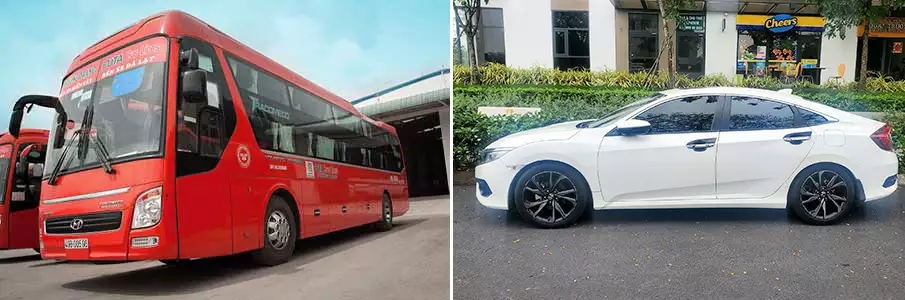
🚍 How to get and travel to Mui Ne?
Mui Ne is located about 200 km (124 miles) east of Ho Chi Minh City in Vietnam. Mui Ne has no airport, so travel by plane to this site is not possible. Here are some ways to get to and travel around Mui Ne:
-
- By Bus – Buses from Ho Chi Minh City to Mui Ne are a popular and affordable option. The journey takes about 5-6 hours and buses depart from various bus stations in Ho Chi Minh City. There are also buses available from other cities in Vietnam such as Nha Trang and Da Lat.
- By Train – Trains run from Ho Chi Minh City to nearby Phan Thiet, which is about 22 km (14 miles) from Mui Ne. From there, visitors can take a taxi or bus to Mui Ne. The train journey takes about 4-5 hours. You can also travel by train to Binh Thuan Railway Station.
- By Car or Taxi – Visitors can hire a car or taxi to travel to Mui Ne from Ho Chi Minh City or other nearby cities. This is a more expensive option, but offers the convenience and flexibility of private transportation.
- By Motorbike – For those who enjoy the freedom of two wheels, motorbikes can be rented in Ho Chi Minh City and other nearby cities. The journey to Mui Ne takes about 5-6 hours and offers scenic views of the countryside.
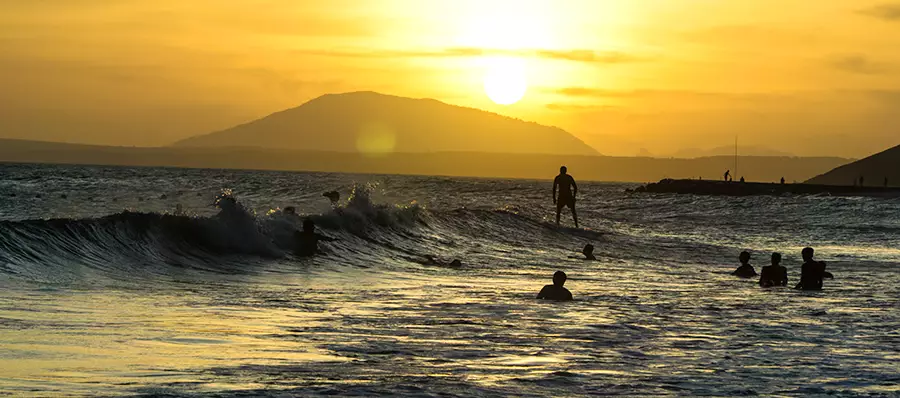
☀️ Weather in Mui Ne + The Best Time to Visit:
The weather in Mui Ne is tropical, with hot and dry conditions for most of the year. Mui Ne has a warm and sunny climate for most of the year, making it a great destination for beach activities. Here is a breakdown of the seasons in Mui Ne:
-
- Dry Season (November – April): This is the most popular time to visit Mui Ne, with sunny and warm weather perfect for outdoor activities. Temperatures during this time range from 25°C (77°F) to 30°C (86°F).
- Rainy Season (May – October): During this time, Mui Ne experiences occasional rain showers and high humidity. Temperatures range from 27°C (81°F) to 32°C (90°F).
The best time to visit Mui Ne is during the dry season (November – April) when the weather is pleasant and dry. This is also the peak tourist season, so be prepared for higher prices and larger crowds. For those who don’t mind a little rain, visiting during the rainy season (May – October) can also be a good option as prices are lower and there are fewer crowds. Overall, Mui Ne can be visited year-round, but it’s important to pack appropriately for the weather and be prepared for occasional rain showers.
| Month | Season | Description |
|---|---|---|
| January | Dry Season | Sunny, warm weather with little rain, perfect for beaches and water sports. |
| February | Dry Season | Dry and sunny conditions continue, ideal for kite surfing and sightseeing. |
| March | Dry Season | Hot, sunny weather makes March excellent for beaches and outdoor activities. |
| April | Dry Season | Very hot with almost no rainfall, ideal for relaxing by the sea. |
| May | Transition Season | Temperatures remain high while occasional showers begin to appear. |
| June | Rainy Season | Hot weather with brief tropical showers, usually in the afternoon or evening. |
| July | Rainy Season | Warm temperatures continue with periodic rain and plenty of sunshine. |
| August | Rainy Season | Short tropical showers are common, but beach activities are still possible. |
| September | Rainy Season | One of the wettest months, with frequent rain and warm temperatures. |
| October | Transition Season | Rainfall decreases, bringing more sunshine and pleasant beach conditions. |
| November | Dry Season | Dry, sunny weather returns, making it one of the best months to visit. |
| December | Dry Season | Warm, dry conditions are perfect for beaches, dunes, and water sports. |
🏡 Accommodation / Where to stay in Mui Ne:
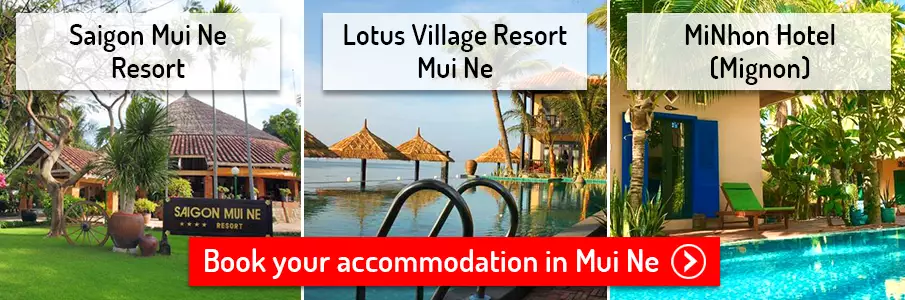
Mui Ne offers a range of accommodation options to suit different budgets and preferences. There are modern beach resorts, guesthouses or cheap hotels. Here are some of the most popular options:
-
- Resorts and Hotels: Mui Ne has a variety of beachfront resorts and hotels ranging from budget to luxury. These accommodations offer amenities like swimming pools, spas, and restaurants, and are perfect for those looking for a comfortable and relaxing stay.
- Guesthouses and Hostels: For budget travelers, Mui Ne has a number of guesthouses and hostels offering basic amenities like shared bathrooms and dormitory-style rooms. These accommodations are perfect for backpackers and those looking for a more social atmosphere.
- Villas and Apartments: For those looking for more space and privacy, Mui Ne has a variety of villas and apartments available for rent. These accommodations often come equipped with kitchenettes and other amenities, making them a great choice for families and groups.
- Homestays: For a more immersive experience, travelers can opt for a homestay with a local family. This allows visitors to experience Vietnamese culture and cuisine firsthand while staying in a comfortable and welcoming environment.
➜ Accommodation in Mui Ne – Book Here
🔍 Interesting Places + Activities in Mui Ne:
- Red Sand Dunes: Climb the colorful dunes, enjoy panoramic views, and try sandboarding at sunrise or sunset.
- Fairy Stream: Walk barefoot through a shallow stream surrounded by colorful sandstone cliffs.
- Poshanu Cham Towers: Explore well-preserved Cham temples dating back to the ancient Champa Kingdom.
- Mui Ne Beach: Relax on a long sandy beach popular for swimming, kiteboarding, and fresh seafood.
- Phan Thiet Market: Sample local food, buy souvenirs, and experience everyday Vietnamese life.
- White Sand Dunes: Visit the largest dunes near Mui Ne for sunrise views, jeep tours, and ATV rides.
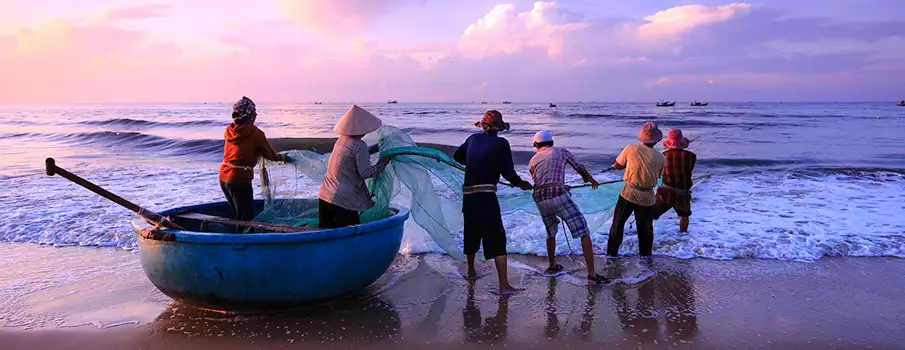
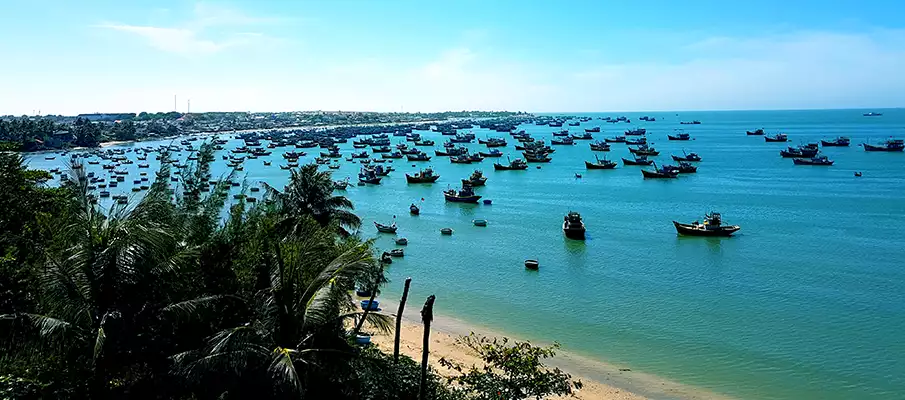
- Mui Ne Harbor: Watch colorful fishing boats return with fresh seafood every morning.
- Mui Ne Fishing Village: Experience authentic coastal life and traditional Vietnamese fishing culture.
- Hon Rom Beach: Enjoy a quieter beach with calm waters, soft sand, and fewer visitors.
- Thien Quang Pagoda: Visit a peaceful Buddhist temple overlooking the surrounding countryside.
- Ham Tien Market: Browse fresh produce, seafood, street food, and local handicrafts.
- Linh Long Pagoda: Discover a tranquil temple known for its peaceful atmosphere and local spirituality.
- Fishing Boat Trip: Join local fishermen for an authentic fishing experience on the South China Sea.
- Banh Xeo Cooking Class: Learn to prepare traditional Vietnamese pancakes with local ingredients.
- Kiteboarding & Windsurfing: Take advantage of Mui Ne’s world-famous wind conditions for water sports.
- Golfing: Play on scenic golf courses overlooking the sea and impressive sand dunes.
- Dune Buggy Riding: Ride an ATV or dune buggy across the spectacular White Sand Dunes.
📍 Mui Ne in Southern Vietnam – Google Map:
❓ Frequently Asked Questions + Tips for Mui Ne:
How to book tickets or a private taxi to Mui Ne?
You can book buses, trains, flights, and private transfers to Mui Ne via Baolau ➜ or 12go.asia ➜.
Where is Mui Ne located?
Mui Ne is a beach resort in Binh Thuan Province, about 220 km northeast of Ho Chi Minh City.
What are the top attractions in Mui Ne?
Top attractions include the Fairy Stream, Red Sand Dunes, White Sand Dunes, and the Poshanu Cham Towers.
What is the best time to visit Mui Ne?
The best time to visit Mui Ne is from November to March during the dry season.
What water sports are popular in Mui Ne?
Kitesurfing, windsurfing, kayaking, paddleboarding, and jet skiing are the most popular activities.
What food should you try in Mui Ne?
Fresh seafood, grilled squid, shrimp cakes, fish hotpot, and traditional Vietnamese dishes are local favorites.
What is the nightlife like in Mui Ne?
Mui Ne offers relaxed beachfront bars and cafés, with Coco Bar, Pogo Bar, and Line Up Bar among the most popular.
How can visitors get around Mui Ne?
You can rent a scooter or bicycle, take a taxi, or use other transport options in Vietnam.
What cultural attractions can you visit in Mui Ne?
The Poshanu Cham Towers are the most important historical site, showcasing the region’s Cham heritage.
What eco-friendly activities are available in Mui Ne?
Enjoy hiking, cycling, beach cleanups, and eco-friendly tours through the dunes and coastal landscapes.
Where should you stay in Mui Ne?
Choose from beach resorts, hotels, guesthouses, or homestays. You can book accommodation in Mui Ne online.
What are some hidden gems near Mui Ne?
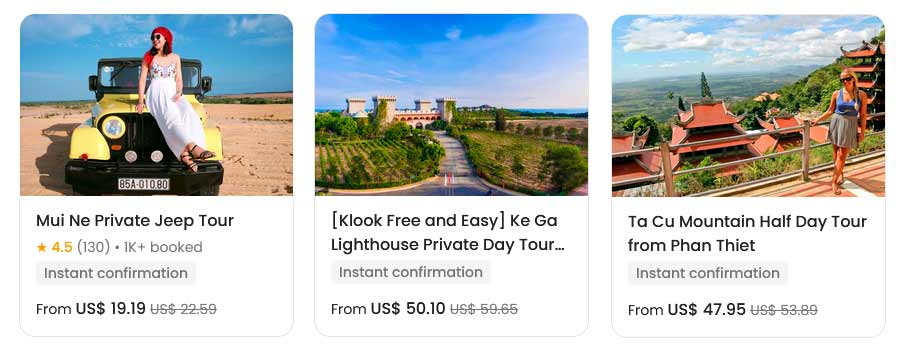
Khe Ga Lighthouse and Ta Cu Mountain are excellent day trips with scenic views and cultural landmarks.
Where can you travel from Mui Ne?
Popular routes include Ho Chi Minh City, Quy Nhon, and Phu Quy Island.
Which floating markets are worth visiting?
The most popular are Cai Rang, Cai Be, and Phong Dien. Read more in Best Floating Markets in Vietnam.
Which islands are the best to visit in Vietnam?
Popular islands include Phu Quoc, Con Dao, Cat Ba, and others featured in Best Islands in Vietnam.
How can you travel solo in Vietnam?
Solo travel in Vietnam is easy thanks to affordable transport, good tourist infrastructure, and welcoming locals.
BOOK a TOUR / ACTIVITY in Mui Ne ➜

Da Lat – Travel Guide|Nha Trang – Travel Guide|Quy Nhon – Travel Guide|Hoi An – Travel Guide|Da Nang – Travel Guide|Hue – Travel Guide