

ℹ️ Information – Quy Nhon
✈️ How to get to Quy Nhon
☀️ Weather in Quy Nhon
🏡 Where to stay in Quy Nhon
🔍 Sightseeing in Quy Nhon
❓ FAQ + Travel Tips + Info
🎫 Book a Tour in Quy Nhon
🎫 Book Ticket to Quy Nhon
Quick answer: Quy Nhơn is a charming, underrated coastal city in central Vietnam, known for its calm beaches, dramatic cliffs, and rich Cham history. It’s a relaxed destination where you can combine beach time, cultural landmarks, and local seafood — ideal for travelers wanting to explore off the beaten path.
At a glance:
- 🏖️ Beaches: Relax at Ky Co Beach or Bai Xép, both peaceful and scenic.
- 🌊 Cliff Views: Hike or drive to Eo Gió for stunning rocky coastlines.
- 📜 Cham Heritage: Visit ancient towers like Tháp Đôi and Banh It.
- 🏞️ Fishing Villages: Explore Nhon Hải or Bai Xép for local life and seafood.
- ⛴️ Island Snorkeling: Take a boat to Hon Kho for coral reefs and clear water.
- 🍤 Food: Enjoy fresh seafood and local specialties like fish noodle soup.
- ✈️ Getting There: Fly into Phu Cat Airport or use the nearby train station.
- 🕰️ Best Time to Visit: December–April offers good weather and calm seas.
Last updated in November 2025
Location and Geography of Quy Nhon:
-
- Quy Nhon is a coastal city situated in the Binh Dinh province of central Vietnam. The city is located on the south-central coast of Vietnam, approximately 320 kilometers (200 miles) south of Da Nang city and 230 kilometers (143 miles) north of Nha Trang city.
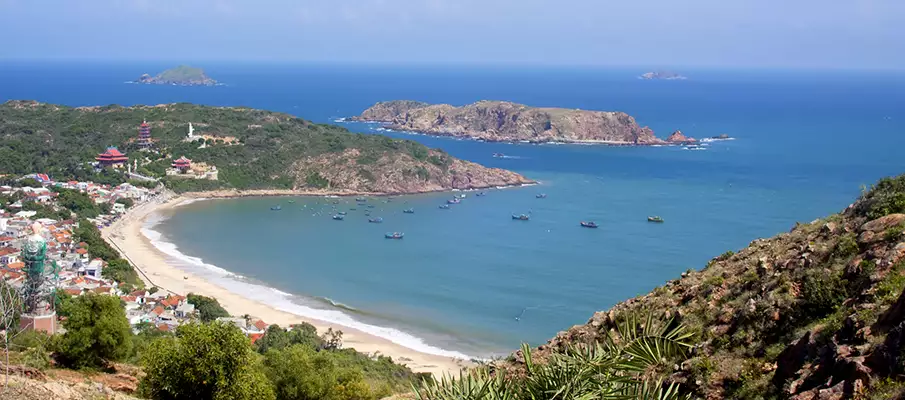
- Quy Nhon is surrounded by a beautiful natural landscape that includes mountains, beaches, and islands. The city is situated on a small peninsula that extends out into the South China Sea, with the Thi Nai Lagoon to the north and the Nhon Ly Island to the south. The city has a tropical monsoon climate, with hot and humid summers and mild winters. The average temperature ranges from 24°C (75°F) to 28°C (82°F) throughout the year, with the rainy season occurring from September to December.
- Quy Nhon is known for its beautiful beaches, which are characterized by their turquoise waters and soft white sand. Some of the most popular beaches in Quy Nhon include Bai Xep, Ghenh Rang, and Queen. The city is also home to the Quy Nhon Port, which serves as an important transportation hub for the region.
Quy Nhon: A City with a Storied Past and a Vibrant Future:
-
- Quy Nhon has a rich and fascinating history that spans over two thousand years. The area was originally inhabited by the Cham people, an ancient civilization that flourished in central and southern Vietnam from the 2nd to the 17th century. The Cham people built a number of temples and other structures in the region, including the Thap Doi Cham Towers, which are still standing today.
- In the 17th century, the Vietnamese took control of the region and established a port in Quy Nhon, which became an important center for trade and commerce. During the French colonial period, Quy Nhon continued to grow as a major trading hub, exporting goods such as rice, pepper, and cotton. In the 20th century, Quy Nhon played a significant role in the Vietnam War. The city was an important military base for the South Vietnamese and American forces, and was heavily bombed during the conflict. Today, visitors can still see the scars of war in the form of bomb craters and damaged buildings.
- After the war ended, Quy Nhon began to rebuild and develop its economy. The city has since become a major center for tourism, attracting visitors from around the world with its stunning beaches, rich culture, and delicious cuisine. In recent years, Quy Nhon has undergone significant urban development, with new hotels, resorts, and infrastructure projects transforming the city into a modern and vibrant destination. Despite these changes, however, Quy Nhon remains deeply connected to its history and heritage, and continues to honor its past while embracing its future.

Exploring the Cultural Heritage of Quy Nhon:
-
- Quy Nhon is a city with a rich cultural heritage that reflects its long and fascinating history. The city has been influenced by various cultures and civilizations throughout the centuries, including the Cham, Vietnamese, and French.
- One of the most significant cultural heritage sites in Quy Nhon is the Thap Doi Cham Towers, a group of ancient Cham temples that date back to the 11th century. These temples are known for their beautiful architecture, intricate carvings, and historical significance.
- Quy Nhon is also home to a number of museums and cultural centers, including the Quy Nhon Museum, which showcases the city’s history and culture through a collection of artifacts and exhibits. Another important aspect of Quy Nhon’s cultural heritage is its cuisine. The city is famous for its delicious seafood, including grilled squid, shrimp, and fish. Other popular dishes include banh xeo (Vietnamese pancakes) and nem lui (lemongrass skewers).
- In addition, Quy Nhon is known for its traditional handicrafts, such as pottery, weaving, and woodcarving. Visitors can explore local markets and workshops to see these crafts being made by skilled artisans.
BOOK a TOUR / ACTIVITY in Quy Nhon ➜


Quy Nhon’s Growing Tourism Industry:
-
- Quy Nhon has emerged as a popular tourist destination in Vietnam in recent years, thanks to its stunning beaches, rich cultural heritage, and peaceful atmosphere. The city offers a range of attractions and activities that appeal to travelers of all ages and interests.
- One of the main draws of Quy Nhon is its beautiful beaches. The city is home to several pristine stretches of sand, including Bai Xep, Ghenh Rang, and Queen, which offer opportunities for swimming, sunbathing, beach relax, fun and water sports.
- For those interested in outdoor activities, Quy Nhon offers opportunities for hiking, biking, and exploring the surrounding natural landscape. The Eo Gio Pass, located just outside the city, offers stunning views of the coastline and is a popular spot for hiking and photography.
- In recent years, Quy Nhon has also developed a reputation as a wellness destination, with a number of resorts and spas offering yoga, meditation, and other wellness activities. Overall, Quy Nhon’s tourism industry has been growing rapidly, with new hotels, restaurants, and attractions opening up to meet the demands of visitors from around the world. Despite this growth, however, the city has managed to maintain its laid-back and authentic charm, making it a must-visit destination for anyone traveling to Vietnam.
Book your Accommodation in Quy Nhon ➜

Explore the Ky Co Beach and Eo Gio Cape in Quy Nhon:
-
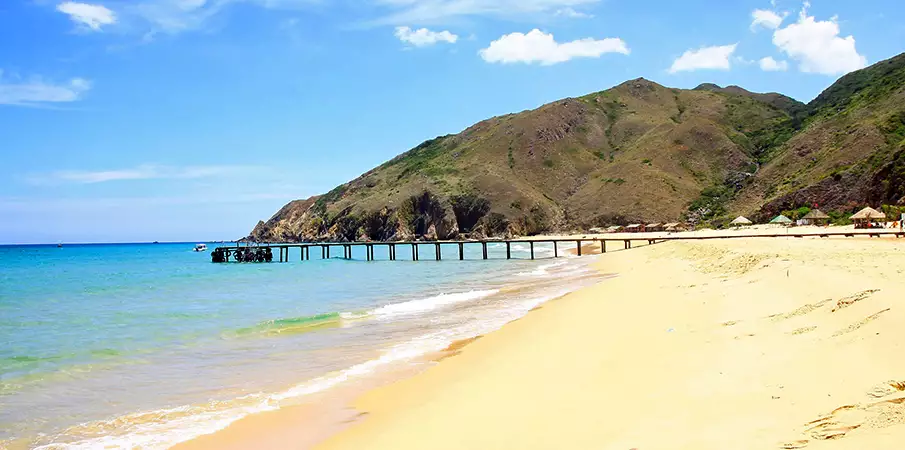
- Ky Co Beach and Eo Gio Cape are two popular tourist attractions located near Quy Nhon, a coastal city in central Vietnam. Ky Co Beach is a secluded and picturesque stretch of sand surrounded by towering cliffs and crystal-clear waters. It is located on the eastern side of Quy Nhon, on the southern tip of the Thi Nai peninsula. Visitors can reach the beach by taking a boat ride from the nearby fishing village of Xuan Hai.
- Eo Gio Cape, on the other hand, is a scenic coastal road that offers stunning views of the sea and surrounding landscape. It is located just a few kilometers from Quy Nhon and is a popular spot for hiking and photography. Both Ky Co Beach and Eo Gio Cape are known for their natural beauty and serene atmosphere, and are popular destinations for visitors looking to explore the stunning coastline of central Vietnam. You can travel to this site by private taxi or teoretically you can rent a scooter or motorbike.
Vung Chua Mountain: A Spiritual and Scenic Gem in Quy Nhon:
Nestled near the enchanting city of Quy Nhơn, Vung Chua Mountain (Núi Vũng Chua), also known as Vung Chua-Yen Island, is a remarkable destination offering a rich tapestry of experiences. This captivating site seamlessly blends spiritual significance, natural beauty, history, and culture.
-
- At the core of Vung Chua Mountain lies a sacred shrine dedicated to Han Mac Tu, a celebrated Vietnamese scholar and poet. This spiritual haven attracts pilgrims and visitors, who come to soak in the profound aura and breathtaking views of the surrounding landscape.
- The mountain’s lush greenery and panoramic vistas of the South China Sea create a picturesque setting that beckons nature enthusiasts and photographers. Vung Chua Mountain stands as a testament to the captivating beauty of the Vietnamese coastline.
- This mountain carries the weight of history as a former naval base during the Vietnam War. Visitors can explore remnants of this period, such as bunkers and tunnels, offering a unique glimpse into the region’s past.
- Ascending to the summit rewards hikers and outdoor enthusiasts with sweeping vistas of Quy Nhơn city, the pristine coastline, and nearby islands. It’s an adventure that combines natural beauty and historical intrigue.

Nhơn Hải district: Discover Quy Nhơn’s Hidden Gem:
-
- Nhơn Hải, a charming coastal district nestled within the city of Quy Nhơn in Bình Định Province, Vietnam, offers an idyllic escape for travelers seeking the perfect blend of traditional coastal life and natural beauty.
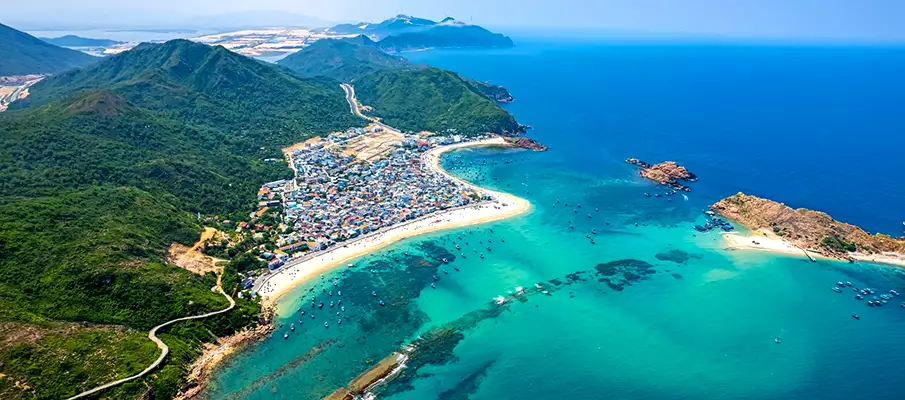
- Located in the southeastern part of Quy Nhơn, Nhơn Hải is renowned for its vibrant fishing village, where local livelihoods revolve around the abundant seafood from the South China Sea. The district’s picturesque landscape, with sandy beaches, lush coconut groves, and rolling hills, has started to capture the attention of tourists looking for a quieter alternative to the city center.
- Nhơn Hải also plays a significant role in aquaculture, with many farms cultivating fish, shrimp, and crabs in its brackish water lagoons and ponds. It’s a place where you can immerse yourself in local culture, witnessing the daily routines of fishermen and savoring the freshest seafood at local eateries.
- For those seeking adventure, Nhơn Hải serves as a gateway to nearby islands such as Cu Lao Xanh and Cu Lao Cham, offering pristine beaches and excellent opportunities for snorkeling and scuba diving.
Explore the Beauty of Quy Nhon´s beaches:
Quy Nhon, a coastal city in central Vietnam, is home to several stunning beaches, each with its own unique charm and attractions. Here is a list of some of the most popular beaches in Quy Nhon:
-
- Bai Xep Beach: Located about 13 kilometers south of Quy Nhon, Bai Xep is a picturesque and secluded beach surrounded by lush green hills. The beach is known for its calm and clear waters, making it a popular spot for swimming and snorkeling.
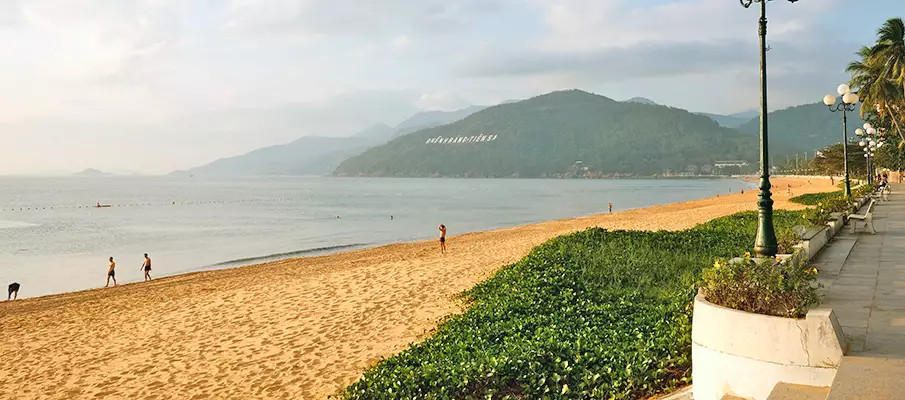
- Quy Nhon Beach: Also known as Bai Dai Beach, is a popular urban beach located in the heart of Quy Nhon city, in central Vietnam. It is a long and wide stretch of golden sand that extends for several kilometers along the city’s coast, with clear blue waters that are ideal for swimming and water sports.
- Ghenh Rang Beach: This beautiful beach is located on a hillside just outside of Quy Nhon and offers stunning views of the surrounding landscape. Visitors can enjoy swimming, sunbathing, and exploring the nearby caves and temples.
- Queen Beach: As its name suggests, this beach is fit for royalty, with its clear blue waters and white sand. The beach is located near the city center and is a popular spot for swimming and sunbathing.
- Ky Co Beach: This secluded and picturesque beach is located on the southern tip of the Thi Nai peninsula and is known for its crystal-clear waters and towering cliffs. Visitors can enjoy swimming, snorkeling, and hiking to nearby hills for panoramic views.
- Quy Hoa Beach: This long and wide beach is located just north of Quy Nhon and is known for its golden sand and calm waters. Visitors can enjoy swimming, sunbathing, and taking a stroll along the beach.
All of these beaches offer a range of activities, from water sports and snorkeling to hiking and exploring nearby attractions. Visitors to Quy Nhon will have plenty of options for enjoying the beautiful coastline and stunning natural landscape of this charming city.
BOOK a TOUR / ACTIVITY in Quy Nhon ➜

ExploraScience Quy Nhon: Unveiling the Wonders of Science.
Vietnam’s coastal city of Quy Nhon has long been known for its pristine beaches, stunning landscapes, and rich cultural heritage. But now, it’s gaining recognition for something else – the remarkable world of science brought to life at ExploraScience Quy Nhon. ExploraScience Quy Nhon is not your typical science museum. It’s a vibrant, interactive space where curiosity knows no bounds, and visitors of all ages can embark on a thrilling journey of discovery. This innovative science center, which opened its doors in 2022, is a testament to Vietnam’s commitment to education, scientific exploration, and public engagement.
-
- Immersive Exhibits: The heart of ExploraScience Quy Nhon lies in its captivating exhibits. From the mysteries of the cosmos to the wonders of the natural world, the center offers a range of hands-on displays that make science accessible and enjoyable. Whether you’re interested in physics, biology, astronomy, or chemistry, there’s something here to pique your curiosity. One of the most striking features is the “Ocean Odyssey” exhibit. Being in a coastal city, it’s no surprise that the ocean plays a central role in ExploraScience. Visitors can embark on a virtual journey to the depths of the sea, exploring marine life, coral reefs, and the impact of climate change on the ocean’s ecosystems. This immersive experience fosters awareness and respect for the environment.
- STEM Education: ExploraScience Quy Nhon doesn’t stop at entertaining visitors; it also has a strong educational mission. The center hosts educational programs and workshops that cater to school groups, families, and even adults looking to expand their knowledge. These programs inspire the next generation of scientists and engineers, emphasizing the importance of science, technology, engineering, and mathematics (STEM) fields.
- A Hub for Innovation: Beyond its exhibits and educational programs, ExploraScience Quy Nhon serves as a hub for innovation and research. Collaborations with local universities, scientists, and researchers have resulted in cutting-edge experiments and exhibits that delve into emerging scientific fields, ensuring that the center remains at the forefront of science communication.

Why to visit or not to visit Quy Nhon?
If you are traveling to southern Vietna, it is really a good idea to visit this site for e.g. 3 days. Here are some reasons why you may want to consider visiting Quy Nhon, as well as some reasons why you might want to skip it:
👉 Reasons to visit Quy Nhon:
-
- Beautiful beaches: Quy Nhon is home to several beautiful beaches, including the Bai Xep, Ghenh Rang, and Ky Co beaches. These beaches offer clear waters, soft sand, and stunning views, making them perfect for swimming, sunbathing, and water sports.
- Delicious seafood: Quy Nhon is known for its fresh seafood, which can be enjoyed at local restaurants and markets. Some popular seafood dishes in Quy Nhon include grilled squid, fish cakes, and fish noodles.
- Historical attractions: Quy Nhon has a rich history and several historical sites, including the Quy Nhon City Museum, the Binh Dinh Museum, and the Tay Son Museum. Additionally, the city has several temples and pagodas that reflect its cultural heritage.
- Natural attractions: Quy Nhon is surrounded by beautiful natural scenery, including the Phuong Mai Peninsula, the Thi Nai Lagoon, and the Eo Gio cliff. These areas offer opportunities for hiking, exploring caves, and admiring stunning views of the coastline and countryside.
👉 Reasons not to visit Quy Nhon:
-
- Limited tourist infrastructure: Quy Nhon is still a relatively undiscovered destination, so the tourist infrastructure is not as developed as in some other cities in Vietnam. This may be a concern for some travelers who are looking for more amenities and services. But it is already changing slowly.
- Language barrier: English is not widely spoken in Quy Nhon, so communication with locals may be difficult for travelers who do not speak Vietnamese.
- Limited nightlife: Quy Nhon does not have a lively nightlife scene, so travelers who are looking for entertainment after dark may be disappointed.
- Weather: Quy Nhon can be quite hot and humid, especially during the summer months. Additionally, the city can be prone to typhoons and heavy rain during the rainy season, which runs from September to December.
Overall, Quy Nhon can be a great destination for travelers who are interested in beautiful beaches, fresh seafood, and historical and natural attractions. However, those who are looking for a more developed tourist infrastructure or a lively nightlife scene may want to consider other destinations in Vietnam.
Exploring the Local Food and Cuisine in Quy Nhon:
The cuisine in Quy Nhon, a coastal city in central Vietnam, is known for its fresh seafood and unique flavors. Here are some of the most popular dishes and specialties in Quy Nhon:
-
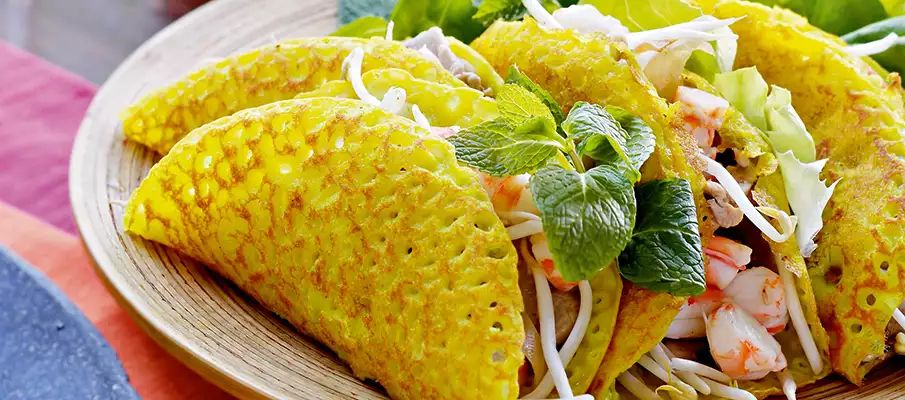
- Banh Xeo: This is a crispy Vietnamese pancake made with rice flour, turmeric, coconut milk, and stuffed with shrimp, pork, and bean sprouts.
- Bun Cha Ca: A noodle soup with fish cakes, often made with mackerel, and served with fresh herbs and vegetables.
- Banh Canh: A thick and chewy noodle soup made with tapioca flour, served with various meats or seafood.
- Cha Ca: A grilled or fried fish dish served with rice noodles, fresh herbs, and peanuts. Nem Chua: A fermented pork roll made with garlic, chili, and rice, often served as a snack or appetizer.
- Oc Huong: A type of sea snail that is popular in Quy Nhon and served with chili and lemongrass.
- Ca Phe Sua Da: A traditional Vietnamese iced coffee served with sweetened condensed milk. In addition to these dishes, Quy Nhon is also known for its fresh seafood, including crabs, squid, and clams, which can be found at the city’s many seafood restaurants and markets. Overall, the cuisine in Quy Nhon is a must-try for food lovers, with its unique flavors and fresh ingredients that showcase the best of Vietnam’s culinary traditions.
Book your Accommodation in Quy Nhon ➜
✈️ How to get and travel to Quy Nhon?
Quy Nhon is accessible by land and also by airplane to Phu Cat Airport. There are also trains to Dieu Tri Station or Quy Nhon Station, most of these trains arrive to Dieu Tri. There are also tourist buses from central or southern Vietnam, so the transportation to Quy Nhon is easy.
-
- By Plane: The easiest and quickest way to get to Quy Nhon is by flying into Phu Cat Airport, which is located about 30 minutes from the city center. There are several daily flights from major cities in Vietnam such as Hanoi, Ho Chi Minh City, and Danang. Flight is the most comfortable and fast option of transfer to Quy Nhon.
-
- By Train: Quy Nhon is also accessible by train, with daily services from Hanoi, Ho Chi Minh City, and other major cities in Vietnam. The Dieu Tri train station is located about 10 minutes from the city center, and you can take a taxi or motorbike taxi to get to your hotel.
-
- By Bus: Another option is to take a bus to Quy Nhon, with frequent services from cities such as Hanoi, Ho Chi Minh City, Da Nang or Nha Trang. The bus station is located in the city center, and you can easily take a taxi or motorbike taxi to your accommodation.
- You can book and buy tickets / flights to Quy Nhon on Baolau ➜ or 12go.asia ➜.

☀️ Weather in Quy Nhon + The best time to visit:
-
- Quy Nhon has a tropical monsoon climate, which is characterized by high temperatures, humidity, and distinct wet and dry seasons. ➜ Current weather in Quy Nhon.
- The dry season in Quy Nhon runs from January to August, with the driest months being February, March, and April. During this time, the weather is generally sunny and dry, with warm temperatures ranging from 22°C to 34°C. The sea is also calmer during this period, making it ideal for water-based activities such as swimming, surfing, and snorkeling.
- The wet season in Quy Nhon runs from September to December, with the heaviest rainfall occurring in October and November. During this period, the weather is generally more humid, and there is a higher chance of typhoons and storms. However, the countryside is lush and green, and the rainforests are at their most vibrant, making it a beautiful time to visit for nature lovers.
- Overall, Quy Nhon has a warm and humid climate throughout the year, which makes it a great destination for beach-goers and outdoor enthusiasts. The dry season from January to August is the best time to visit Quy Nhon, but even during the wet season, there are still plenty of activities and attractions to enjoy.
| Month | Season | Description |
|---|---|---|
| January | Dry Season | Sunny and dry weather makes January ideal for beaches and sightseeing. |
| February | Dry Season | Warm, dry conditions are perfect for island trips and outdoor activities. |
| March | Dry Season | Mostly sunny weather offers excellent conditions for beaches and water sports. |
| April | Dry Season | Hot, dry weather is ideal for swimming, snorkeling, and coastal exploration. |
| May | Transition Season | Temperatures rise while occasional tropical showers begin to appear. |
| June | Dry Season | Hot weather continues with plenty of sunshine and only occasional rainfall. |
| July | Dry Season | Warm, sunny days are excellent for beaches and exploring the coastline. |
| August | Dry Season | Mostly dry weather continues, with calm seas and sunny beach days. |
| September | Transition Season | Rainfall gradually increases, but many sunny days remain for sightseeing. |
| October | Rainy Season | Heavy rainfall becomes more frequent, with occasional storms and rough seas. |
| November | Rainy Season | This is typically the wettest month, with frequent rain and strong winds. |
| December | Transition Season | Rainfall decreases while sunny, pleasant weather gradually returns. |
🏡 Where to accommodate in Quy Nhon:
Quy Nhon has a variety of accommodation options to suit different budgets and preferences. Luxury hotels and resorts typically offer more high-end amenities such as private villas, butler service, and exclusive beach access. Budget-friendly accommodations such as guesthouses and homestays may offer fewer amenities but are a great way to experience local hospitality and culture at an affordable price. Here are some popular choices:
-
- Luxury hotels and resorts – For those looking for a more luxurious stay, Quy Nhon has several five-star hotels and resorts such as the Anantara Quy Nhon Villas, AVANI Quy Nhon Resort & Spa, and FLC Luxury Resort Quy Nhon.
- Mid-range hotels and guesthouses – There are also many mid-range hotels and guesthouses in Quy Nhon, such as the Seagull Hotel, Saigon Quy Nhon Hotel, and Life’s A Beach Guesthouse. These options offer comfortable and affordable accommodation.
- Budget accommodation – For budget-conscious travelers, Quy Nhon has several budget guesthouses and homestays such as Blossom Sea Homestay Quy Nhon, Quy Nhon center hotel, BED STATION HOSTEL QUY NHON. These options are a great way to experience local hospitality and culture.
➜ Accommodation in Quy Nhon – Book Here

🔍 Interesting Places + Activities in Quy Nhon:
- Quy Nhon Beach: Relax on the city’s main sandy beach with calm water and scenic coastal views.
- Bai Xep Beach: Enjoy a peaceful beach surrounded by green hills, perfect for swimming and snorkeling.
- Ky Co Beach: Visit one of Vietnam’s most beautiful beaches with crystal-clear water and white sand.
- Ghenh Rang Tien Sa: Admire panoramic coastal views, rocky cliffs, beaches, and historical landmarks.
- Thap Doi Twin Towers: Explore impressive Cham towers dating back to the ancient Champa Kingdom.
- Eo Gio: Walk along dramatic cliffs with spectacular ocean views and excellent photo opportunities.
- Binh Dinh Museum: Discover local history, Cham artifacts, and the heritage of Binh Dinh Province.
- ExploraScience Quy Nhon: Visit Vietnam’s first interactive science center with astronomy and educational exhibits.
- Trung Luong Picnic Area: Relax by the coast while enjoying local seafood and scenic ocean views.
- Queen’s Beach: Swim and relax on a peaceful beach famous for its unique rounded stones.
- Banana Island: Enjoy snorkeling, fishing, island tours, and clear tropical waters.
- Hoang Hau Beach: Escape the crowds at this quiet beach with calm water and rocky scenery.
- Long Khanh Pagoda: Visit one of Quy Nhon’s oldest Buddhist temples with beautiful traditional architecture.
- Banh It Towers: Explore well-preserved Cham towers overlooking the surrounding countryside.
- Cham’s Well: Discover a historic Cham site connected to the region’s ancient civilization.
- Ham Ho Waterfall: Enjoy hiking, boat rides, and swimming in a scenic natural setting.
- Nhon Hai Beach: Relax on a quiet beach near a traditional fishing village with clear water.
- Tuyệt Tình Cốc: Admire dramatic cliffs, turquoise water, and impressive coastal rock formations.
- Ba Hoa Peak: Hike to panoramic viewpoints overlooking Quy Nhon and the surrounding coastline.
❓ Frequently Asked Questions + Tips for Quy Nhon:
How to book tickets or flights to Quy Nhon?
You can book buses, trains, flights, and private transfers to Quy Nhon via Baolau ➜ or 12go.asia ➜.
What is the best time to visit Quy Nhon?
The best time to visit Quy Nhon is from January to August, when the weather is mostly sunny and dry.
What are the best things to do in Quy Nhon?
Visit Ky Co Beach, Eo Gio, Long Khanh Pagoda, Binh Dinh Museum, and enjoy kayaking or paddleboarding.
What local food should you try in Quy Nhon?
Try fresh seafood, banh xeo, and the regional specialty banh hoi chao long.
Where should you stay in Quy Nhon?
Choose from beachfront resorts, boutique hotels, homestays, or budget guesthouses. Book accommodation in Quy Nhon online.
How can you get around Quy Nhon?
Taxis, rental scooters, and bicycles are the easiest ways to explore Quy Nhon.
Is Quy Nhon safe for tourists?
Yes. Quy Nhon is considered one of Vietnam’s safest coastal destinations, but standard travel precautions are recommended.
What should you pack for Quy Nhon?
Pack lightweight clothing, sunscreen, a hat, insect repellent, and swimwear. See this Vietnam packing guide.
Is it safe to swim at Quy Nhon’s beaches?
Yes, but always check sea conditions, avoid rough waves, and follow local safety warnings.
How do you visit the nearby islands?
Take a boat from nearby fishing villages or join an island-hopping tour to Hon Kho and surrounding islands.
What is the most popular beach in Quy Nhon?
Bai Xep Beach is the area’s best-known beach, famous for soft sand and clear water.
How do you get to Quy Nhon?
Direct flights from Hanoi and Ho Chi Minh City arrive at Phu Cat Airport, about 30 km away.
Which islands are the best to visit in Vietnam?
Popular choices include Phu Quoc and other destinations featured in Best Islands in Vietnam.
How can you travel solo in Vietnam?
Solo travel in Vietnam is affordable, easy to organize, and ideal for independent travelers.
BOOK a TOUR / ACTIVITY in Quy Nhon ➜



Hoi An – Travel Guide|Da Nang – Travel Guide|Hue – Travel Guide|Phong Nha – Ke Bang|Thanh Hoa – Travel Guide|Krabi to Koh Jum|Waterfalls