ℹ️ What You Can Expect
⚠️ Prepare for Trekking
🌲 Favorite Sites of Vietnam
📍 Maps – Reserves + Parks
❓ FAQ + Travel Tips + Info
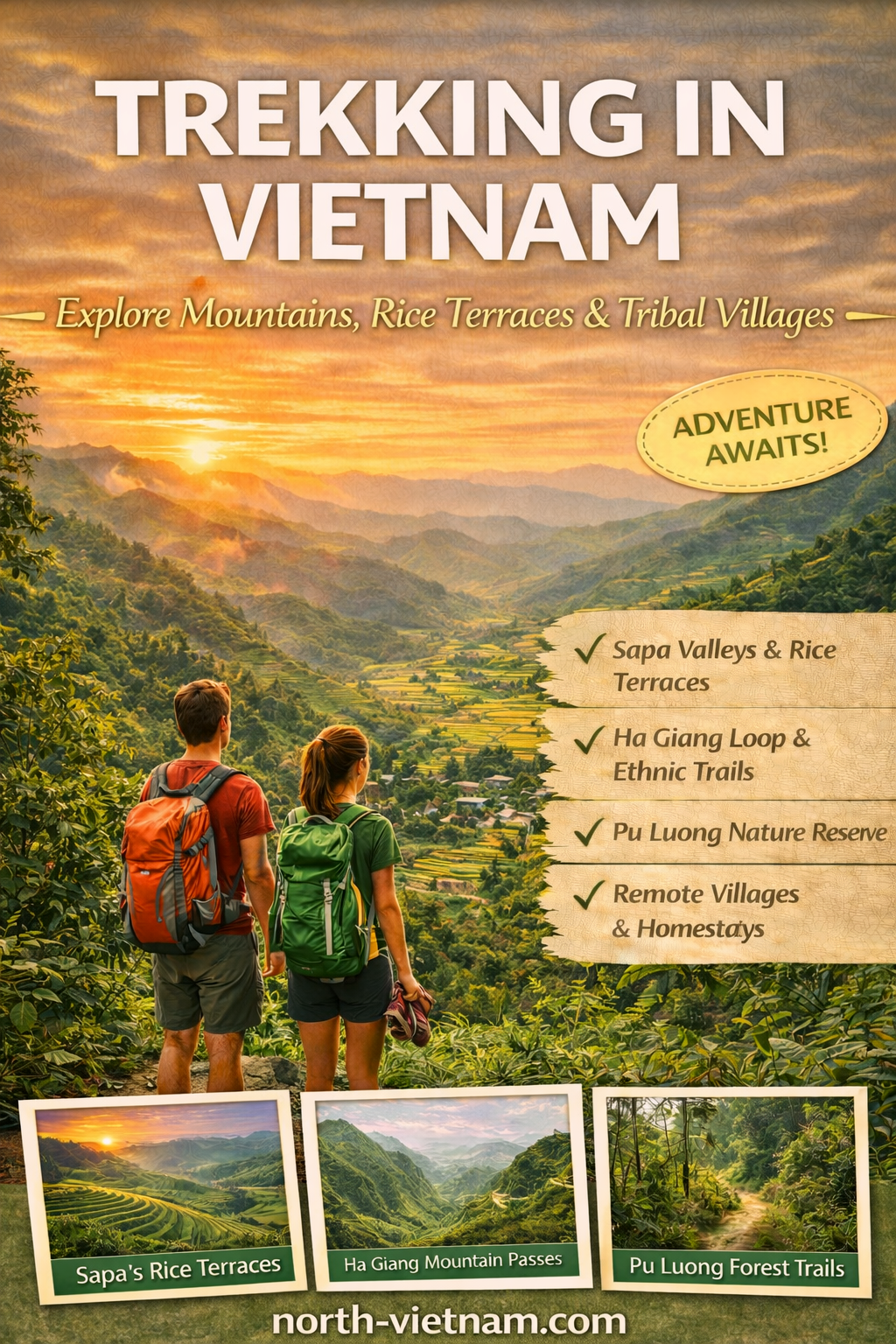
Quick answer: Trekking in Vietnam is one of the best outdoor experiences in Southeast Asia, especially in the north. Expect mountain landscapes, rice terraces, ethnic-minority villages, and scenic national parks. Popular trekking areas include Sapa, Ha Giang, and Pu Luong, with routes ranging from short hikes to multi-day treks with homestays.
Key trekking information:
- 🌄 Top regions: Sapa, Ha Giang, Pu Luong, Ba Be and other areas offer diverse terrain, from rice terraces to limestone mountains.
- 👣 Trek options: Easy day hikes, guided walks, and multi-day trekking routes with overnight stays.
- 🏡 Accommodation: Local homestays in ethnic villages or eco-lodges in nature.
- 🌍 Responsible trekking: Choose local guides and small groups to support communities and protect nature.
- 🛠️ What to bring: Good hiking shoes, a backpack, water, and basic travel gear.
Last updated: March 2026
Mountains and National parks of northern Vietnam are suitable for trekking.
Beautiful sceneries – mountains, rivers, hills, caves, waterfalls, villages and ethnic minorities, nature. Almost everything you will see when you go into the some of favorite areas for trekking in northern Vietnam. Northern Vietnam has also 2 geoparks: Dong Van Karst Global Geopark and Non Nuoc Cao Bang Geopark written in UNESCO. Below this article you will find maps of the national parks in northern and southern Vietnam.
The area with the most beautiful treks is located near the Chinese border in the north (Sapa, Ha Giang, Cao Bang).
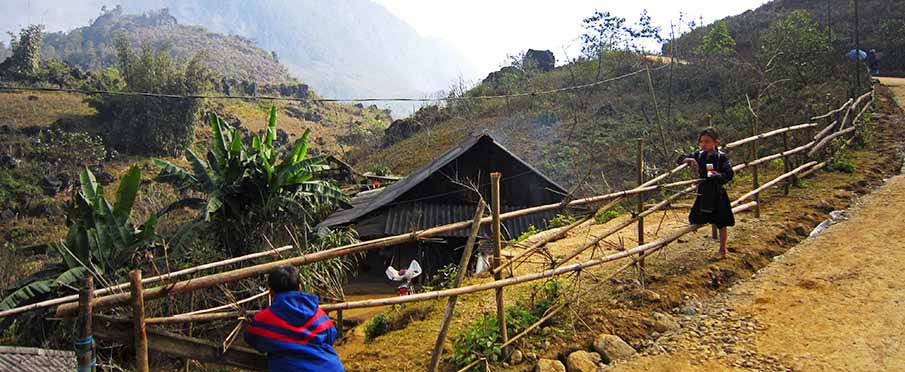
In northern Vietnam, you can trek almost everywhere where are a mountains. When you want to go on the difficult trails, it is recommended to hire a local guide.
The Best weather for trekking is in the months from October to March (dry season).
However, be aware that the weather can change rapidly in these months anywhere (hot, rain, sometimes the snow in the mountains).
🥾 How to Prepare for Trekking in Vietnam?
Planning a trekking trip in Vietnam requires good preparation, especially if you visit mountain regions like Sapa, Ha Giang, Cao Bang, or Pu Luong. These practical trekking tips will help you stay safe, comfortable, and ready for hiking in northern Vietnam.
1. Choose the Right Trek
Research trekking areas in Vietnam based on difficulty, weather, and trail conditions. Popular regions include Sapa, Ha Giang, and Pu Luong.
2. Plan Your Route
Create a realistic travel itinerary with trekking routes, overnight stops, and transport options.
3. Pack Essential Gear
Bring hiking shoes, lightweight clothes, rain jacket, sunscreen, water bottle, and basic trekking gear. More tips: What to pack for Vietnam.
4. Check Vaccinations
Before traveling, review recommended vaccinations for Vietnam and carry basic medicines.
5. Improve Your Fitness
Trekking in Vietnam can be physically demanding. Hiking, cycling, or jogging before your trip helps improve stamina.
6. Prepare for Altitude
If trekking in mountain areas like Sapa, take time to acclimatize and stay hydrated to avoid altitude sickness.
7. Learn Basic Vietnamese
Simple Vietnamese phrases can help when communicating with local people in remote trekking villages.
8. Check Permits
Some trekking routes and national parks in Vietnam require permits or local guides, especially near border areas.
9. Arrange Transport & Hotels
Book your transportation in Vietnam and accommodation before trekking, mainly during high season.
Tip: Always respect local customs, nature, and ethnic minority communities while trekking in Vietnam.

What to take on treks into the mountains and parks in Vietnam?
When trekking into the mountains and parks in Vietnam, it’s important to pack the right gear and essentials to ensure your comfort, safety, and enjoyment. Here’s a list of items to take on a trekking trip in Vietnam:
| What to take on treks in Vietnam: | |
|---|---|
| Backpack | A sturdy and comfortable backpack to carry all your belongings. |
| Hiking boots | Waterproof and durable hiking boots with good ankle support. |
| Clothing | Lightweight, moisture-wicking, and quick-drying clothing suitable for layering, including long-sleeved shirts, T-shirts, pants, shorts, and thermal layers for colder regions. |
| Rain jacket | A waterproof and breathable rain jacket or poncho to protect you from unexpected rain showers. |
| Hat and sunglasses | A wide-brimmed hat or cap to shield you from the sun, and sunglasses to protect your eyes. |
| Sunscreen | A high SPF sunscreen to protect your skin from harmful UV rays. |
| Insect repellent | An effective insect repellent to ward off mosquitoes and other insects. |
| First aid kit | A basic first aid kit containing adhesive bandages, antiseptic ointment, pain relievers, blister pads, and any necessary personal medications. |
| Headlamp / Flashlight | A headlamp or flashlight with extra batteries for navigating in low-light conditions or during nighttime. |
| Water bottle | A reusable water bottle to stay hydrated throughout the trek. Consider using a water filter or purifier if necessary. |
| Snacks and food | Carry lightweight and high-energy snacks such as trail mix, energy bars, and dried fruits. Additionally, pack sufficient food supplies for longer treks or remote areas. |
| Cooking equipment (if needed) | If you plan on cooking your meals, carry a lightweight camping stove, cookware, and utensils. |
| Sleeping bag and sleeping pad | A lightweight and compact sleeping bag suitable for the expected temperature range, and a sleeping pad for added comfort during overnight stays. |
| Navigation tools | A map, compass, or GPS device to help you navigate through the trails. |
| Trekking poles | Optional but helpful for stability and reducing stress on your knees, especially during challenging terrain or steep descents. |
| Personal hygiene items | Include items such as toilet paper, wet wipes, hand sanitizer, and a small towel. |
| Cash and identification | Carry some cash in small denominations for emergencies, along with identification documents. |
| Portable charger | A portable charger or power bank to keep your electronic devices charged. |
| Camera or smartphone | Capture your trekking memories with a camera or smartphone. |
| Trash bags | Help keep the trails clean by carrying and properly disposing of your trash. |
Best Trekking Areas and National Parks in Northern Vietnam
1. Sapa
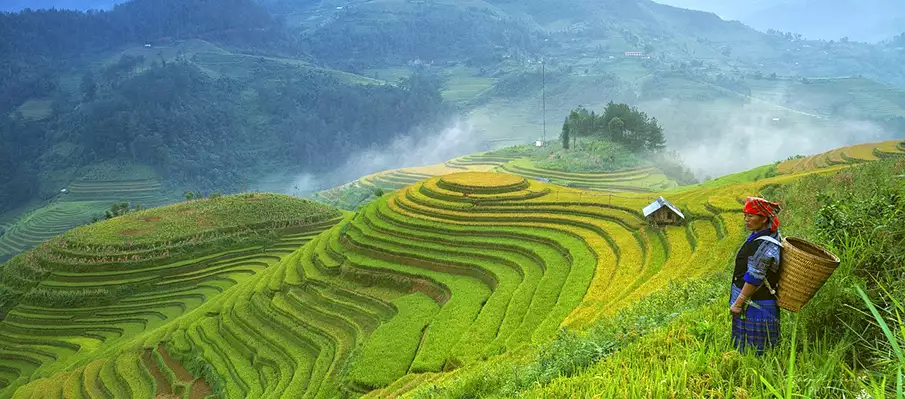
- Sapa is one of the best places for trekking in Northern Vietnam, known for rice terraces and mountain scenery.
- Located at 1,600 m with a cool climate and changing weather conditions.
- Starting point for trekking to Fansipan (3,143 m), the highest mountain in Vietnam.
- Home to ethnic groups such as Hmong, Red Dao, Tay, and Giay.
- Explore Muong Hoa Valley and scenic village routes.
- Suitable for day hikes and multi-day trekking with homestays.
- Visit also nearby Tram Ton Pass (1,900 m).
- Read more about homestays and villages in the Sapa area.
💡 Travel tip: Stay overnight in a local homestay to experience ethnic village life and sunrise over the rice terraces.
How to travel from Hanoi to Sapa? ➜
Book your hotel / homestay in Sapa ➜

2. Hoang Lien National Park
- Hoang Lien National Park is located about 15 km from Sapa and is one of the most important protected areas in Northern Vietnam.
- Home to Fansipan (3,143 m), the highest mountain in Vietnam.
- Rich biodiversity with over 2,000 plant species and diverse wildlife.
- Ideal destination for trekking, hiking, and ecotourism.
- Mountain landscapes with forests, valleys, and ethnic minority villages.
- Local communities include Hmong and other ethnic groups.
- Best for trekking in dry season – trails can be muddy and difficult during heavy rains.
💡 Travel tip: Start trekking early in the morning to avoid clouds and enjoy panoramic views of the Hoang Lien mountain range.
3. Mai Chau
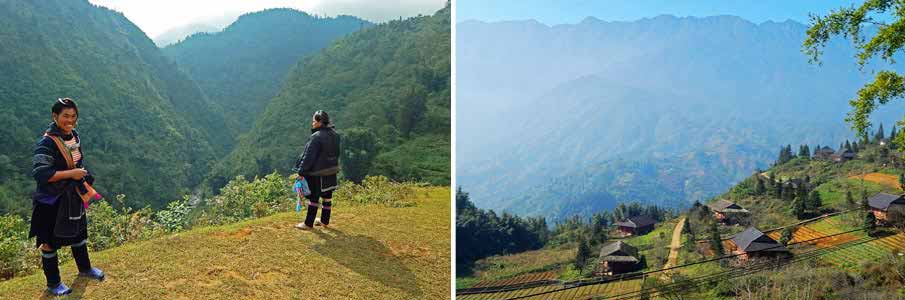
- Mai Chau is a peaceful valley in Northern Vietnam, ideal for easy trekking, cycling, and cultural travel.
- Offers a mix of lowlands, hills, and mountain trails suitable for beginners and relaxed trekking.
- Close to Pu Luong Nature Reserve, Pu Hu, and the scenic Hoa Binh Lake.
- Home to ethnic White and Black Thai communities with traditional stilt houses and local culture.
- Explore villages such as Van Lac, Van Mai, Pieng Ve, Hang Kia, and Dong Bang.
- Less touristy than Sapa, but with good accommodation and homestay options.
- Easy to combine with a trip to Moc Chau, known for tea plantations, flower fields, and orchards.
💡 Travel tip: Rent a bicycle or stay in a local homestay to explore villages and rice fields around Mai Chau.
How to travel from Hanoi to Mai Chau? ➜
Book your hotel / homestay in Mai Chau ➜
4. Pu Luong Nature Reserve
- Pu Luong Nature Reserve is one of the most beautiful trekking areas in Northern Vietnam, known for rice terraces, forests, and traditional villages.
- Located near Mai Chau, it offers easy access and peaceful surroundings away from mass tourism.
- Ideal for light trekking, cycling, and multi-day hiking routes.
- Rich biodiversity with rare wildlife and excellent opportunities for birdwatching.
- Home to ethnic White Thai communities with authentic village life and homestays.
- Best explored with a local guide to discover hidden trails and remote villages.
- Download a detailed map of Pu Luong Nature Reserve.
💡 Travel tip: Stay in a local homestay and explore small villages with scenic rice field trails.
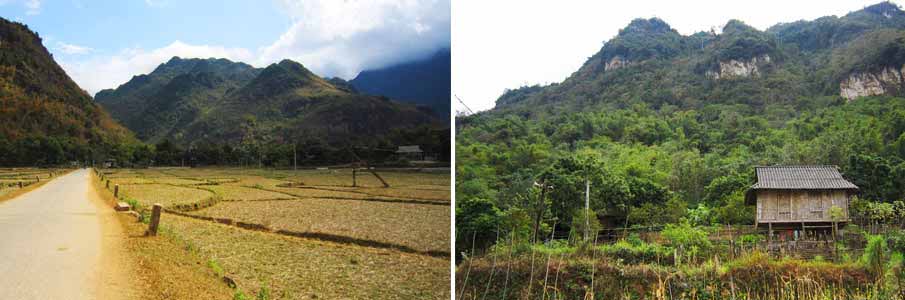
5. Ha Giang
- Ha Giang is one of the most spectacular regions in Northern Vietnam, famous for its dramatic mountain landscapes and remote scenery.
- The area is home to many ethnic minority groups, including Hmong, Tay, Dao, Nung, Lo Lo, Giay, and Pu Peo.
- Highlights include the Dong Van Karst Plateau Global Geopark, the scenic Ma Pi Leng Pass, and the town of Meo Vac.
- Known for the famous Ha Giang Loop, one of the best motorbike routes in Southeast Asia.
- Offers incredible trekking opportunities through mountain villages, valleys, and limestone formations.
- Less touristy than Sapa, but with more limited infrastructure and services.
- Located in the far north of Vietnam near the Chinese border, ideal for off-the-beaten-path travel.
- Best visited in dry season for clearer views and safer travel conditions.
💡 Travel tip: Ride the Ha Giang Loop slowly and stay overnight in local homestays along the route.
How to travel from Hanoi to Ha Giang? ➜
Book your hotel / homestay in Ha Giang ➜
6. Dong Van Karst Global Geopark
- Dong Van Karst Global Geopark is located in Ha Giang – Tuyen Quang Province, near the Chinese border.
- One of the most unique landscapes in Vietnam, with limestone mountains and deep valleys.
- About 80% of the area is limestone with fossils dating back 400–600 million years.
- Altitude ranges from 1,400 to 2,000 meters, creating dramatic scenery and viewpoints.
- Home to around 17 ethnic minority groups with rich culture and traditions.
- Part of the famous Ha Giang Loop and a top destination for trekking and motorbike travel.
- Recognized as the first UNESCO Global Geopark in Vietnam.
💡 Travel tip: Visit viewpoints early in the morning for the best light and fewer tourists.

7. Bai Tu Long National Park (Ha Long Bay)
- Bai Tu Long National Park is located northeast of Ha Long Bay and offers similar limestone scenery with fewer tourists.
- A quieter alternative to Ha Long Bay, about 30 km from the main tourist area.
- Features a mix of islands, forests, and marine ecosystems.
- Surrounded by dramatic limestone karsts rising from the sea.
- Rich biodiversity with hundreds of plant and animal species on land and in water.
- Ideal for boat trips, kayaking, light trekking, and nature exploration.
- Includes Van Don area, one of the oldest historical trading ports in Vietnam.
- Also known for archaeological sites and ancient cultural history.
💡 Travel tip: Choose an overnight cruise or kayak trip to explore quieter islands and hidden beaches.
How to get from Hanoi to Ha Long Bay? ➜
Book your hotel / homestay in Ha Long ➜
8. Cat Ba National Park (Ha Long Bay)
- Cat Ba Island is the largest island in Ha Long Bay, surrounded by limestone karsts and coastal scenery.
- Cat Ba National Park covers much of the island and offers forests, mountains, and coastal landscapes.
- Important biodiversity area, home to the endangered Cat Ba langur.
- Mix of ecosystems: jungle, beaches, lagoons, mangroves, and coral reefs.
- Ideal for trekking, hiking, kayaking, and exploring viewpoints and caves.
- Well-developed tourist destination with good services and accommodation.
- Quieter alternative to Ha Long Bay with more outdoor activities.
💡 Travel tip: Hike to Ngu Lam Peak early for panoramic views over Cat Ba National Park.
How to get from Hanoi to Cat Ba Island? ➜
Book your hotel / homestay in Cat Ba ➜
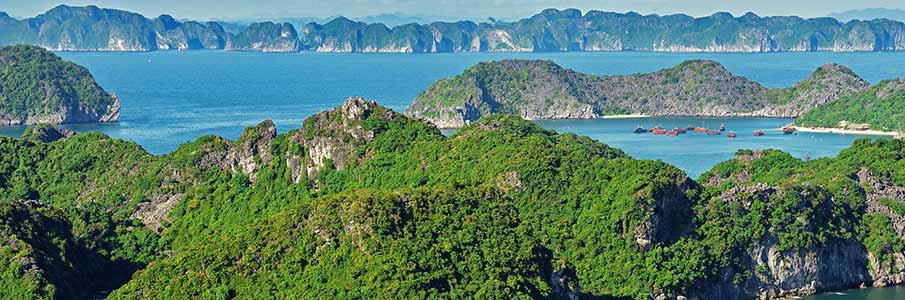
9. Cao Bang
- Cao Bang Province is a remote mountainous region in Northern Vietnam, ideal for trekking and nature exploration.
- Home to the famous Ban Gioc Waterfall, the largest and one of the most beautiful waterfalls in Vietnam.
- Offers multi-day trekking routes through valleys, rivers, and limestone mountains.
- The Quang Hoa district is one of the best areas for hiking, with scenic landscapes and quiet villages.
- Features unique karst formations, caves, and less explored natural sites.
- Inhabited by ethnic groups such as Tay, Nung, Dao, and Hmong.
- Less touristy than Sapa or Ha Giang, perfect for off-the-beaten-path travel.
- Great destination to combine with nearby natural attractions and border areas with China.
💡 Travel tip: Combine Ban Gioc Waterfall with nearby caves, mountain passes, and local ethnic villages.
How to get from Hanoi to Cao Bang? ➜
Book your hotel / homestay in Cao Bang ➜
10. Cuc Phuong National Park
- Cuc Phuong National Park is the oldest national park in Vietnam, located about 130 km south of Hanoi.
- Famous for its rich biodiversity with hundreds of species of mammals, birds, reptiles, and plants.
- Home to ancient rainforest with massive trees reaching up to 70 meters in height.
- Offers well-marked trekking trails through dense jungle and scenic nature.
- Explore caves with archaeological findings and historical significance.
- Visit rescue centers for endangered primates and turtles.
- Activities include trekking, cycling, kayaking, and night wildlife tours.
- Best time to visit is from April to May, when the forest is full of life and butterflies.
- Located near Van Long Nature Reserve and Ninh Binh, ideal for combining trips.
- Official website: Cucphuongtourism.com
💡 Travel tip: Visit the primate rescue center and explore jungle trails early in the morning.
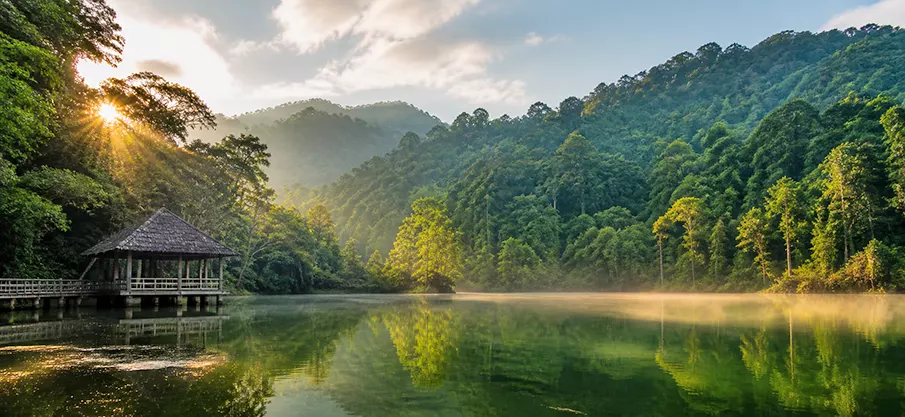
11. Ba Be National Park
- Ba Be National Park is one of the most scenic natural areas in Northern Vietnam, centered around the peaceful Ba Be Lake.
- Enjoy boat trips, kayaking, or swimming in one of the largest natural lakes in Vietnam.
- Surrounded by limestone mountains, forests, rivers, and caves.
- Offers beautiful trekking routes through jungle, villages, and lakeside landscapes.
- Visit nearby waterfalls, hidden caves, and river valleys.
- Home to ethnic minorities such as Tay and Dao, with traditional homestay experiences.
- Small villages around the lake offer authentic rural life and local culture.
- Rich biodiversity with hundreds of plant, animal, and butterfly species.
- The park consists of three interconnected lakes stretching about 8 km in length.
Book your hotel / homestay in Ba Be ➜
12. Ba Vi National Park
- Ba Vi National Park is located about 70 km west of Hanoi and is a popular nature escape from the city.
- Known for Ba Vi Mountain, with peaks reaching around 1,200 meters above sea level.
- Offers easy trekking routes through tropical forest, with viewpoints and fresh mountain air.
- You can reach the summit on foot or by motorbike via a scenic road.
- Famous for old French colonial ruins hidden in the forest, creating a unique atmosphere.
- Great for short hikes, photography, and day trips from Hanoi.
- Very popular with locals on weekends, quieter and more enjoyable on weekdays.
- Cooler climate compared to Hanoi, ideal during hot summer days.
- Basic accommodation and guesthouses are available in and around the park.
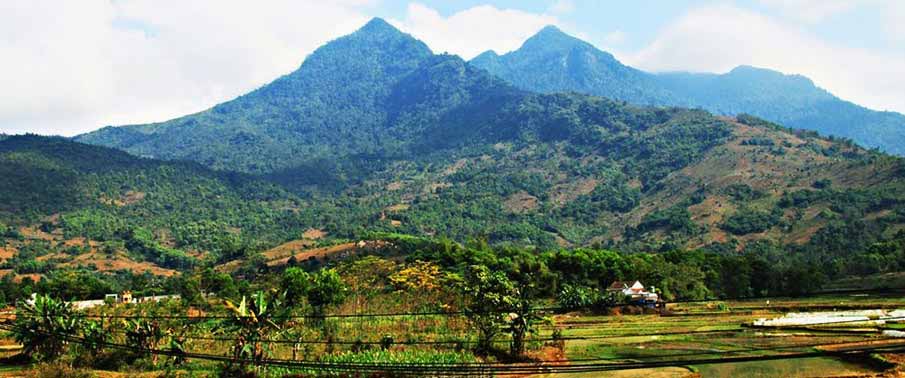
13. Tam Dao National Park
- Tam Dao National Park is located about 80 km north of Hanoi in Vinh Phuc province.
- Easy access makes it a popular destination for short trips from Hanoi.
- Known for cool climate, mountain views, and misty landscapes.
- Features dense tropical forests with rich biodiversity.
- The highest peak, Tam Dao North, reaches 1,592 meters above sea level.
- More than 20 peaks rise above 1,000 meters.
- Great for trekking, hiking, and nature photography.
- Home to over 2,000 plant species, many with medicinal value.
14. Pu Mat Nature Reserve
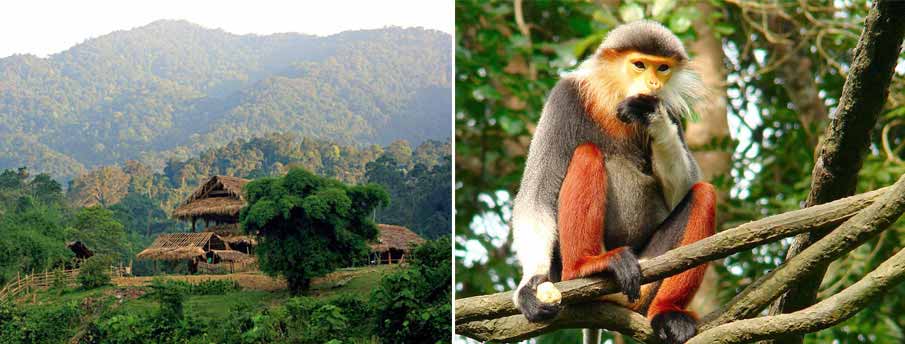
- Pu Mat Nature Reserve is located in central Vietnam and is part of the Annamite mountain range.
- A great stop when traveling from Hanoi to southern Vietnam.
- One of the most important protected areas for wildlife and endangered mammals in Vietnam.
- Dense forests with very high biodiversity and untouched nature.
- Offers trekking, boat trips, and eco-tourism experiences.
- Home to Thai ethnic communities with homestay options.
- Over 2,500 plant species and around 1,000 animal species.
- Ancient trees up to 50 meters tall and over 100 years old.
15. Van Long Nature Reserve
- Van Long Nature Reserve is located about 20 km from Ninh Binh and is the largest wetland reserve in Northern Vietnam.
- A perfect destination for a peaceful day trip from Ninh Binh.
- Often compared to Trang An and Tam Coc, but much quieter and less touristy.
- Famous for scenic boat rides through limestone mountains, wetlands, and caves.
- Home to the endangered Delacour’s langur and rich birdlife.
- Ideal for nature lovers, photography, and relaxing countryside views.
- Boat tickets are available on-site and tours are easy to arrange.
How to travel from Hanoi to Ninh Binh? ➜
Book your hotel / homestay in Ninh Binh ➜
16. Xuan Son National Park
- Xuan Son National Park is located in Phu Tho province, about 100 km west of Hanoi.
- A remote and less-visited park with dense forests and unspoiled nature.
- Rich biodiversity with hundreds of animal species, including langurs, gibbons, and rare birds.
- Famous for its cave systems, including long underground tunnels and karst formations.
- Over 80% of the area is covered by natural forest.
- Ideal for trekking, nature exploration, and off-the-beaten-path travel.
- Local homestays are available in villages of Hmong and Dao ethnic groups.
- Still developing for tourism, offering a more authentic and quiet experience.
17. Ben En National Park
- Ben En National Park is located in Thanh Hoa province, about 40 km from Thanh Hoa city.
- A peaceful destination for a day trip, especially if staying in Thanh Hoa or Sam Son.
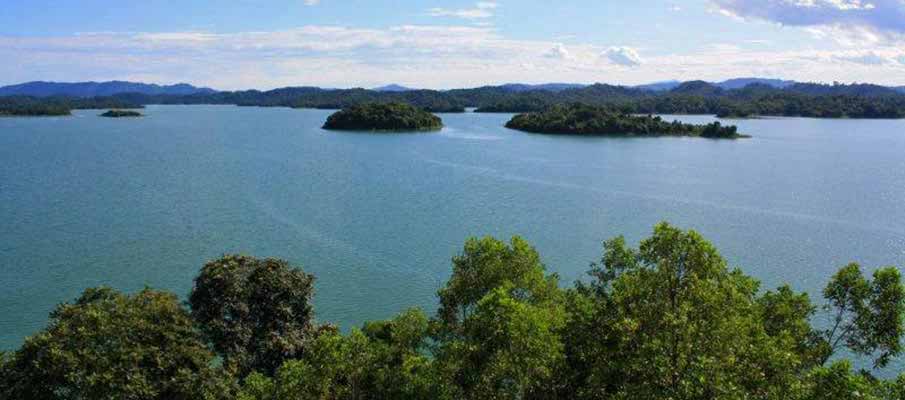
- Known for the large Song Muc Lake, surrounded by forested hills and small islands.
- Often called the “Ha Long Bay on land” thanks to its scenic lake and island landscape.
- Ideal for boat trips, kayaking, and relaxing in nature.
- Offers light trekking routes through forest and lakeside areas.
- Quiet and less touristy, perfect for nature lovers and off-the-beaten-path travel.
How to go from Hanoi to Thanh Hoa? ➜
Book your hotel / stay in Thanh Hoa ➜
18. Xuan Lien Nature Reserve
- Xuan Lien Nature Reserve is located about 70 km from Thanh Hoa city.
- A large and remote protected area with dense forests and mountain landscapes.
- Home to diverse wildlife, including langurs, gibbons, and rare bird species.
- Offers trekking opportunities through untouched nature and quiet valleys.
- Less visited by foreign tourists, ideal for off-the-beaten-path travel.
- Rich biodiversity and natural scenery with rivers, forests, and hills.
19. Non Nuoc Cao Bang Global Geopark
- Non Nuoc Cao Bang Global Geopark covers a large part of Cao Bang province, about 300 km north of Hanoi.
- Recognized as a UNESCO Global Geopark in 2018, the second in Vietnam.
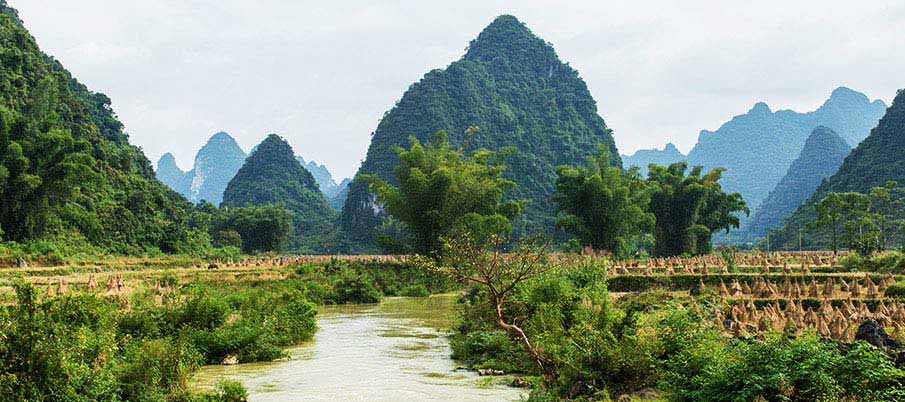
- Famous for limestone karst landscapes, caves, valleys, and mountain scenery.
- Geological heritage includes fossils, sediments, and ancient volcanic formations.
- Home to top attractions like Ban Gioc Waterfall, Pac Bo historical site, and Thang Hen Lake.
- Ideal for trekking, sightseeing, and exploring remote natural areas.
- Less crowded region with authentic local culture and ethnic minority villages.
How to get from Hanoi to Cao Bang? ➜
Book your hotel / homestay in Cao Bang ➜
20. Ta Xua Nature Reserve
- Ta Xua Nature Reserve is located about 230 km from Hanoi in Bac Yen district, Son La province.
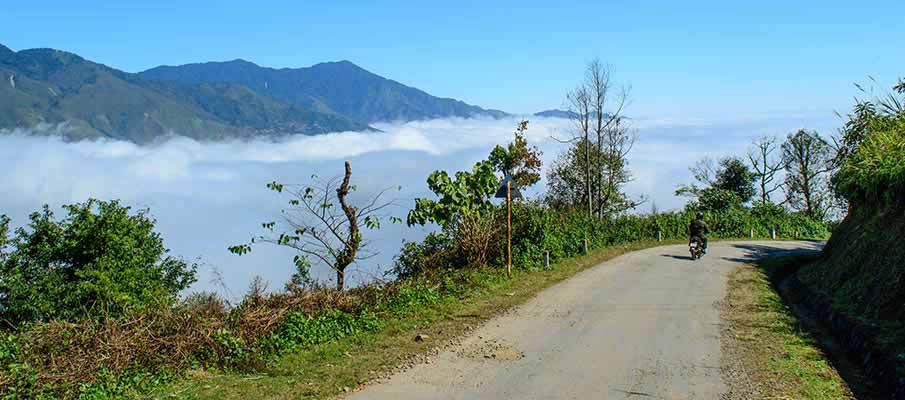
- A popular destination among Vietnamese travelers, especially for mountain views and cloud hunting.
- Famous for dramatic mountain ridges, forests, and rice terraces.
- Home to Hmong ethnic communities and traditional village life.
- One of the highlights is the Dinosaur Spine (Song Lung Khung Long), a narrow ridge with stunning views.
- Ideal for trekking, photography, and sunrise viewpoints above the clouds.
- Best visited in dry season for clear views and safer trekking conditions.
21. Phia Oac – Phia Den National Park
- Phia Oac – Phia Den National Park is located in Cao Bang province and was established in 2018.
- One of the newest national parks in Vietnam with well-preserved natural landscapes.
- Covers more than 10,500 hectares, with over 75% of the area covered by natural forest.
- Known for cool mountain climate, forests, and scenic viewpoints.
- Features diverse ecosystems with rich flora and fauna.
- Less visited area, ideal for quiet trekking and nature exploration.
- Located near Tinh Tuc town in Nguyen Binh district.
📍 Map of the national parks in northern Vietnam:

📍 National parks in central and southern Vietnam:
❓ Frequently Asked Questions – Trekking in Vietnam:
What are the best trekking areas in northern Vietnam?
How to travel from Hanoi to Sapa?
You can travel by tourist bus, minivan, or sleeper train. More info: Hanoi to Sapa.
What is the highest mountain in Vietnam?
Fansipan is the highest mountain in Vietnam at 3,147 m. You can hike it or use the cable car from Sapa.
Which mountain pass is the most scenic in Vietnam?
Ma Pi Leng Pass in Ha Giang is one of the most scenic mountain roads in Vietnam.
How to explore national parks in Vietnam?
Large parks are best explored with a guide, while smaller parks can be visited independently.
What are the top trekking destinations in Vietnam?
Sapa, Ha Giang, Mai Chau, and Pu Luong are among the top trekking destinations in Vietnam.
Do I need a guide for trekking in Vietnam?
A guide is recommended for remote or difficult trekking routes in Vietnam.
When is the best time for trekking in Vietnam?
The best trekking season is usually from November to April during the dry and cooler months.
What to pack for trekking in Vietnam?
Bring hiking shoes, light clothing, rain jacket, sunscreen, insect repellent, and water. More: What to pack for Vietnam.
What are the best islands to visit in Vietnam?
Phu Quoc is one of the most popular islands in Vietnam. More tips: Best Islands in Vietnam.
Find Tours & Tickets in Vietnam ➜
☕ Do you want to support this website? You can do it.
This website is free for all visitors and travelers heading to Vietnam. Here you will find a lot of my information about possible travel around northern Vietnam. You do not pay anything for the content on this website, the content is completely free for all visitors. If you like the website and you are satisfied with the information, you can contribute a small amount ($3) to its further maintenance and updates. You can do it online on BUYMEACOFFEE platform. And I may also buy one coffee or snack. In my opinion $3 for completely free content is nothing.
BUY ME A COFFEE HERE (Thanks!) 😉