
ℹ️ Practical Information
🚍 How to Get There
☀️ Weather & Best Time
🏡 Where to Stay
🔍 Best Places to Visit
❓ FAQ and Travel Tips
🎫 Book a Tour Online
🎫 Book Tickets Online
Culture & Heritage
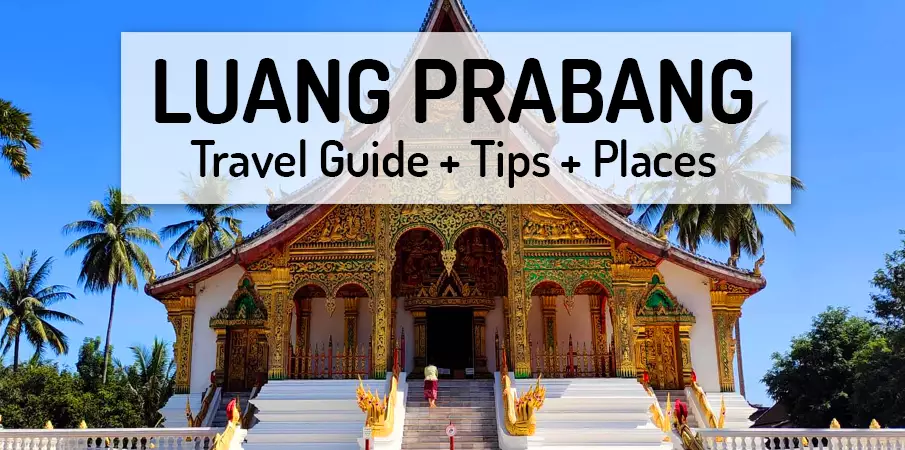
Discover ancient temples and colonial streets
Kuang Si Waterfalls
Explore turquoise pools and jungle scenery
Temples & Night Market
Experience Buddhist traditions and local culture
November–February
Cooler, dry weather for sightseeing
Quick answer: Luang Prabang is the cultural and spiritual heart of Laos, famous for its UNESCO-listed Old Town, Buddhist temples, French colonial architecture and beautiful natural scenery. Visit the Royal Palace Museum, climb Mount Phousi, explore Kuang Si Waterfalls or enjoy a sunset cruise on the Mekong River.
At a glance:
- 📍 Location: Northern Laos, at the Mekong and Nam Khan rivers.
- 🏛️ UNESCO Heritage: Historic Old Town and colonial architecture.
- 🛕 Top Attractions: Wat Xieng Thong, Mount Phousi and Royal Palace Museum.
- 💦 Nature: Kuang Si Waterfalls and Pak Ou Caves.
- 🙏 Culture: Buddhist temples and traditional alms-giving ceremony.
- 🗓️ Best Time: November–February, during the cool dry season.
Last updated in November 2026
Luang Prabang: The Cultural Heart of Laos
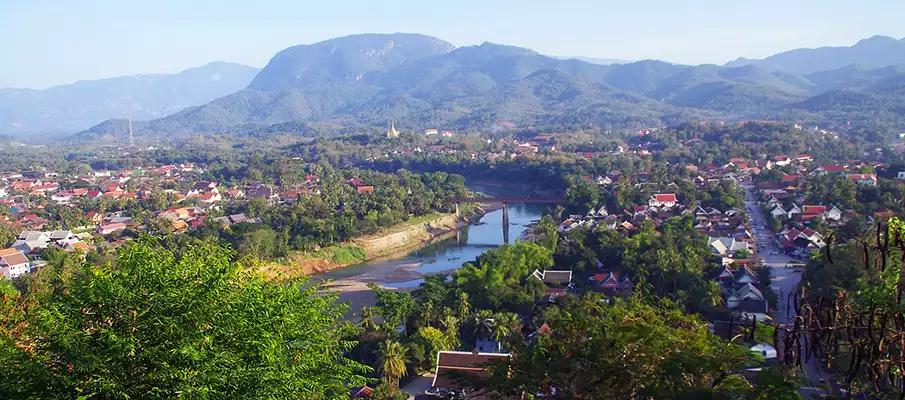
Luang Prabang is a historic city in northern Laos, located at the confluence of the Mekong and Nam Khan rivers. It lies approximately 300 km north of Vientiane and is surrounded by green mountains and beautiful countryside. The city is accessible by train, bus, private transfer or plane.
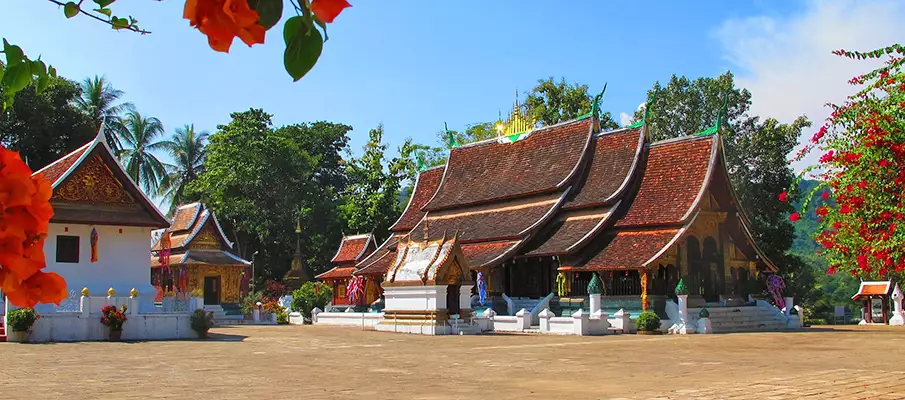
Luang Prabang is a UNESCO World Heritage Site, recognized for its well-preserved Old Town, traditional Lao temples and French colonial architecture. Its cultural highlights include Wat Xieng Thong, the Royal Palace Museum, Mount Phousi and the traditional morning alms-giving ceremony.
🏛️ Why Visit Luang Prabang?
- UNESCO-listed historic Old Town
- Beautiful Buddhist temples
- French colonial architecture
- Kuang Si Waterfalls and Pak Ou Caves
- Mekong River cruises and night markets
⚠️ What to Consider
- Hot and humid weather in summer
- Rainy season from May to October
- Busy tourist areas during peak season
- Early morning alms-giving ceremony
- Some attractions require transport outside town
Luang Prabang is an excellent destination for history, culture and nature. Spend 2–3 days exploring the Old Town, visiting temples and discovering local markets. Allow an extra day for Kuang Si Waterfalls or a boat trip to the Pak Ou Caves. It is also a popular stop on a journey through northern Laos.
Explore Luang Prabang’s History & Cultural Heritage
Luang Prabang has a rich history dating back over a thousand years. It was an important royal capital of the Kingdom of Lane Xang, founded in the 14th century by King Fa Ngum. For centuries, the city served as a major political, religious and cultural center of Laos. During the French colonial period, it became part of French Indochina, leaving a lasting influence on its architecture.
🏛️ Historical Heritage
- Former royal capital of the Kingdom of Lane Xang
- Founded by King Fa Ngum in the 14th century
- UNESCO-listed Old Town and historic buildings
- French colonial architecture and heritage
- Royal Palace Museum and former royal residences
🛕 Culture and Traditions
- Theravada Buddhist traditions and heritage
- Historic temples and Buddhist monasteries
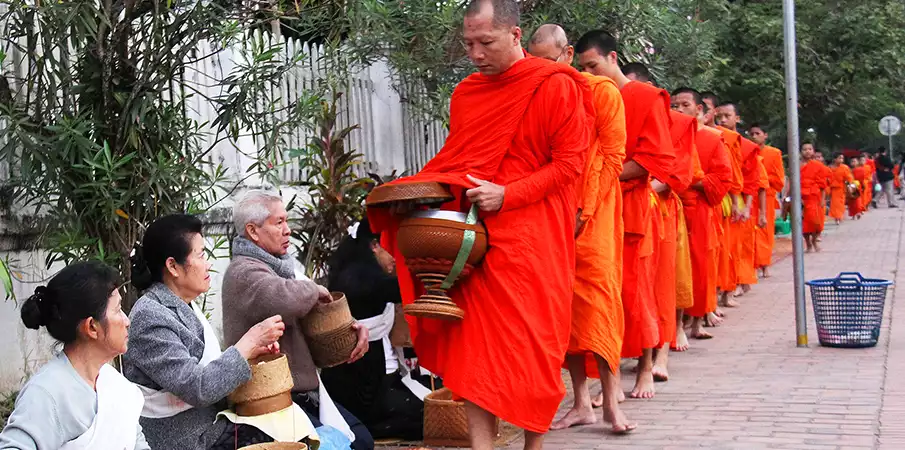
- Daily Tak Bat alms-giving ceremony
- Traditional Lao festivals and religious rituals
- Local markets, crafts and traditional cuisine
Explore the UNESCO-listed Old Town, visit Wat Xieng Thong and the Royal Palace Museum, and discover traditional Buddhist temples. The daily Tak Bat ceremony, when monks receive food offerings, is one of the city’s most important traditions. French colonial buildings and Lao houses create a unique atmosphere.
💡 Travel Tip: Observe the Tak Bat ceremony respectfully, keep your distance and avoid disturbing the monks or local residents.

How to Plan Your Visit to Luang Prabang
Luang Prabang is best explored over two or three days. This gives you enough time to discover the UNESCO-listed Old Town, visit Buddhist temples, explore local markets and enjoy the surrounding nature. Here are some practical tips for planning your stay.
⏱️ One-Day Visit
Explore the Old Town, visit Wat Xieng Thong and the Royal Palace Museum, climb Mount Phousi and enjoy the night market.
⛰️ Two–Three Day Stay
Visit Kuang Si Waterfalls, explore the Pak Ou Caves and enjoy a Mekong River cruise. Leave time for temples and local markets.
🛵 Getting Around
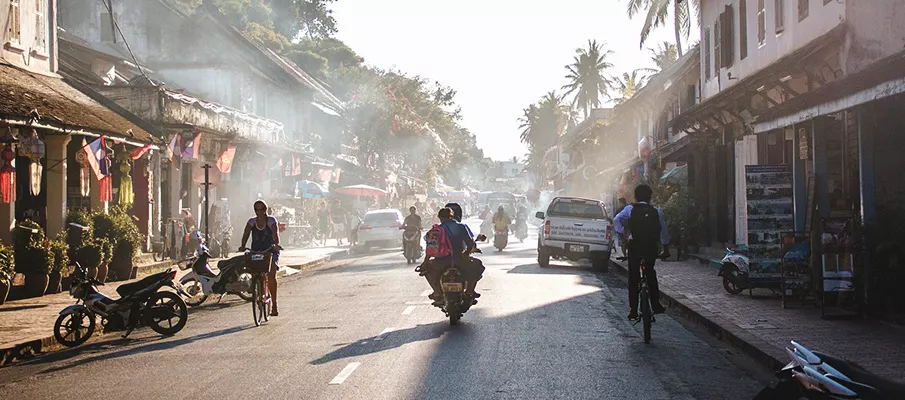
Explore the Old Town on foot or by bicycle. Rent a motorbike, hire a tuk-tuk or arrange a private transfer for attractions outside the city.
🎒 What to Bring
Pack sunscreen, insect repellent, comfortable shoes and light clothing. Bring modest clothes for temple visits and a rain jacket during the wet season.
For a first visit, 2–3 days are ideal for exploring Luang Prabang and its main attractions. Allow an extra day for Kuang Si Waterfalls, a Mekong boat trip or nearby villages. If possible, plan your visit around local celebrations such as Pi Mai Lao in April or Lai Heua Fai in November.

Discover the Enchanting Charms of Luang Prabang
Luang Prabang, located in northern Laos, is one of Southeast Asia’s most charming destinations. This UNESCO World Heritage Site combines ancient Buddhist temples, French colonial architecture, beautiful natural scenery and a peaceful atmosphere. Discover its main highlights and enjoy an authentic experience in Laos.
🛕 Buddhist Temples & Heritage
Explore historic temples and monasteries, including Wat Xieng Thong and Wat Mai. Discover traditional architecture, Buddhist artifacts and the daily alms-giving ceremony.
💦 Nature & Waterfalls
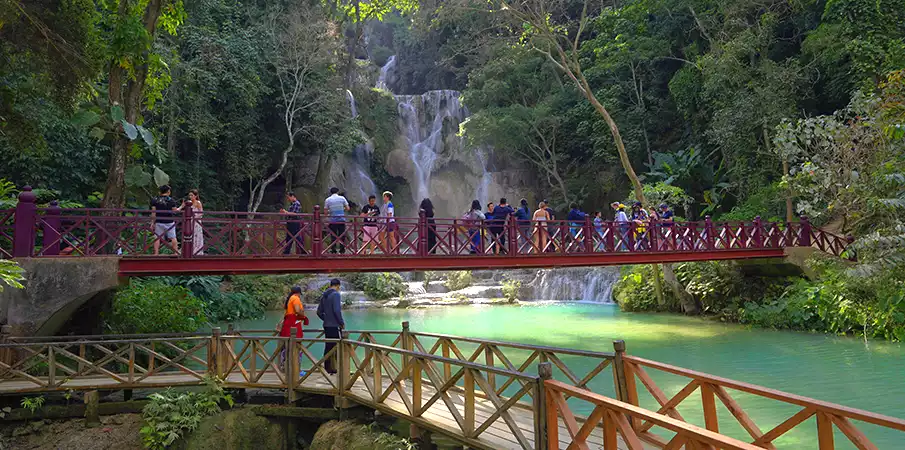
Discover the green mountains surrounding Luang Prabang and visit Kuang Si Falls, famous for its turquoise pools and cascading waterfalls. Enjoy swimming, scenic walks and boat trips on the Mekong River.
🛍️ Night Markets & Local Food
Explore the lively night markets, browse handmade textiles, handicrafts and souvenirs, and taste traditional Lao street food. Meet local artisans and experience the friendly atmosphere of the city.
🌅 Mekong River & City Views
Enjoy the peaceful riverside atmosphere, take a scenic Mekong boat trip and watch beautiful sunsets. Discover charming colonial streets and traditional Lao buildings throughout the Old Town.
Luang Prabang offers a wonderful combination of culture, history and nature. Spend time exploring its temples, relaxing by the river and discovering the local way of life. It is one of the most memorable destinations in northern Laos.
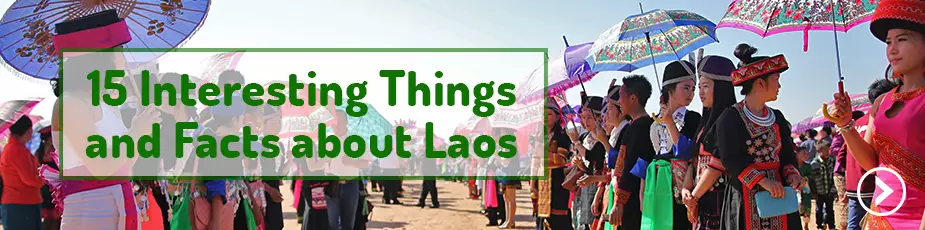
Historical Temples and Buildings in Luang Prabang
Luang Prabang is a UNESCO World Heritage city with a remarkable collection of historic temples, royal buildings and cultural landmarks. These places reveal the rich history and Buddhist heritage of Laos.
1. Wat Xieng Thong
One of Laos’s most beautiful temples, built in the 16th century. Famous for its golden decorations, intricate mosaics and Tree of Life artwork.
2. Royal Palace Museum
Former residence of the Lao royal family, displaying royal rooms, traditional costumes, historical objects and valuable Buddhist artifacts.
3. Wat Mai
A beautiful Buddhist temple known for its distinctive five-tiered roof, detailed decorations and important religious role.
4. Mount Phousi
A sacred hill in the city center, crowned by Wat Chom Si stupa. Climb to the top for panoramic views of Luang Prabang and the Mekong River.
5. Wat Wisunarat
One of the city’s oldest temples, dating back to 1513. Its highlights include traditional Lao architecture and the distinctive Watermelon Stupa.
6. Wat Aham
A peaceful temple associated with local guardian spirits and traditional Lao religious ceremonies.
7. Wat Xieng Muan
A historic temple featuring traditional Lao decorations, intricate carvings and beautiful Buddhist artwork.
8. Wat Manorom
One of Luang Prabang’s oldest temples, traditionally dated to the late 14th century, with a large Buddha image and historic architecture.
9. Wat Sensoukharam
A quieter temple known for its ornate decorations, traditional architecture and peaceful atmosphere.
10. Ock Pop Tok Living Crafts Centre
Discover traditional Lao handicrafts, including silk weaving, natural dyeing and textile production. A great place to learn about local crafts.
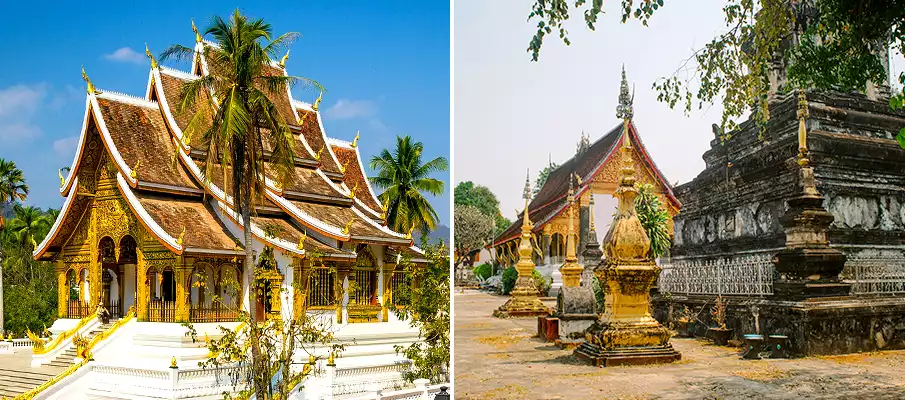
Explore the Mekong River in Luang Prabang
The Mekong River is one of the main highlights of Luang Prabang. It flows alongside the historic city, meets the Nam Khan River and offers beautiful scenery, boat trips and a glimpse into traditional Lao life. A river cruise is one of the best ways to discover the surrounding countryside.
🚤 Mekong River Cruises
Take a boat trip along the river and enjoy views of green hills, riverside villages and traditional landscapes. Sunset cruises are especially popular.
🛕 Pak Ou Caves
Visit the famous caves filled with thousands of Buddha statues. They are accessible by boat from Luang Prabang and make a popular half-day trip.
📸 River Views & Photography
Enjoy scenic views where the Mekong meets the Nam Khan River. The riverbanks and sunset viewpoints offer excellent photo opportunities.
🚣 Local Life Along the River
Observe local fishermen, boats and riverside communities. The Mekong remains an important part of everyday life in northern Laos.
The Mekong River is more than just a scenic attraction. It is an essential part of Luang Prabang’s culture, history and daily life. Whether you choose a short cruise, a trip to Pak Ou Caves or a relaxing sunset ride, it is an experience worth including in your itinerary.

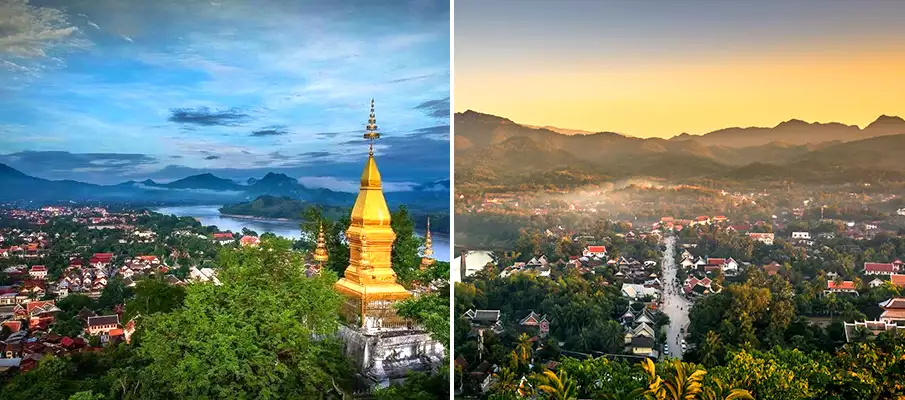
Phousi Hill: The Best Panoramic View of Luang Prabang
Phousi Hill is one of Luang Prabang’s most popular attractions. Rising around 100 meters above the town, this sacred hill offers Buddhist shrines, historic stupas and panoramic views of the Mekong River and surrounding mountains.
🥾 Climb to the Summit
Follow approximately 328 steps past Buddhist shrines and statues to reach the hilltop and Wat Chom Si stupa.
🌅 Sunset Views
Enjoy spectacular sunset views over the Mekong River, Nam Khan River and historic Luang Prabang.
📸 Panoramic Scenery
See the Old Town, traditional temples, colonial buildings and green mountains from above.
🛕 Spiritual Heritage
Discover Buddhist shrines and Buddha images at one of the city’s most important sacred sites.
💡 Practical Tips for Visiting Phousi Hill
- Best time: Early morning or late afternoon to avoid the midday heat.
- Sunset: Arrive early, as the viewpoint gets crowded before sunset.
- What to bring: Water, comfortable shoes and a camera.
- Dress code: Wear respectful clothing suitable for visiting a Buddhist religious site.
- Entrance: An admission fee may apply.
UXO Lao Visitor Center: Discover Laos’s Wartime History
The UXO Lao Visitor Center offers an important insight into Laos’s wartime history and the ongoing problem of unexploded ordnance (UXO). Its exhibitions explain the impact of the bombing campaigns and the continuing work to make affected areas safer.
📖 History of the Secret War
Learn about the bombing of Laos, the history of unexploded ordnance and its lasting impact on local communities.
⚠️ UXO Awareness
Discover why unexploded bombs remain dangerous and how clearance teams work to protect local residents.
❤️ Stories of Survivors
See photographs, historical exhibits and personal stories about the people affected by UXO in Laos.
💡 Practical Tips for Visiting UXO Lao Visitor Center
- Location: In central Luang Prabang, within walking distance of the Old Town.
- Time: Allow around 30–60 minutes for your visit.
- Admission: Check current opening hours and admission arrangements before visiting.
- More information: Visit the official UXO Lao website.
The UXO Lao Visitor Center is a worthwhile stop for travelers interested in understanding Laos beyond its temples and tourist attractions. It offers a sobering but important perspective on the country’s recent history.

Luang Prabang Morning & Night Markets
Luang Prabang’s morning and night markets are among the best places to experience local life, traditional handicrafts and Lao street food. Both markets are located in the historic Old Town, along and around Sisavangvong Road, but offer very different atmospheres.
🌅 Morning Market
Luang Prabang Morning Market is a lively local food market. Browse fresh fruit, vegetables, herbs, spices and traditional Lao ingredients while observing everyday life.
- Best time: Early morning
- Fresh local produce and snacks
- Authentic atmosphere and local vendors
- Great for food photography
🏮 Night Market
Luang Prabang Night Market fills the main street with colorful stalls selling handmade souvenirs, silk scarves, textiles, jewelry and local artwork.
- Best time: After sunset
- Traditional handicrafts and souvenirs
- Street food and local snacks
- Relaxed evening shopping atmosphere
Whether you visit early in the morning or after sunset, these markets offer a wonderful opportunity to discover local culture, traditional products and Lao cuisine. They are an essential stop during your stay in Luang Prabang.

Discover the Best Day Trips from Luang Prabang
Luang Prabang is an excellent base for exploring the beautiful countryside of northern Laos. Just outside the city, you can discover turquoise waterfalls, mysterious caves, traditional villages, jungle landscapes and scenic stretches of the Mekong River.
💦 Kuang Si Waterfalls
Visit the famous turquoise pools and cascading waterfalls surrounded by lush tropical forest. Enjoy swimming, walking trails and beautiful natural scenery.
🛕 Pak Ou Caves
Take a scenic boat trip along the Mekong River to explore caves filled with thousands of Buddha statues and religious offerings.
🌾 Traditional Lao Villages
Discover rural life around Luang Prabang, visit local communities and learn about traditional crafts, weaving and everyday Lao culture.
🐘 Nature & Elephant Experiences
Explore the surrounding forest landscapes and learn about elephant conservation at a responsible sanctuary. Choose ethical experiences that do not involve riding.
Allow at least one full day to explore the surroundings of Luang Prabang. Kuang Si Waterfalls and Pak Ou Caves are among the most popular excursions and can be visited separately or as part of organized tours.
Food and Cuisine in Luang Prabang: What to Taste
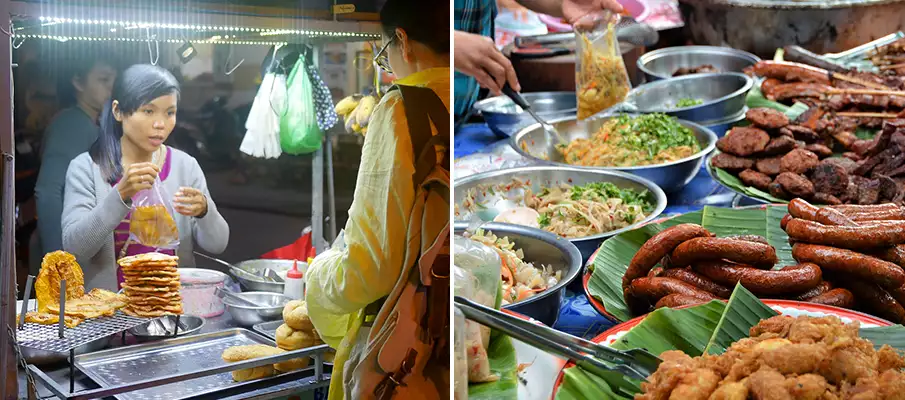
Luang Prabang is a great place to discover traditional Lao cuisine, fresh local ingredients and delicious street food. Local dishes combine sticky rice, aromatic herbs, grilled meats, freshwater fish and distinctive spicy flavors. The city also has several regional specialties worth trying.
🍚 Traditional Lao Cuisine
Try popular dishes such as laap (minced meat salad), tam mak hoong (green papaya salad) and mok pa (steamed fish in banana leaves). Sticky rice is served with many meals.
🍲 Local Specialties
Taste Or Lam, a traditional Lao stew, Luang Prabang sausage and local Khao Soi noodle soup. These dishes offer a delicious introduction to northern Lao cuisine.
🥖 Street Food & Night Markets
Explore food stalls selling grilled meats, Lao sausages, baguette sandwiches and traditional snacks. The night market is a great place to sample local specialties.
☕ French Influences & Cooking Classes
Enjoy French-style baguettes, pastries and coffee. Join a cooking class, visit a local market and learn how to prepare traditional Lao dishes.
For an authentic food experience, visit the morning market, try local street food and explore the restaurants around the Old Town. Discover more traditional dishes, ingredients and culinary traditions in our complete guide to food and cuisine in Laos.
How to Get Around Luang Prabang: Transport Options
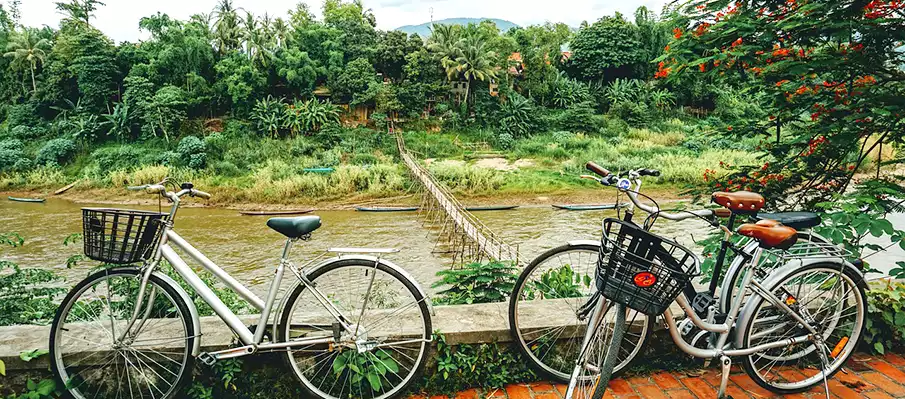
Luang Prabang is a compact city, so exploring the historic Old Town is easy on foot or by bicycle. For attractions outside the center, such as Kuang Si Waterfalls, Pak Ou Caves and nearby villages, you can use tuk-tuks, local transport, private drivers or organized tours.
🚶 Walking & Cycling
- Ideal for exploring the Old Town
- Easy access to temples and markets
- Bicycle rentals available in town
- Great for short distances and sightseeing
🛺 Tuk-tuks & Local Transport
- Convenient for short journeys
- Available around hotels and tourist areas
- Useful for nearby attractions and restaurants
- Agree on the fare before departure
🏍️ Motorbike Rental
- Flexible way to explore the countryside
- Useful for waterfalls and rural villages
- Suitable for independent travelers
- Check license requirements and helmet availability
🚕 Private Transfers & Tours
- Comfortable for longer excursions
- Convenient for Kuang Si Waterfalls and Pak Ou Caves
- Private drivers offer flexible itineraries
- Organized tours often include transport and a guide
For sightseeing in central Luang Prabang, walking or cycling is usually sufficient. For attractions outside the city, a tuk-tuk, private driver or organized tour is more convenient. You can also take a Mekong River cruise to explore riverside villages and nearby attractions from the water.
✈️ How to Get to Luang Prabang by Plane, Train, Bus or Boat
Luang Prabang is accessible by air, train, bus, minivan and boat. The most convenient options are flights to Luang Prabang International Airport and trains on the Laos-China Railway. Tourist buses and minivans connect the city with other destinations in Laos and neighboring countries, while Mekong River slow boats offer a scenic alternative from northern Laos.
Travel to Luang Prabang from Major Destinations in Laos
🚆 From Vientiane
Travel from the capital to Luang Prabang by high-speed train, bus or flight. The train is one of the fastest and most convenient options.
🚆 From Vang Vieng
Regular trains, buses and minivans connect Vang Vieng with Luang Prabang. The train is a popular choice for this route.
🚆 From Muang Xay
Travel from northern Laos to Luang Prabang by train or bus. The Laos-China Railway provides a convenient connection between the two destinations.
🛶 From Huay Xai
Take a traditional slow boat along the Mekong River. The scenic journey to Luang Prabang takes two days, with an overnight stop in Pakbeng.
Travel to Luang Prabang from Thailand, Vietnam and Other Destinations
🌏 From Thailand
Travel from Chiang Mai to Luang Prabang by international bus connections or via Huay Xai and the Mekong River slow boat.
🚌 From Vietnam
International bus connections link Dien Bien Phu in northern Vietnam with Luang Prabang. The journey involves crossing the Laos–Vietnam border.
✈️ From Hanoi
Flights and connecting routes are available between Hanoi and Luang Prabang. Flying is usually the most convenient option.
🌏 From Siem Reap
Travel from Siem Reap to Luang Prabang by flight or connecting bus and minivan services. Compare available connections before departure.
🚍 Baolau
Compare and book train, bus and flight connections to Luang Prabang and other destinations in Laos.
🚕 12Go
Find available trains, buses, minivans, flights and other transport services to Luang Prabang.

☀️ Weather in Luang Prabang – Best Time to Visit
Luang Prabang has a tropical monsoon climate with warm temperatures throughout the year. The region has two main seasons: a dry season from November to April and a rainy season from May to October. The dry months are generally cooler and sunnier, while the rainy season brings higher humidity, regular showers and lush green landscapes.
☀️ Dry Season (November–April)
Mostly sunny weather with lower rainfall and temperatures around 18–32°C. These months are ideal for exploring temples, visiting Kuang Si Waterfalls and taking Mekong River cruises.
🌧️ Rainy Season (May–October)
Expect high humidity, regular afternoon showers and occasional thunderstorms. Temperatures usually range from 23–32°C. The surrounding countryside becomes greener and waterfalls are more impressive.
🌴 Best Months (November–February)
These months are generally cooler, sunny and relatively dry. They offer excellent conditions for sightseeing, outdoor activities, temple visits and exploring the surrounding countryside.
🌡️ Hottest Months (March–May)
Temperatures can reach 35–38°C, with strong sunshine and increasing humidity. Plan outdoor activities for early mornings or late afternoons and drink plenty of water.
Overall, November to February is the best time to visit Luang Prabang for comfortable sightseeing and outdoor activities. The city can be visited year-round, but during the rainy season it is worth keeping your plans flexible. Read more in our Luang Prabang Weather and Best Time to Visit Guide.
| Month | Weather | Description |
|---|---|---|
| January | Cool & Dry | One of the best months to visit, with cool mornings, sunny days and excellent conditions for sightseeing. |
| February | Warm & Dry | Mostly sunny and dry, ideal for exploring temples, the Old Town and Kuang Si Waterfalls. |
| March | Hot & Dry | Temperatures rise and rainfall remains low. Plan outdoor activities for early mornings. |
| April | Hot & Dry | Very hot weather and the traditional Lao New Year (Pi Mai) celebrations in mid-April. |
| May | Hot & Rainy | The rainy season begins, bringing higher humidity, tropical showers and greener landscapes. |
| June | Warm & Rainy | Regular rainfall and humid conditions, with lush countryside and fewer tourists. |
| July | Warm & Rainy | Frequent showers keep the landscape green, while sightseeing is still possible between rains. |
| August | Warm & Rainy | High humidity and heavy rainfall. Kuang Si Waterfalls are particularly impressive. |
| September | Warm & Rainy | One of the wettest months, with frequent rain and occasional thunderstorms. |
| October | Warm & Improving | Rainfall gradually decreases, rivers remain full and the countryside is especially green. |
| November | Cool & Dry | Excellent sightseeing weather returns, with cooler temperatures and mostly sunny days. |
| December | Cool & Dry | One of the best months for exploring Luang Prabang, with comfortable temperatures and little rain. |
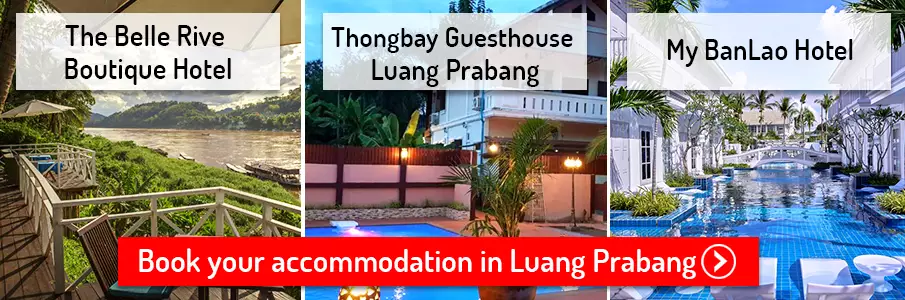
🏡 Accommodation in Luang Prabang – Where to Stay
Luang Prabang offers accommodation for every budget, from luxury resorts and boutique hotels to affordable guesthouses, hostels and traditional homestays. Stay in the historic Old Town for temples, restaurants and markets, near the Mekong River for scenic views, or outside the center for a quieter experience surrounded by nature.
🏨 Luxury Resorts & Hotels
Enjoy elegant rooms, swimming pools, spa facilities, fine dining and beautiful gardens at Luang Prabang’s luxury resorts and hotels. Explore our selection of best luxury hotels and resorts.
🛏️ Boutique Hotels
Choose charming boutique hotels featuring traditional Lao architecture, restored heritage buildings, modern comforts and personalized service. See our guide to affordable hotels in Luang Prabang.
🎒 Guesthouses & Budget Hostels
Find affordable guesthouses and hostels with simple rooms, friendly atmospheres and convenient locations. Ideal for backpackers and budget-conscious travelers.
🌴 Homestays & Traditional Houses
Experience local hospitality by staying in a traditional Lao house or family-run homestay. Enjoy a quieter atmosphere and discover everyday Lao culture.
📍 Popular Areas to Stay in Luang Prabang
🏛️ Historic Old Town
Best for first-time visitors, temples, restaurants, cafés, night markets and easy access to the main attractions.
🌅 Mekong Riverside
Popular for relaxing stays, scenic river views, boutique hotels, guesthouses and beautiful sunsets.
🌿 Nam Khan Riverside
Ideal for peaceful accommodation, charming guesthouses and a quieter atmosphere near the historic center.
🌴 Outside the City Center
A good choice for luxury resorts, peaceful gardens and travelers looking for more space and a relaxing stay.
📍 Best Places to Visit & Things to Do in Luang Prabang
Discover Luang Prabang’s historic temples, waterfalls, markets and traditional Lao culture.
🛕 Temples & Historical Landmarks
- Mount Phousi: Panoramic city views
- Royal Palace Museum: Lao royal heritage
- Wat Xieng Thong: Historic Buddhist temple
- Wat Mai: Golden temple façade
- Heuan Chan Heritage House: Traditional Lao architecture
💦 Nature & Outdoor Attractions
- Kuang Si Waterfalls: Turquoise pools and jungle
- Tad Sae Waterfalls: Forest pools and cascades
- Pak Ou Caves: Thousands of Buddha statues
- Mekong River: Boat trips and sunsets
🙏 Culture & Local Experiences
- Alms Giving Ceremony: Morning monk offerings
- Traditional Arts & Crafts: Silk and pottery
- Ock Pop Tok: Lao weaving and textiles
- Lao Cooking Classes: Traditional local dishes
- Traditional Music & Dance: Lao cultural performances
- Baci Ceremony: Traditional blessing ritual
🛍️ Markets & Modern History
- Night Market: Handicrafts and street food
- Morning Market: Fresh produce and local snacks
- UXO Museum: Laos’s wartime history
- Traditional Lao Cuisine: Local dishes and specialties
❓ Frequently Asked Questions + Tips for Luang Prabang
How to book and buy tickets or flights to Luang Prabang?
What is Luang Prabang famous for?
Luang Prabang is famous for its UNESCO World Heritage Old Town, Buddhist temples, French colonial architecture and beautiful natural surroundings.
What festivals are celebrated in Luang Prabang?
The biggest events are Lao New Year (Boun Pi Mai) in April and the Boat Racing Festival in October.
Can you join the Tak Bat alms-giving ceremony?
Yes. Visitors can respectfully observe or participate in the traditional morning Tak Bat ceremony by following local customs.
What outdoor activities are available in Luang Prabang?
Popular activities include hiking, cycling, kayaking, Mekong River cruises and visiting nearby waterfalls.
Where can you see traditional Lao handicrafts?
Visit local workshops and the Night Market to discover silk weaving, wood carving, pottery and handmade souvenirs.
Can you join a Lao cooking class?
Yes. Many cooking schools include a local market visit followed by hands-on lessons preparing traditional Lao dishes.
Where can you travel from Luang Prabang?
Travel by train, bus or flight to Vang Vieng, to Vientiane, or take a direct flight or sleeper bus to Hanoi.
What is the weather like in Laos?
Weather in Laos has a dry season from November to April and a rainy season from May to October. The dry months are the best time for travel.


Kampot in Cambodia|Sihanoukville in Cambodia|Siem Reap in Cambodia|Phnom Penh in Cambodia|Phu Quoc in Vietnam|Da Lat in Vietnam