🚍 Transport by bus
🚆 Transport by train
✈️ Transport by plane
🚢 Transport by boat
🚕 Transport by taxi/car
🛺 Transport by tuk-tuk
🛵 Travel on a motorbike
🛻 Travel by songthaew
🚇 Skytrain in Bangkok
Quick answer: Transportation in Thailand is diverse and affordable, from buses, trains and domestic flights to tuk-tuks, motorbike taxis and ferries. The most popular options are buses, trains and cheap domestic flights. Tickets and cars can be booked online in advance.
At a glance:
- 🚍 Bus/Minivan: Cheapest and most widespread way to travel across Thailand
- 🚆 Train: Scenic and comfortable for long distances, including night trains
- ✈️ Plane: Fastest option for long routes and island access
- 🚇 Metro & Skytrain (BTS/MRT): Best way to get around Bangkok efficiently
- 🚕 Taxi & Grab: Affordable and convenient in cities
- 🛵 Motorbike Taxi: Quick for short distances and avoiding traffic
- 🛺 Tuk-tuk: Iconic tourist experience for short rides
- 🚢 Ferry/Boat: Essential for islands and river transport
Last updated in August 2026
How to Get Around Thailand: Transportation Options
Thailand has a wide and convenient transportation network. Travelers can choose from buses, minivans, trains, domestic flights, ferries, private cars, tuk-tuks and motorbikes. In Bangkok, BTS SkyTrain and MRT are also useful for getting around the city.
🚍 Best for Budget
Buses, minivans and trains are among the cheapest ways to travel between popular destinations in Thailand.
✈️ Best for Speed
Domestic flights are the fastest option for long-distance travel between major cities and tourist destinations.
🚕 Best for Flexibility
Private cars, taxis, tuk-tuks and motorbikes are useful for short trips and places away from major transport routes.
Thailand is also a major travel hub in Southeast Asia, with connections to Vietnam, Laos and Cambodia. For island destinations, ferries and speedboats are essential, while Bangkok has an extensive urban transport network.
🎫 Baolau
Search and book buses, trains, ferries and flights in Thailand online, with schedules and e-tickets for popular routes.
🚌 12go.asia
Compare and book buses, trains, ferries, flights and private transfers throughout Thailand and Southeast Asia.
What Types of Transport Can You Use in Thailand?
1. Transport by Bus / Minivan in Thailand
Affordable
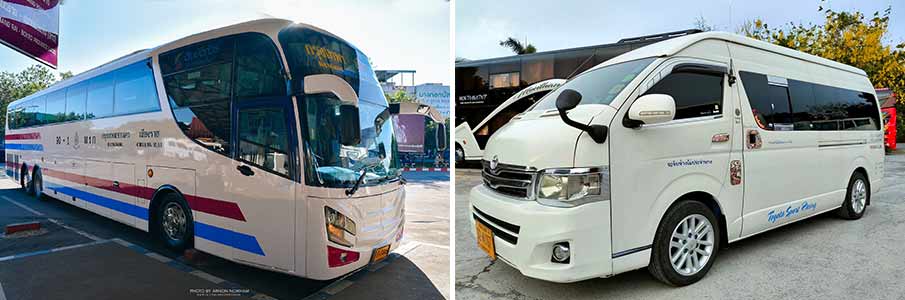
Buses and minivans are among the cheapest ways to travel between cities and popular destinations in Thailand.
Wide Network
Tourist buses and minivans connect Bangkok, major cities, islands and many popular tourist destinations.
Modern Vehicles
You can choose from comfortable tourist buses, sleeper buses, vans and faster modern minivans.
Popular Routes
Common routes include Bangkok to Ayutthaya, Bangkok to Pattaya and Bangkok to Hua Hin.
International Routes
Buses and minivans can also cross the borders to Vientiane and Phnom Penh.
Book Ahead
For popular routes, booking in advance is recommended, especially during weekends and busy travel periods.
Transport by Bus / Minivan in Thailand – Pros + Cons
| Pros | Cons |
|---|---|
| Affordable: Buses and minivans are usually cheaper than flights and offer good value for longer journeys. | Slower: Road travel can take considerably longer than flying, especially on long-distance routes. |
| Wide Network: Bus and minivan services connect most major cities and many tourist destinations. | Delays: Traffic, road conditions and stops can affect travel times. |
| Choice of Services: Travelers can choose between standard buses, sleeper buses, vans and modern minivans. | Comfort Varies: Comfort depends on the operator, vehicle and length of the journey. |
2. Transport by Train in Thailand
Large Railway Network
Thailand has an extensive railway network connecting Bangkok with the north, northeast, east and south of the country.
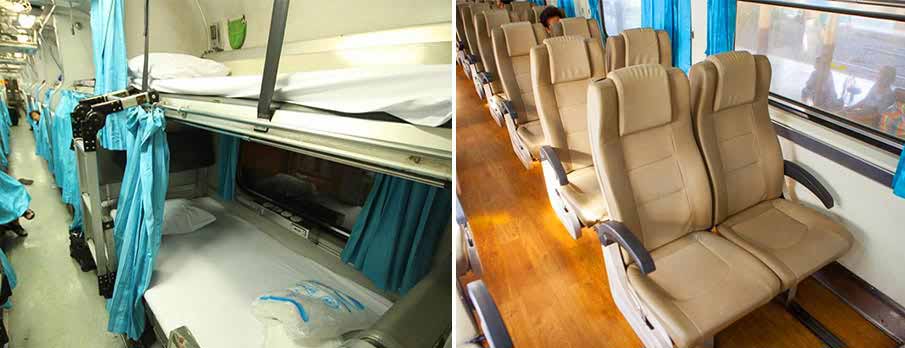
Sleeper Trains
Overnight trains with sleeper berths and cabins are a practical option for longer journeys such as Bangkok to Chiang Mai.
Different Classes
The State Railway of Thailand offers 1st, 2nd and 3rd class services, with different levels of comfort and pricing.
Popular Routes
Popular journeys include Bangkok to Chiang Mai and Bangkok to Surat Thani.
Scenic Travel
Train journeys offer a slower way to see Thailand’s countryside, towns and rural landscapes along the route.
Check the Schedule
Train services are less frequent than buses on many routes, so check the Thailand train schedule before planning your journey.
Transport by Train in Thailand – Pros + Cons
| Pros | Cons |
|---|---|
| Comfortable: Trains offer more space than many buses, with comfortable seating and sleeper berths on longer routes. | Slower: Train journeys can take longer than buses or flights, especially on long-distance routes. |
| Affordable: Train travel can be a budget-friendly way to cover longer distances, particularly in 2nd and 3rd class. | Limited Routes: The railway does not reach every tourist destination, so connections by bus or minivan may still be necessary. |
| Scenic: Traveling by train allows you to enjoy views of Thailand’s countryside and rural landscapes along the way. | Limited Frequency: Some routes have fewer departures than buses, making advance planning more important. |
3. Transport by Plane / Flights in Thailand
Fastest Option
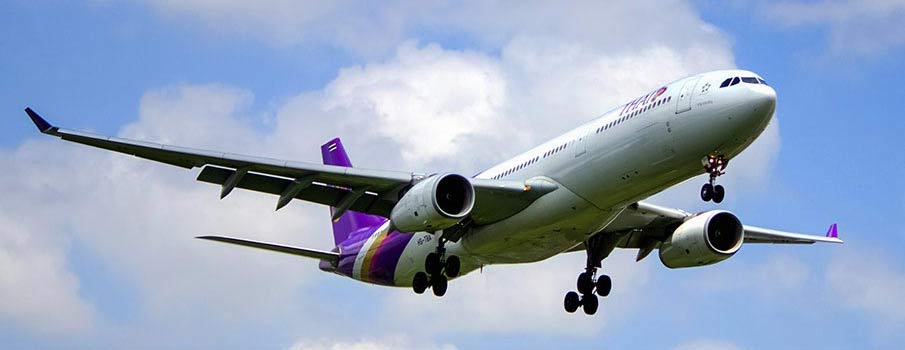
Domestic flights are the quickest way to travel long distances across Thailand, saving many hours compared with road or rail travel.
Many Destinations
Flights connect Bangkok with major destinations such as Chiang Mai, Phuket, Krabi, Surat Thani and Koh Samui.
Major Airports
Thailand has a large airport network, with Bangkok, Chiang Mai, Phuket, Krabi and Surat Thani among the most useful for tourists.
International Flights
Thailand has direct international connections with neighboring countries including Laos, Cambodia and Vietnam.
Airline Choice
Travelers can choose from full-service and low-cost airlines serving domestic and international routes across Thailand.
Compare Prices
Compare different airlines and departure times before booking, especially when traveling on popular routes or during holidays.
Transport by Plane in Thailand – Pros + Cons
| Pros | Cons |
|---|---|
| Fast: Flying is the quickest way to cover long distances between major cities and tourist destinations. | Cost: Flights can cost more than buses or trains, especially when booked at short notice. |
| Convenient: Thailand has many airports and frequent connections between popular destinations. | Airport Transfers: Airports are often outside city centers, so additional transport may be needed. |
| Comfortable: Flying provides a comfortable way to travel, particularly on longer domestic routes. | Less Scenic: Flights provide less opportunity to enjoy Thailand’s countryside and local landscapes. |
4. Transport by Speedboat / Ferry in Thailand
Island Connections
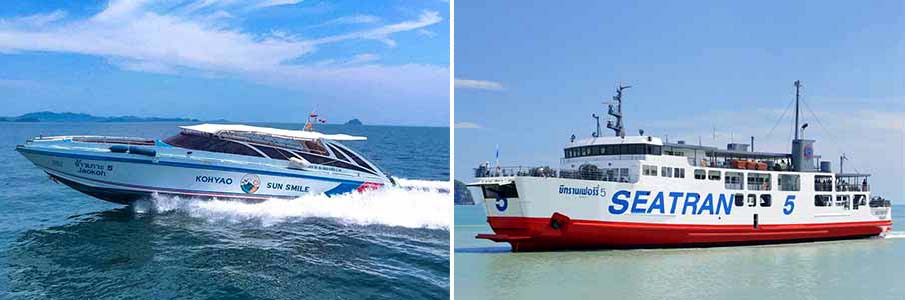
Ferries and speedboats are essential for reaching many of Thailand’s popular islands and coastal destinations.
Popular Islands
Regular boat services connect the mainland with Koh Samui, Koh Phi Phi, Koh Phangan and Koh Chang.
Different Boat Types
Depending on the route, you can travel by regular ferry, high-speed ferry, speedboat or traditional longtail boat.
Seasonal Services
Some routes operate more frequently during the main tourist season, while services can be reduced during the low season.
Book in Advance
Popular ferry routes can sell out during busy periods, so booking ahead is recommended for important connections.
Weather Matters
Boat schedules can change because of rough seas or bad weather, so allow some flexibility when planning island trips.
International Connections
You can also travel by ferry from Thailand to Malaysia, including the popular route from Koh Lipe to Langkawi.
Transport by Speedboat / Ferry in Thailand – Pros + Cons
| Pros | Cons |
|---|---|
| Island Access: Ferries and speedboats provide essential connections to many of Thailand’s islands. | Weather Dependent: Bad weather and rough seas can cause delays or cancellations. |
| Scenic: Boat journeys offer beautiful views of the coastline, sea and surrounding islands. | Crowded: Popular routes can become busy during holidays and the main tourist season. |
| Fast: Speedboats and high-speed ferries can provide quick connections between the mainland and nearby islands. | Sea Sickness: Passengers may experience motion sickness, particularly on speedboats or in rough seas. |
5. Transport by Longtail Boat in Thailand
Popular in the South
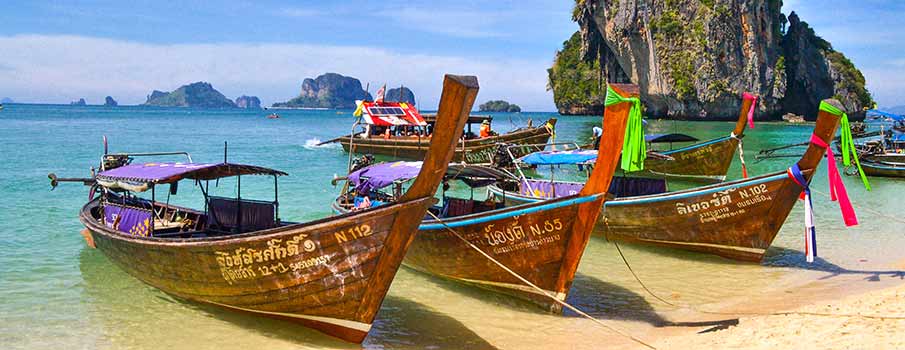
Longtail boats are widely used around Thailand’s southern coast, islands and popular beach destinations.
Railay Beach
Longtail boats are a popular way to reach Railay Beach from Ao Nang and nearby coastal areas.
Scenic Travel
These traditional boats offer a great way to enjoy Thailand’s coastline, beaches, limestone cliffs and nearby islands.
Flexible Trips
You can usually find longtail boats at beaches and piers and arrange short private trips to nearby beaches or islands.
Agree on the Price
Prices are often negotiable, so confirm the fare and destination with the boat operator before departure.
Check the Weather
Longtail boats are open and can be uncomfortable or unsafe in strong winds, high waves or heavy rain.
Transport by Longtail Boat in Thailand – Pros + Cons
| Pros | Cons |
|---|---|
| Scenic: Longtail boats provide beautiful views of Thailand’s coastline, beaches and islands. | Weather Dependent: Rough seas, strong winds and heavy rain can affect boat trips. |
| Flexible: Private longtail boats can reach smaller beaches, islands and places inaccessible to larger vessels. | Limited Comfort: The boats are open-air and usually have basic seating with little protection from the elements. |
| Local Experience: Traveling by traditional longtail boat offers an authentic way to experience Thailand’s coastal areas. | Noisy: Longtail boat engines can be quite loud, particularly during longer journeys. |
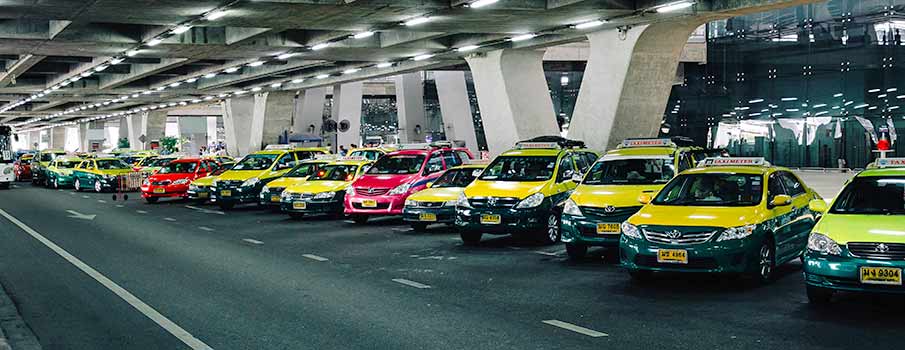
6. Transport by Private Taxi / Car in Thailand
Door-to-Door
Private cars and taxis can pick you up and drop you off directly at your hotel, airport or chosen destination.
Flexible Travel
Private transport allows you to choose your departure time, route and stops without following a public transport schedule.
Comfortable
Air-conditioned cars and modern minivans provide a comfortable option, particularly in Thailand’s hot and humid climate.
Good for Groups
A private car can offer good value when the fare is shared by several travelers, couples or a family.
Grab Available
Grab is available in many Thai cities and can be a convenient way to arrange local taxi and private car rides.
Airport Transfers
Private cars and taxis are widely available for transfers between Thailand’s airports, hotels and city centers.
Transport by Private Taxi / Car in Thailand – Pros + Cons
| Pros | Cons |
|---|---|
| Convenient: Door-to-door service makes private cars especially useful for airports, hotels and direct transfers. | Cost: Private transport is usually more expensive than buses or trains, especially for solo travelers. |
| Flexible: You can choose your departure time, route and stops without depending on public transport schedules. | Traffic: Heavy traffic in Bangkok and other busy cities can significantly increase journey times. |
| Comfortable: Air-conditioned private vehicles offer more personal space and comfort than many public transport options. | Driver Quality: The experience can depend on the driver, vehicle and communication. |
| Good for Groups: Sharing the cost among several travelers can make a private car more affordable per person. | Availability: Private cars may be harder to arrange in smaller or remote destinations. |
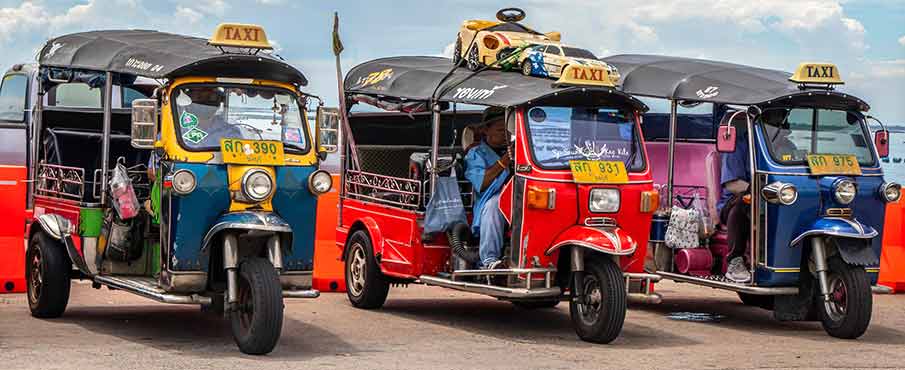
7. Transport by Tuk-Tuk / Rickshaw in Thailand
Popular in Cities
Tuk-tuks are widely used for short trips around Bangkok, other cities and popular tourist attractions.
Short Trips
They are best suited to short urban journeys, sightseeing and transfers between nearby attractions.
Agree on the Price
Tuk-tuk fares are often negotiable, so agree on the total price and destination before starting the ride.
Local Experience
Riding a tuk-tuk is a classic Thai travel experience and gives you a closer view of local streets and daily life.
Sam-Lor
Traditional bicycle rickshaws, known as sam-lor, can still be found mainly around tourist areas.
Check the Fare
For practical tips on using tuk-tuks and avoiding common problems, see this guide.
Transport by Tuk-Tuk in Thailand – Pros + Cons
| Pros | Cons |
|---|---|
| Maneuverability: Tuk-tuks can move easily through busy streets and congested urban traffic. | Open-Air: Passengers are exposed to heat, rain, traffic noise and air pollution. |
| Local Experience: A tuk-tuk ride is a fun and traditional way to experience Thailand’s city streets. | Negotiation: Fares are often negotiated, so tourists should agree on the price before departure. |
| Affordable: Tuk-tuks can be a convenient and inexpensive option for short trips. | Limited Comfort: They usually offer less comfort and protection than an air-conditioned taxi or car. |
| Flexible: Tuk-tuks are useful for quick trips between nearby attractions and hotels. | Safety: They generally provide fewer safety features than modern cars, so extra caution is advisable. |
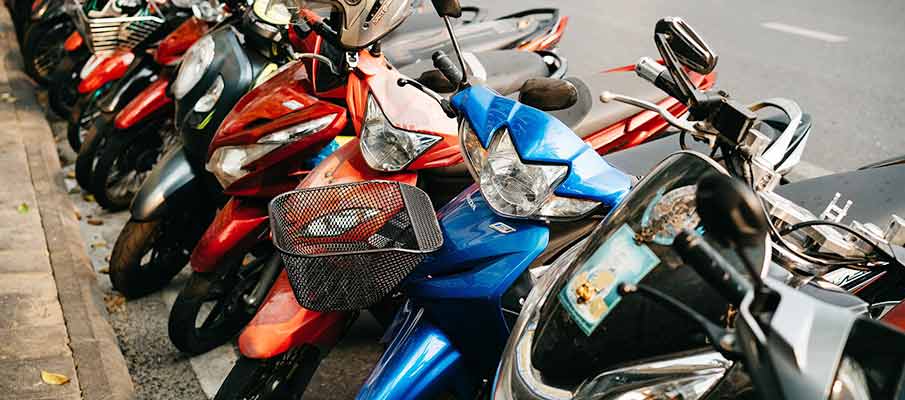
8. Travel on a Motorbike / Scooter in Thailand
Rent a Scooter
Motorbikes and scooters are widely available for rent in popular tourist destinations across Thailand.
Flexible Travel
A motorbike gives you freedom to explore beaches, towns, countryside and smaller roads at your own pace.
Rental Cost
Basic motorbike or scooter rentals commonly cost around $7–12 per day, depending on location and vehicle.
Licence Required
Foreign visitors should have the appropriate motorcycle licence and a valid IDP to legally ride in Thailand.
Private Tours
Travelers can also join organized motorcycle tours with companies such as Big Bike Tours or Let’s Ride.
Travel Carefully
Traffic, road conditions and weather can make riding challenging, so always wear a helmet and ride within your experience level.
Transport by Motorbike / Scooter in Thailand – Pros + Cons
| Pros | Cons |
|---|---|
| Flexibility: Motorbikes make it easy to explore smaller roads, beaches and places away from main tourist routes. | Safety Risks: Motorbike riding carries higher accident and injury risks, especially for inexperienced riders. |
| Affordable: Rental and fuel costs can be relatively low compared with taxis and private cars. | Traffic: Busy roads and urban traffic can be challenging, particularly in larger cities. |
| Exploration: A scooter allows you to travel at your own pace and make spontaneous stops along the way. | Weather Exposure: Riders are exposed to rain, strong sun and heat, which can affect comfort. |
| Local Experience: Riding a motorbike offers a more independent way to experience Thailand’s countryside and local areas. | Limited Storage: Motorbikes have limited luggage space and are less practical for travelers carrying large bags. |
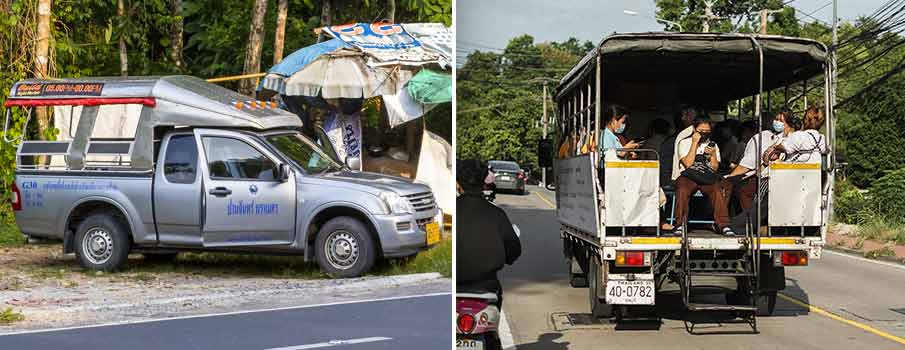
9. Transport by Songthaew in Thailand
Local Transport
Songthaews are common in many Thai towns and cities and are widely used by local residents.
Cheap Option
They are one of the cheapest ways to travel short distances and get around many smaller towns.
How to Stop One
Wait beside the road and wave with your hand when a songthaew approaches. Routes and fares can vary by location.
Shared Ride
Songthaews normally carry several passengers, making them a practical shared form of local transportation.
No Fixed Timetable
There may be no regular timetable, so you should allow extra time and be prepared to wait.
Local Experience
Traveling by songthaew is an easy way to experience everyday local transport in Thailand. See Songthaew in Thailand.
Transport by Songthaew in Thailand – Pros + Cons
| Pros | Cons |
|---|---|
| Affordable: Songthaews are a cheap option for short trips and local transportation. | Fixed Routes: They usually follow specific routes, so they may not take you directly to your destination. |
| Local Experience: Riding a songthaew gives travelers a more authentic experience of everyday life in Thailand. | No Timetable: Departures can be irregular, and waiting times may vary. |
| Widely Used: Songthaews connect neighborhoods, towns and local destinations in many parts of Thailand. | Crowded: Vehicles can become busy, particularly during popular travel times. |
| Easy to Use: In many places, you can simply wait by the roadside and signal to the driver. | Limited Comfort: Seating is basic and the open design offers little protection from heat, rain and traffic. |
10. Transport by BTS SkyTrain + MRT in Bangkok
Fast City Transport
BTS SkyTrain and MRT are among the fastest and most convenient ways to travel around busy Bangkok.
BTS SkyTrain
The BTS elevated railway connects many important areas of Bangkok and avoids much of the city’s heavy road traffic.
MRT Subway
The MRT provides another useful network across Bangkok and connects with the BTS at several interchange stations.
Airport Rail Link
Phaya Thai Station provides access to the Airport Rail Link, making the BTS useful for some airport connections.
Single Tickets
Single-journey tickets can be purchased from ticket machines, with fares depending on the destination. See how to buy a BTS ticket.
One-Day Pass
If you plan several BTS journeys in one day, check the One-Day Pass option.
For current routes and ticket information, check the BTS SkyTrain map and the official BTS SkyTrain website. You can also find information about the MRT Subway in Bangkok.

Which Transport Should You Choose in Thailand?
🚌 Bus / Minivan
Best for budget travel between cities and tourist destinations. Cheap, frequent and widely available.
🚆 Train
Best for scenic journeys and overnight travel. Sleeper trains are useful for longer routes.
✈️ Flight
Best when time matters, especially for long-distance travel between major cities and islands.
🚕 Private Car
Best for comfort, door-to-door travel and flexible stops, especially for families or groups.
⛴️ Ferry / Boat
Best for reaching Thailand’s islands, with ferries, speedboats and longtail boats serving many routes.
🛵 Motorbike / Scooter
Best for independent travelers who want to explore smaller roads and destinations at their own pace.
❓ Thailand Transportation: FAQ & Travel Tips
What is the most popular way to travel around Thailand?
Buses, minivans and trains are popular between cities, while ferries and speedboats connect the islands.
Is there a train in Thailand?
Yes. Thailand has an extensive railway network operated by the State Railway of Thailand, with regular and sleeper trains.
What is the best way to travel from Thailand to Vietnam?
The easiest option is a direct flight. Overland travel is also possible via Laos or Cambodia.
What is the cheapest way to travel in Thailand?
Buses, minivans and trains are generally among the cheapest transport options.
Is Grab available in Thailand?
Yes. Grab operates in many Thai cities. Check the Grab official page for current coverage.
Where can you travel by ferry or speedboat in Thailand?
Ferries and speedboats connect many Thai islands. Popular routes include Surat Thani to Koh Samui, Krabi to Koh Phi Phi and Phuket to Koh Phi Phi.
Is Uber available in Thailand?
No. Uber is not available in Thailand. Grab is the main alternative.
What is the best way to get around Bangkok?
BTS SkyTrain and MRT are fast options. You can also use buses, taxis, Grab, tuk-tuks and boats. See Transit Bangkok for more information.
Which airport is the main airport in Thailand?
Suvarnabhumi International Airport is Bangkok’s main international airport. Don Mueang International Airport is another major airport.
How can I travel from Thailand to Laos or Cambodia?
Flights are fastest, but you can also travel by bus or train. Popular routes include Bangkok to Vientiane, Bangkok to Phnom Penh and Bangkok to Siem Reap.
How can I travel to Thailand from Vietnam?
A direct flight is the fastest and easiest option. Overland travel is also possible via Laos or Cambodia. See Vietnam to Thailand.
⬇️ The most frequented travel routes from Bangkok ⬇️