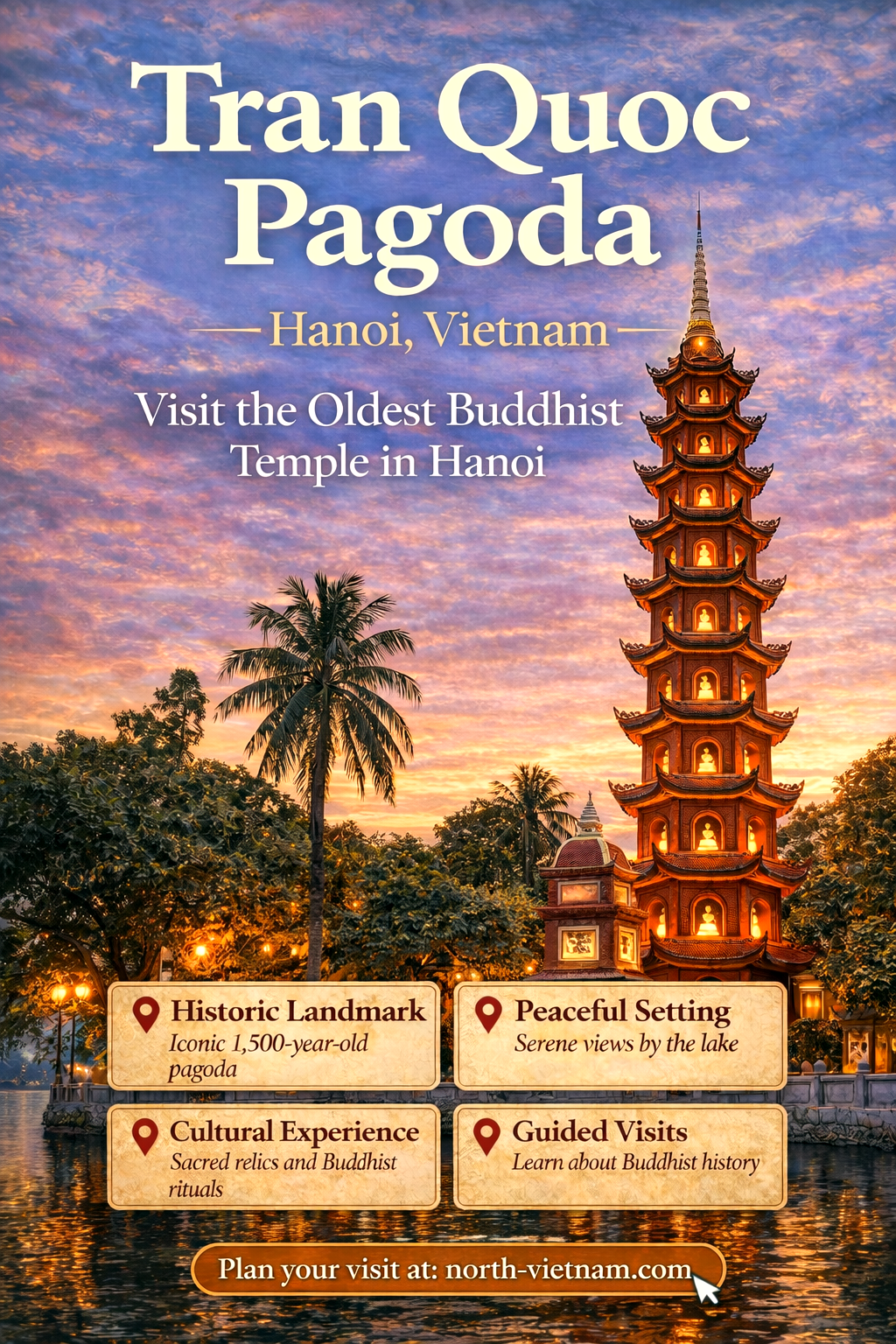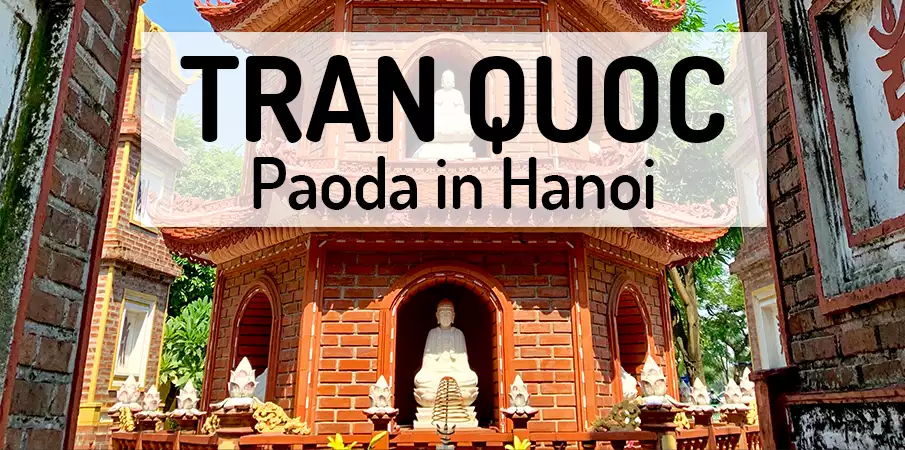
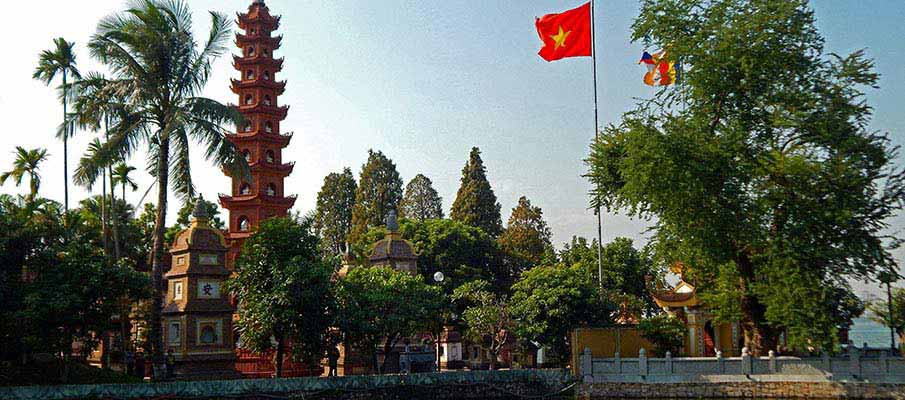
Quick answer: Trấn Quốc Pagoda is one of Hanoi’s most spiritual and historic sites. Located on a small peninsula on West Lake, it dates back to the 6th century and is considered the oldest pagoda in the city. Its peaceful architecture, elegant stupa, and lakeside views make it a serene escape from the city bustle.
At a glance:
- 📍 Location: Thanh Niên Street, Tay Hồ District, on the edge of West Lake.
- 🕰️ History: Built around 544–548 AD under King Lý Nam Đế; originally on the Red River, moved to its current spot in 1615.
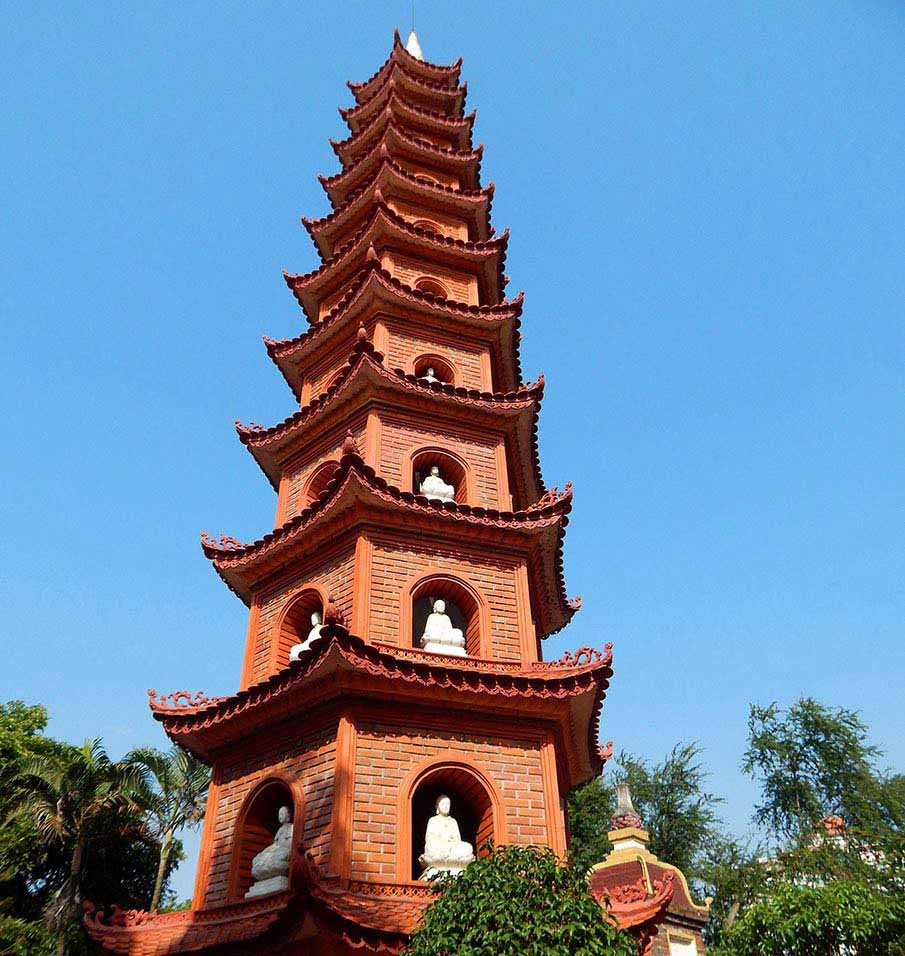
- 🏯 Architecture: Features three main halls (Front, Incense, Upper), a bell tower, and a graceful lotus‑shaped 11‑tier stupa.
- 🌳 Bodhi Tree: A sacred bodhi tree with heart-shaped leaves gifted by the Indian Prime Minister in 1959.
- ⏱️ Visiting hours: Usually 8:00 AM – 4:00 PM; on the 1st and 15th of each lunar month, 6:00 AM – 6:00 PM.
- 💰 Entrance: Free to visit.
Last updated in November 2025
The oldest buddhist temple in Hanoi – Tran Quoc Pagoda.
-
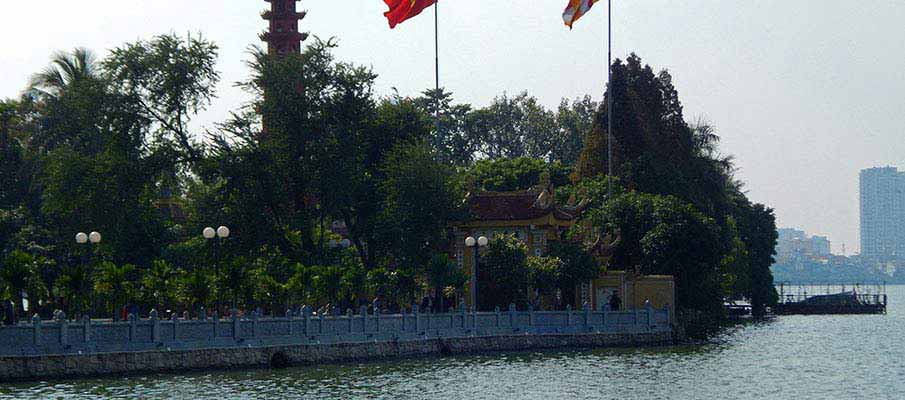
- Tran Quoc Pagoda is one of the oldest and most revered Buddhist temples in Hanoi, the capital city of Vietnam. Situated on a small island on the west side of Hanoi’s largest lake, West Lake, this pagoda is a must-visit destination for both locals and tourists. In this article, we will explore the history and significance of Tran Quoc Pagoda, what to see there, how to get there, and some useful information for tourists.
History of Tran Quoc Pagoda in Hanoi – Ho Tay Lake:
-
- Tran Quoc Pagoda in Hanoi, also known as the “Stabilizing the Nation” Pagoda, was originally built during the reign of Emperor Ly Nam De in the 6th century. It was then called Khai Quoc Pagoda and was located near the Red River. In the 17th century, during the reign of Emperor Le Hy Tong, the pagoda was moved to its current location on a small island in West Lake.
- Throughout its long history, Tran Quoc Pagoda has undergone many renovations and expansions. The most significant renovation took place in the 19th century during the Nguyen Dynasty, which brought about the current architecture of the pagoda and it looks amazing.
What to See at Tran Quoc Pagoda:
-
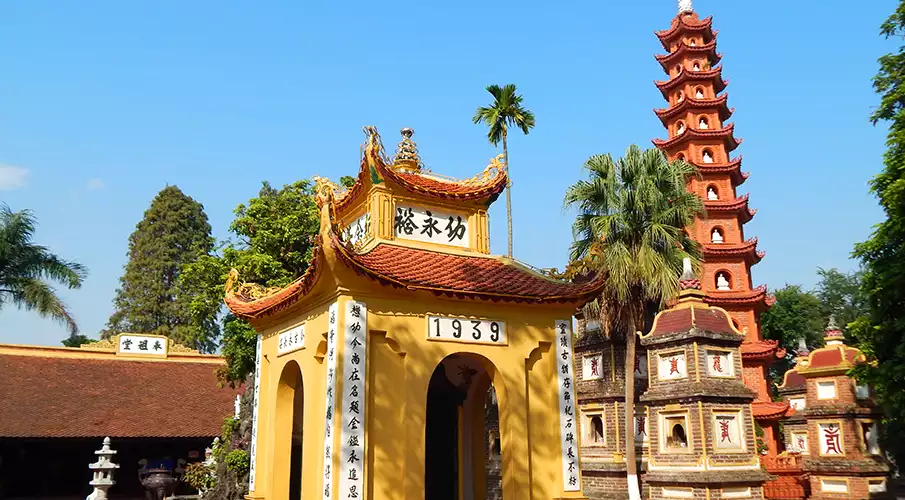
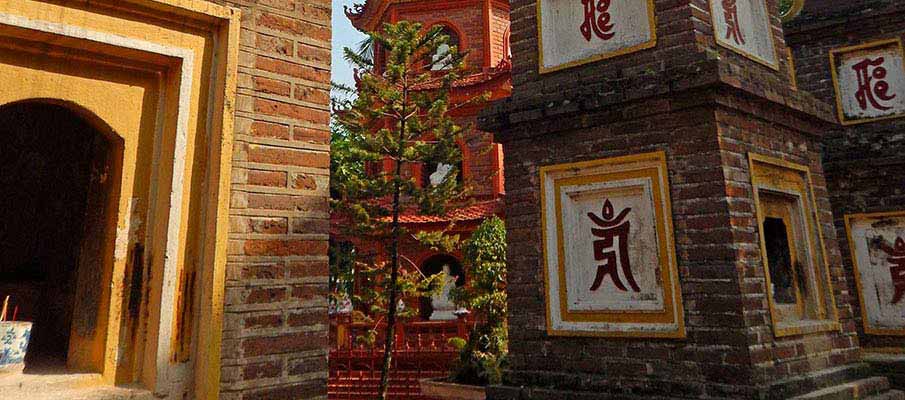
- Tran Quoc Pagoda is an architectural masterpiece with a tranquil and serene atmosphere. The pagoda has a combination of Chinese and Vietnamese architectural styles and is surrounded by a beautiful garden with colorful flowers and trees.
- The main attraction of the pagoda is its tower, called the Thap But or Pen Tower. This tower is 15 meters high and has eleven floors, each floor containing a Buddha statue. Visitors can climb to the top of the tower and enjoy a panoramic view of West Lake and the surrounding areas.
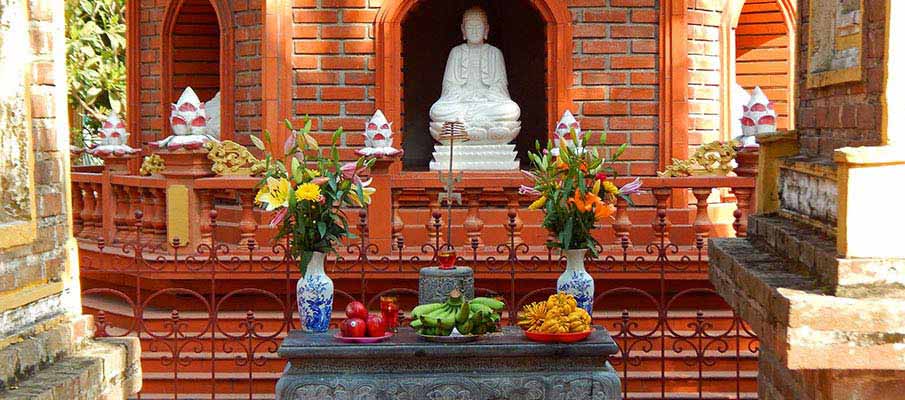
- There are also several shrines and statues in the pagoda’s courtyard, including a statue of Amitabha Buddha, the Bodhisattva of Compassion, and a giant bell that dates back to the 18th century. Visitors can participate in the pagoda’s daily Buddhist rituals and ceremonies, such as burning incense and offering prayers.
BOOK a TOUR / TICKETS in Hanoi ➜

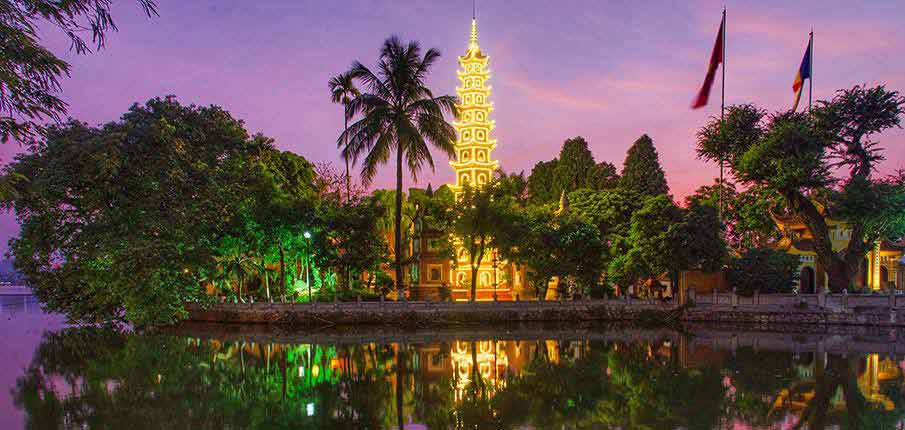
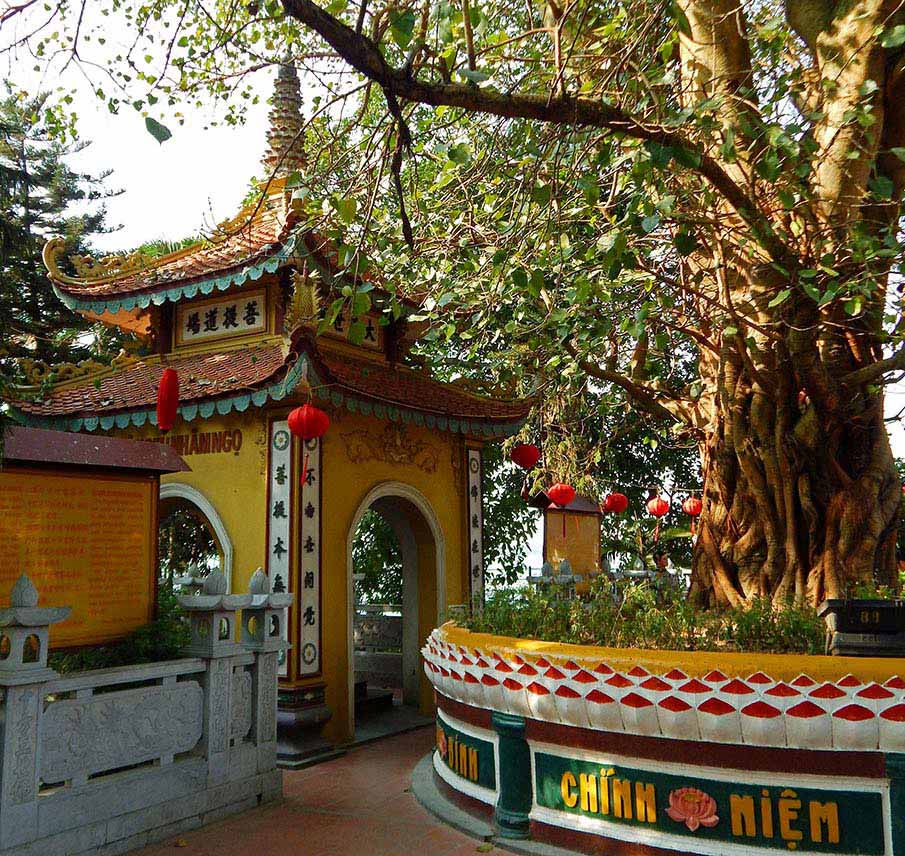
On this place is an important symbol of Buddhism – Bodhi tree (Bồ Đề).
-
- Statuettes of lotus flowers, eightfold wheel (wheel of Dharma) as well as the Bodhi tree are symbols of Buddhism, and you can see them here. In the garden you can see Bodhi tree, this tree was donated during a visit in 1959 by first India president – Rajendra Prasad. This tree was crafted on the tree in India, where Buddha meditated and attained the enlightenment nearly 25 centuries ago. The tree is green and is easily recognizable in accordance with the heart-shaped leaves. Tran Quoc Pagoda is definitely a good place to visit if you will be moving at the West Lake (Hồ Tây). You will not probably forget on the atmosphere of this place where the sun is falling down over the lake.
How to Get to Tran Quoc Pagoda:
-
- Tran Quoc Pagoda is located on Thanh Nien Street, Tay Ho District, Hanoi, and is easily accessible by taxi, motorbike, or bicycle. If you’re coming from the city center, you can take a taxi or motorbike for a 15-20 minute ride, depending on the traffic.
-
- For tourists who want to explore the area around West Lake, renting a bicycle is a popular option. There are many bicycle rental shops around the lake, and the ride to Tran Quoc Pagoda is scenic and enjoyable. But you can also walk around the West Lake – recommended option.
Useful Information for visitors of Tran Quoc Pagoda:
-
- The pagoda is open daily from 8:00 AM to 5:00 PM.
- Admission to the pagoda is free, but visitors can donate to support the maintenance and preservation of the temple.
- Visitors should dress modestly when visiting the pagoda, covering their shoulders and knees.
- Photography is allowed but should be done respectfully and without disrupting the pagoda’s ceremonies and rituals.
- Visitors should be mindful of the pagoda’s rules and regulations, such as not smoking or bringing food and drinks into the temple.
- Tran Quoc Pagoda is about 4 km from Hanoi Old Quarter.
In conclusion, Tran Quoc Pagoda is a beautiful and historic Buddhist temple that is worth visiting when in Hanoi. Its peaceful atmosphere, stunning architecture, and cultural significance make it a popular destination for tourists and locals alike. So if you’re planning a trip to Hanoi, don’t miss the opportunity to visit this remarkable pagoda.
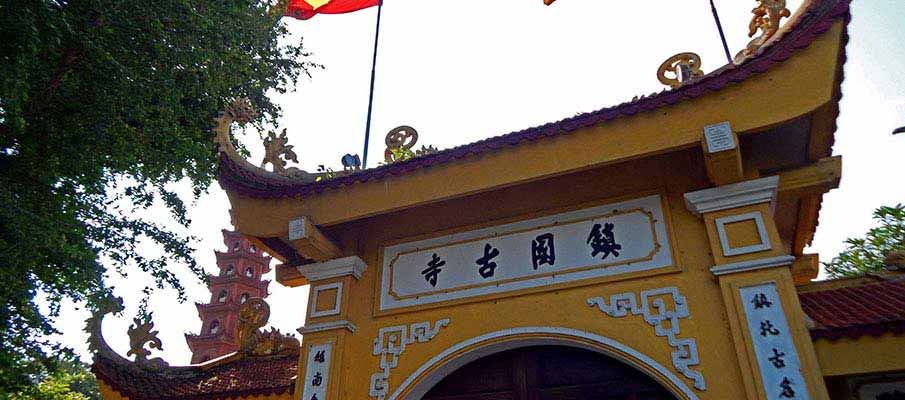
Photos of Tran Quoc pagoda in Hanoi:
❓ FAQ + TIPS – Tran Quoc Pagoda in Hanoi (West Lake):
1. What is the history behind Tran Quoc Pagoda?
-
- Tran Quoc Pagoda has a long and rich history that dates back to the 6th century during the reign of Emperor Ly Nam De. Originally called Khai Quoc Pagoda, it was located near the Red River. However, in the 17th century, during the reign of Emperor Le Hy Tong, the pagoda was moved to its current location on a small island in West Lake. Throughout its history, the pagoda has undergone many renovations and expansions, with the most significant taking place in the 19th century during the Nguyen Dynasty.
2. What is the significance of the Thap But or Pen Tower?
-
- The Thap But or Pen Tower is the main attraction of Tran Quoc Pagoda. It stands at 15 meters high and has eleven floors, each floor containing a Buddha statue. The tower is a symbol of the Buddhist teachings, with each floor representing a different aspect of Buddhism. Visitors can climb to the top of the tower and enjoy a panoramic view of West Lake and the surrounding areas.
3. Are there any ceremonies or rituals that visitors can participate in?
-
- Yes, visitors can participate in the pagoda’s daily Buddhist rituals and ceremonies, such as burning incense and offering prayers. These rituals take place throughout the day, and visitors can join in at any time. However, it’s important to be respectful of the ceremonies and not disrupt them.
4. Is there an admission fee to enter Tran Quoc Pagoda?
-
- No, admission to Tran Quoc Pagoda is free. However, visitors can donate to support the maintenance and preservation of the temple.
5. What is the dress code for visitors to the pagoda?
-
- Visitors should dress modestly when visiting the pagoda, covering their shoulders and knees. It’s also recommended to wear comfortable and easy-to-remove shoes as visitors are required to take them off before entering the temple.
6. Are there any specific rules that visitors should be aware of when visiting the pagoda?
-
- Yes, visitors should be mindful of the pagoda’s rules and regulations, such as not smoking or bringing food and drinks into the temple. They should also avoid touching any artifacts or statues inside the pagoda and not disturb any ongoing ceremonies or rituals.
7. Is photography allowed inside the pagoda?
-
- Yes, photography is allowed inside the pagoda. However, visitors should be respectful and not use flash photography or take photos during ceremonies or rituals.
8. Is Tran Quoc Pagoda accessible for wheelchair users?
-
- The pagoda is accessible for wheelchair users, but visitors should be aware that the pathways leading to the pagoda can be uneven and challenging to navigate. The temple’s interior also has steps that may be difficult for some visitors to climb.
9. Are there any other attractions or activities around Tran Quoc Pagoda?
-
- Yes, there are many other attractions and activities around Tran Quoc Pagoda. Visitors can explore the surrounding areas of West Lake, such as the Quan Thanh Temple and the Ho Chi Minh Mausoleum. They can also rent a bicycle and ride around the lake, or enjoy a leisurely boat ride on the lake itself.
10. What are the opening hours for Tran Quoc Pagoda?
-
- Tran Quoc Pagoda is open daily from 8:00 AM to 5:00 PM. Visitors should check the opening hours before visiting as they may be subject to change due to religious events or ceremonies.
11. How do I get to Tran Quoc Pagoda?
-
- Tran Quoc Pagoda is located on a small island in West Lake, Hanoi. Visitors can easily get there by taking a taxi, motorbike taxi, or by renting a bicycle. The pagoda is about 4km from Hanoi’s Old Quarter and can be reached in about 15-20 minutes by taxi.
12. What is the best time to visit Tran Quoc Pagoda?
-
- The best time to visit Tran Quoc Pagoda is in the early morning or late afternoon when the temperature is cooler, and the crowds are smaller. The pagoda is also particularly beautiful during sunset when the light hits the Thap But or Pen Tower, creating a stunning reflection on the lake.
13. Are there any nearby restaurants or food stalls?
-
- Yes, there are many restaurants and food stalls in the surrounding areas of West Lake, but there is no restaurant at Tran Quoc Pagoda. Visitors can enjoy traditional Vietnamese cuisine such as pho, bun cha, and banh mi, as well as international cuisine such as pizza and burgers. There are also many street food vendors selling local delicacies such as banh cuon and bun cha on the streets surrounding the pagoda.
BOOK a TOUR / ACTIVITY in Hanoi ➜