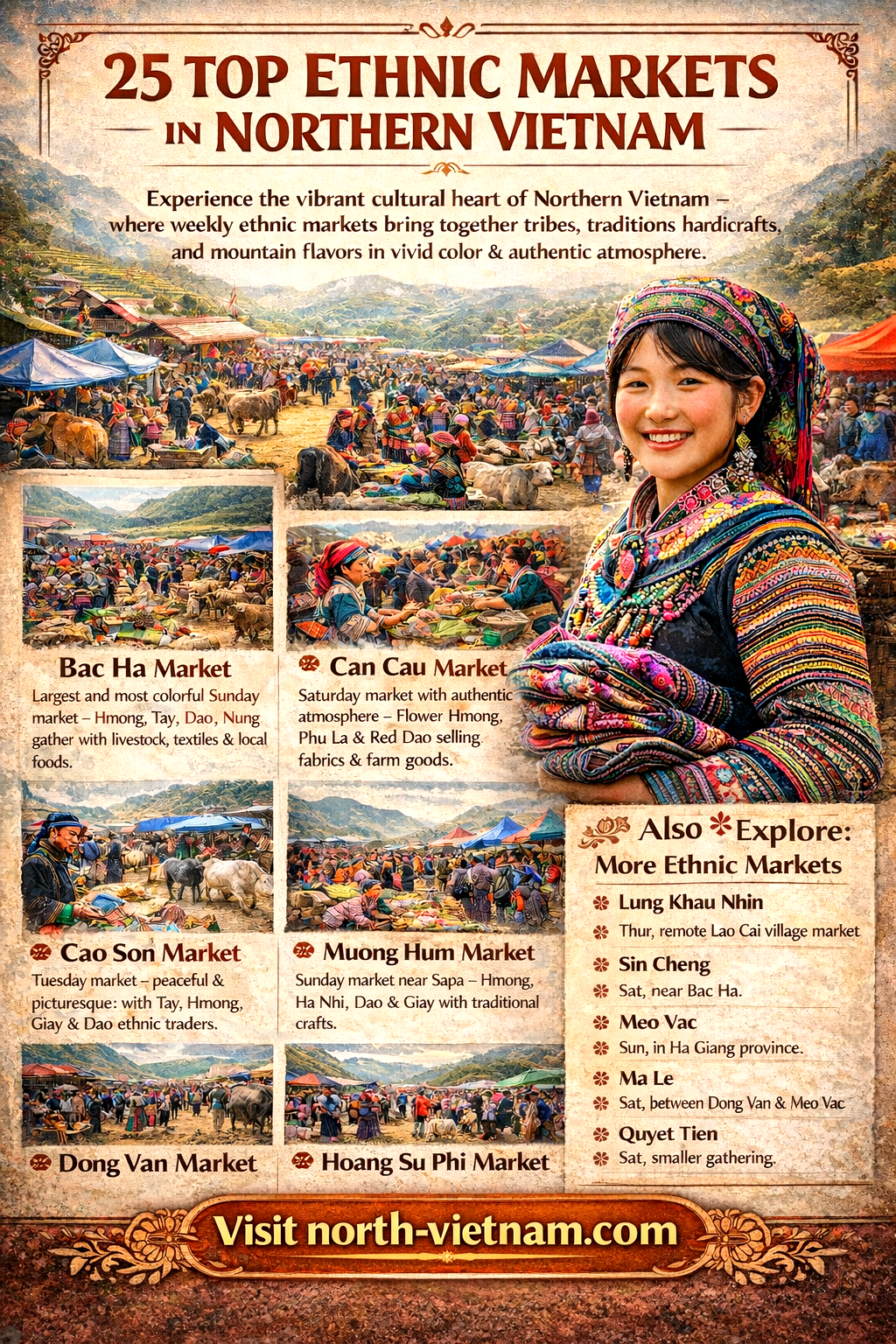
Quick answer: Ethnic markets in Vietnam are cultural hubs where minority groups sell textiles, crafts, food and local products. They offer a unique insight into traditions, costumes and daily life of groups like H’Mong, Dao and Tay, and are also lively social events with local culture and atmosphere.
At a glance:
- 🌄 Culture: Markets bring together groups like the H’Mong, Dao, and Tay, showcasing their traditions.
- 🛍️ Shopping: Find brocaded fabrics, silver jewelry, pottery, and local produce.
- 🍜 Food: Try local specialties like sticky rice cakes and traditional soups.
- 🗺️ Locations: Top markets include Sapa, Ha Giang, Bac Ha, and Cao Son.
- 🎉 Atmosphere: Markets are lively social events with music, dance, and gatherings.
Last updated April 2026
Ethnic markets in Vietnam: culture, food and local life
Ethnic markets in Vietnam are one of the best ways to experience the country’s cultural diversity. With over 50 ethnic groups, these markets bring together local traditions, food, clothing and daily life in one place.
Most markets are held in northern Vietnam, especially in regions like Sapa, Bac Ha and Ha Giang, where ethnic minority communities gather to trade goods and socialise.
Why visit ethnic markets in Vietnam
- Culture: traditional clothing, customs and local traditions
- Food: regional dishes, street food and local specialties
- Trade: markets selling produce, livestock and handmade goods
- Handicrafts: textiles, embroidery, jewelry and souvenirs
- Community: social gatherings, festivals and local life
These markets are not just places to shop, but important social and cultural events where visitors can see authentic life in Vietnam’s ethnic minority regions.

Traditional ethnic markets with long history
Many ethnic markets in northern Vietnam have existed for centuries and still follow traditional customs. One of the most unique is the Khau Vai Love Market, where people from different ethnic groups meet, socialise and form relationships.
These markets are not only about trade, but also about culture, gatherings and local traditions, often including music, games and community events.
❱ How to go to Sapa from Hanoi? ❰
Why ethnic markets are important
For many ethnic minority communities, markets are a key source of income, especially in remote areas. People sell agricultural products, livestock and handmade goods to support their families.
For visitors, these markets offer a chance to buy authentic local products and directly support ethnic minority communities.
Social life and community gatherings
Ethnic markets are also important social events. Hundreds or even thousands of people gather to meet friends, share food and drinks, exchange news and strengthen relationships between different ethnic groups.

Authentic markets, traditions and local experiences
Ethnic markets in Vietnam attract both local communities and travellers looking for authentic cultural experiences. While some markets are easy to access and popular, others remain remote and less visited.
Well-known markets such as Sapa and Bac Ha are popular due to their accessibility. In contrast, more authentic markets can be found in provinces like Ha Giang and Lao Cai, where traditional lifestyles are still strongly preserved.
❱ How to go to Ha Giang from Hanoi? ❰
Ha Giang is one of the most scenic and culturally rich regions in northern Vietnam. It is home to the Dong Van Karst Global Geopark, a UNESCO-listed area known for its dramatic landscapes and ethnic diversity.
Visiting these markets offers a chance to experience traditional customs, local food, handicrafts and everyday life in remote mountain communities.

Why visit ethnic markets in Vietnam?
🌏 Authentic atmosphere
Experience real local life in traditional ethnic markets.
👥 Diverse ethnic groups
Meet different communities in one place.
🛍️ Local products
Buy handmade goods and authentic souvenirs.
🍜 Traditional food
Taste regional dishes and local specialties.
🍍 Fresh produce
See and buy fresh fruits and local ingredients.
📸 Great photos
Capture colorful scenes and traditional clothing.
🌄 Unique landscapes
Travel through scenic mountains and valleys.
🧭 Off the beaten path
Visit remote areas away from mass tourism.
What you can buy in these ethnic markets in Vietnam?
| Items | Description |
|---|---|
| Traditional textiles | Handwoven fabrics, embroidered textiles, batik, and ikat fabrics |
| Handmade crafts | Bamboo and rattan products, wood carvings, pottery, and lacquerware |
| Silver jewelry | Intricate silver necklaces, bracelets, earrings, and rings |
| Local agricultural produce | Fresh fruits, vegetables, herbs, spices, and medicinal plants |
| Traditional garments | Traditional dresses (Ao Dai), tribal costumes, and embroidered clothes |
| Handicrafts | Handmade bags, baskets, hats, and ethnic accessories |
| Indigenous artworks | Paintings, sculptures, and handicrafts depicting ethnic motifs |
| Musical instruments | Traditional musical instruments like flutes, drums, and stringed instruments |
| Herbal remedies | Herbal medicines, natural remedies, and traditional health products |
| Indigenous food products | Local delicacies, dried goods, spices, and unique food items |
Tam Son ethnic market (Ha Giang) – video:
Ethnic markets in Vietnam – best markets list
This list highlights some of the most interesting and authentic ethnic markets in northern Vietnam. While there are many more markets across the region, these are among the most popular, largest or culturally unique.
Most markets take place early in the morning, often starting around 6–7 am. They are usually named after the town or village where they are held.
1. Sin Ho Market
Location: Lai Chau Province (about 70 km from Lai Chau town)
Days: Saturday and Sunday (Sunday is busier)
Ethnic groups: Red Dao, Hmong, Phu La, Cong
Highlights: Large market, fewer tourists, local food, textiles and everyday goods
2. Muong Hum Market
Location: About 50 km north of Sapa
Days: Sunday
Ethnic groups: Hmong, Ha Nhi, Phu La, Tu Di, Giay
Highlights: Authentic atmosphere, traditional culture, less crowded
3. Sapa Market
Location: Sapa
Days: Sunday
Ethnic groups: Hmong, Dao
Highlights: Most popular market, easy access, more tourists
4. Coc Ly Market
Location: Lao Cai Province (about 50 km from Lao Cai town)
Days: Tuesday
Ethnic groups: Flower Hmong
Highlights: Small market, textiles, handicrafts and local products

5. Cao Son Market
Location: About 25 km north of Coc Ly
Days: Wednesday
Ethnic groups: Flower Hmong, Phu La, Black Dao
Highlights: Local produce, vegetables, textiles and jewelry
6. Lung Khau Ninh Market
Location: About 10 km north of Cao Son
Days: Thursday
Ethnic groups: Black Dao, Giay, Tay, Flower Hmong
Highlights: Smaller local market with authentic atmosphere
7. Pha Long Market
Location: About 70 km north of Lao Cai, near the Chinese border
Days: Saturday
Ethnic groups: Hmong, Tay, Dung, Pa Di
Highlights: Agricultural products, textiles and livestock
8. Bac Ha Market
Location: Bac Ha town
Days: Sunday
Ethnic groups: Mainly Flower Hmong
Highlights: Large market, textiles, food, livestock and nearby trekking options

9. Lung Phin Market
Location: About 10 km from Bac Ha
Days: Sunday
Ethnic groups: Flower Hmong
Highlights: Smaller and quieter market with fewer tourists
10. Sin Cheng Market
Location: Lao Cai Province
Days: Saturday
Ethnic groups: Flower Hmong
Highlights: Authentic local market with low tourist presence
11. Coc Pai Market
Location: Western Ha Giang (Tuyen Quang Province)
Days: Saturday and Sunday
Ethnic groups: Hmong, Nung, La Chi, Cao Lan
Highlights: Remote market with food, textiles, livestock and local goods
12. Muong Khuong Market
Location: Lao Cai Province
Days: Sunday
Ethnic groups: Flower Hmong, Nung
Highlights: Handicrafts, livestock, vegetables and local products
13. Y Ty Market
Location: Bat Xat District, Lao Cai Province
Days: Saturday
Ethnic groups: Ha Nhi
Highlights: Remote mountain market with strong local traditions

14. Hoang Su Phi Market
Location: Vinh Quang town, Ha Giang (Tuyen Quang Province)
Days: Sunday
Ethnic groups: Hmong, Tay, Nung, Dao, La Chi
Highlights: Scenic mountain setting, wide range of goods including food, textiles and livestock
15. Ha Giang Town Market
Location: Ha Giang town center
Days: Sunday
Ethnic groups: Red Dao, White Hmong, Tay, Nung
Highlights: Largest market in the town, easy access and diverse products
16. Quan Ba Market
Location: Tam Son, Quan Ba District, Ha Giang
Days: Sunday
Ethnic groups: Various ethnic groups and local Vietnamese
Highlights: Largest market in the area, food, textiles, livestock and local products
17. Yen Minh Market
Location: Yen Minh town center
Days: Sunday
Ethnic groups: Multiple ethnic communities
Highlights: Large regional market, local wine, herbs, fruits, vegetables and agricultural products
18. Mau Due Market
Location: Yen Minh District, Ha Giang
Days: Saturday and Sunday (Sunday is busier)
Ethnic groups: Local ethnic communities
Highlights: Local produce, herbs, fruits, vegetables and traditional goods

19. Lung Phin Market
Location: About 35 km south of Dong Van, near Meo Vac
Days: Local market days (varies)
Ethnic groups: Multiple groups (up to 16)
Highlights: Authentic atmosphere, local products like mint, Lung Phin tea, dried beef, corn wine and brocade textiles
20. Pho Cao Market
Location: Dong Van District, Ha Giang (Tuyen Quang Province)
Days: Rotating schedule (market shifts one day earlier each week)
Ethnic groups: Up to 17 ethnic communities
Highlights: Unique rotating market, strong cultural diversity
21. Pho Bang Market
Location: Near Pho Cao, Dong Van District
Days: Rotating schedule (similar to Pho Cao)
Ethnic groups: Local ethnic communities
Highlights: Traditional market near historic village with centuries-old houses
22. Ma Le Market
Location: About 10 km from Dong Van, on the road to Lung Cu
Days: Saturday
Ethnic groups: Local ethnic communities
Highlights: Small market in Dong Van Karst Global Geopark, scenic surroundings

23. Dong Van Market
Location: Dong Van town, Ha Giang area
Days: Sunday (6:00–11:00 am)
Ethnic groups: Various ethnic communities
Highlights: One of the largest markets in northern Vietnam, livestock, food, textiles and local cuisine
24. Meo Vac Market
Location: Meo Vac town, Ha Giang area
Days: Sunday
Ethnic groups: Local ethnic communities
Highlights: Famous livestock market (buffalo, cows, goats), scenic area near Ma Pi Leng Pass
25. Khau Vai Love Market
Location: About 20 km from Meo Vac
Days: Once per year (26–27th day of the 3rd lunar month)
Ethnic groups: Various ethnic minorities
Highlights: Unique cultural event where people meet, reconnect and celebrate traditions
Note: A similar love market is also held in Moc Chau. You can also watch a video of the Khau Vai Love Market.
📍 Map of Ethnic Markets in northern Vietnam:


❓ FAQ + Useful Tips – Ethnic Markets in Vietnam:
What are ethnic markets in Vietnam?
Ethnic markets are traditional local markets where minority groups sell food, textiles, handicrafts, and local products.
Where can you visit ethnic markets in Vietnam?
The most famous markets are near Sapa, Bac Ha, Ha Giang, and Mu Cang Chai in northern Vietnam.
What can tourists buy at ethnic markets in Vietnam?
Visitors can buy handmade textiles, traditional clothing, jewelry, local food, spices, and handicrafts.
Can you bargain at ethnic markets in Vietnam?
Yes, bargaining is common, especially in tourist areas, but it should always be polite and respectful.
When are ethnic markets open in Vietnam?
Many ethnic markets operate only on specific weekly market days, often during weekends or mornings.
Can tourists visit ethnic markets without a guide?
Yes, most markets can be visited independently, though local guides can help with transport and communication.
Are there cultural activities at ethnic markets?
Some markets include local food, traditional music, and gatherings of nearby ethnic communities.
Can tourists take photos at ethnic markets?
Yes, but it is polite to ask for permission before photographing local people or children.
What etiquette should tourists follow at ethnic markets?
Dress respectfully, avoid loud behavior, and respect local customs and traditions.
Can you buy traditional clothing at ethnic markets?
Yes, many markets sell handmade clothing, embroidery, fabrics, and traditional accessories.
What are the most popular floating markets in Vietnam?
The most famous floating markets are Cai Rang, Cai Be, and Phong Dien in the Mekong Delta.
What is Vietnam known for?
Vietnam is known for landscapes, street food, rice terraces, beaches, and rich culture. Read more about interesting facts about Vietnam.
What is Vietnamese culture like?
Vietnamese culture combines traditions, family values, Buddhism, and local customs.
Ethnic markets in Vietnam – quick overview
| Market | Day | Location |
|---|---|---|
| Sin Ho | Sat–Sun | Lai Chau |
| Muong Hum | Sunday | Near Sapa |
| Sapa | Sunday | Sapa |
| Coc Ly | Tuesday | Lao Cai |
| Cao Son | Wednesday | Lao Cai |
| Lung Khau Ninh | Thursday | Lao Cai |
| Pha Long | Saturday | Lao Cai |
| Bac Ha | Sunday | Lao Cai |
| Muong Khuong | Sunday | Lao Cai |
| Y Ty | Saturday | Lao Cai |
| Hoang Su Phi | Sunday | Ha Giang |
| Dong Van | Sunday | Ha Giang |
| Meo Vac | Sunday | Ha Giang |
| Khau Vai | Annual | Ha Giang |