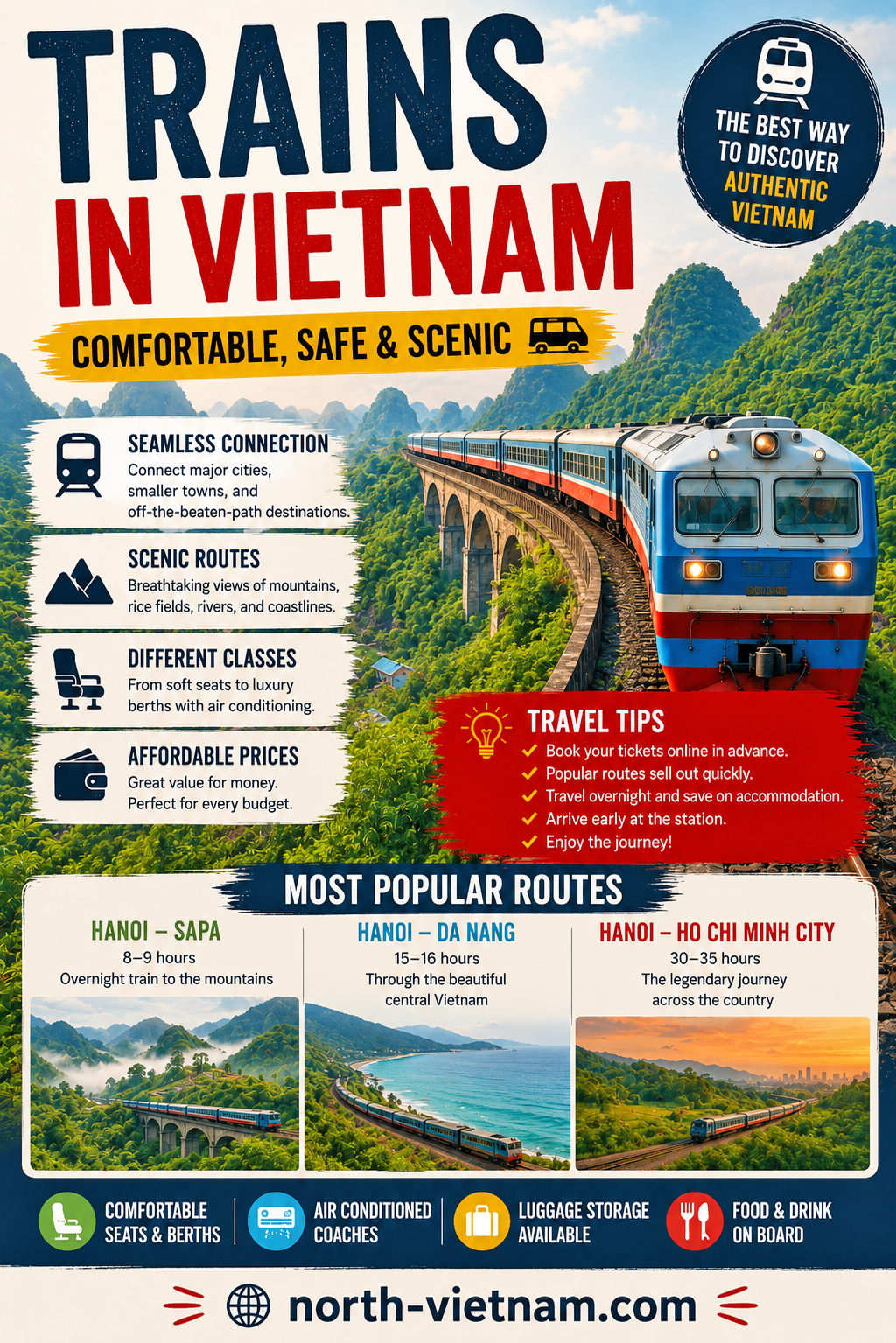
Sleeper train (overnight)
Comfortable cabins with beds, saves a night in hotel, ideal for long distances
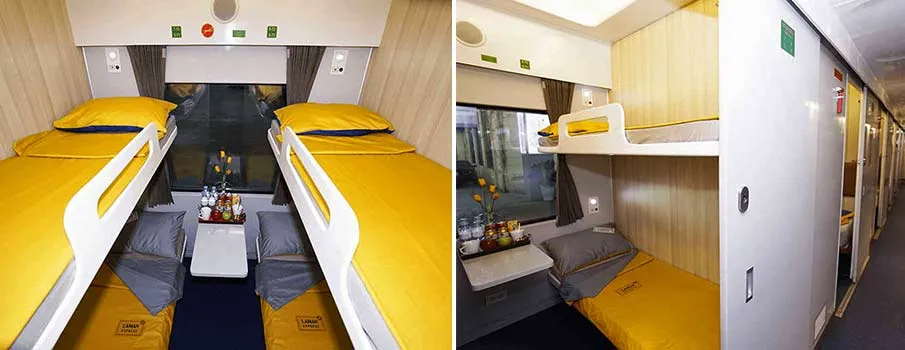
Soft sleeper (4-berth)
Air-conditioned cabins, fewer people, best balance of comfort and price
Seat / hard sleeper
Cheaper options, but less space and comfort for long journeys
Short routes by train
Slower than bus or flight, better for long scenic journeys
Quick answer: Travelling by train in Vietnam is a scenic, comfortable and increasingly convenient way to explore the country. The rail network links major cities and tourist destinations, from regular overnight sleepers through to luxury sleeper tourist trains. Whether you’re doing a short hop or the full north-to-south journey, the train offers a relaxing alternative to flights and buses.
At a glance:
- 🚆 Network coverage: Key routes include the Hanoi ↔ Ho Chi Minh City corridor + trains to Sapa – Lao Cai.
- 📜 Ticketing &- booking: Online, at stations or via agencies; book ahead for popular sleeper trains.
- 🛌 Comfort levels: Options range from regular seats to soft-sleeper cabins and luxury tourist trains.
- 🌄 Experience: Slow travel style with views of rural landscapes, coastal stretches and highlands, ideal for relaxed journey.
Tip: Choose an overnight sleeper for longer routes to save time and get more comfort. For scenic day rides, book the best available class early.
Last updated in April 2026
🚉 Train Travel in Vietnam – Complete Guide:
▶️ 1. Introduction to Train Travel in Vietnam:
Train travel in Vietnam is one of the most popular and scenic ways to explore the country. Vietnam’s railway network connects major cities such as Hanoi, Da Nang, Hue, Nha Trang, and Ho Chi Minh City, offering comfortable transport through mountains, coastlines, countryside, and large urban areas.
Compared to buses or domestic flights, traveling by train in Vietnam provides a more relaxing and authentic travel experience. Many routes belong among the most beautiful railway journeys in Southeast Asia, especially the famous coastal section between Hue and Da Nang.
This guide covers everything about trains in Vietnam, including railway routes, sleeper trains, ticket booking, train classes, prices, stations, overnight trains, and useful travel tips. You can also search and book train tickets in Vietnam online before your trip.
Overview of Vietnam’s Railway Network
- Vietnam’s railway system stretches over 2,600 km from Hanoi to Ho Chi Minh City and connects many important tourist destinations across the country.
Why Travel by Train in Vietnam?
- Vietnam train travel is affordable, scenic, safer than roads in many areas, and ideal for overnight long-distance journeys.
What You Will Find in This Guide
- Useful information about train routes, ticket reservations, sleeper cabins, railway stations, onboard facilities, and practical travel tips for tourists.
▶️ 2. Historical Background of Vietnam Railway:
Vietnam’s railway network was first built during the French colonial period in the late 19th century. The first railway line between Saigon (Ho Chi Minh City) and My Tho opened in 1881 and became the foundation of modern train transport in Vietnam.
Over time, the railway system expanded across the country and played an important role in transportation, trade, and national development. Today, trains remain an important and popular way to travel between major Vietnamese cities.
Importance of Railways in Vietnam
- Railways helped connect northern and southern Vietnam and became a key part of the country’s economic and cultural development.
Modernization of Vietnam Railways
- Vietnam’s train infrastructure has gradually improved with modern sleeper trains, upgraded stations, air-conditioned cabins, and better passenger services.

▶️ 3. Types of Trains in Vietnam:
Vietnam’s railway network offers a wide range of train classes and categories to suit every traveler’s preferences. From budget-conscious backpackers to luxury-seeking adventurers, there’s a train option for everyone.
🚆 Standard Train Classes
Choose between economy seats, soft seats, or first-class cabins depending on your budget and comfort preferences for train travel in Vietnam.
🛏️ Luxury Sleeper Trains
Luxury sleeper trains offer comfortable cabins, soft beds, air-conditioning, and premium services on popular tourist routes in Vietnam.
🌄 Overnight Sleeper Experience
Sleeper trains in Vietnam are ideal for long-distance travel, combining transportation, accommodation, and scenic countryside views.
Distinguishing Local vs. Long – Distance Trains
Understand the differences between local and long-distance trains in terms of route length, amenities, and passenger demographics, to choose the ideal option for your journey.
1. Local Trains: Short Routes for Commuters
-
- Experience the simplicity of local trains, operating on shorter routes and offering basic facilities catering primarily to local passengers and short-distance travelers.
2. Long-Distance Trains: Extensive Routes for Comfort
-
- Embark on extended journeys with long-distance trains, equipped with a wider range of amenities including sleeper compartments and dining cars for a comfortable and convenient travel experience.
Comparing Seating and Sleeper Options
Explore the variety of seating and sleeper options available aboard Vietnam’s trains, from standard seats to spacious cabins, ensuring a comfortable and enjoyable journey for passengers of all preferences.
1. Seating Arrangements: Comfort and Affordability
-
- Find the perfect balance between comfort and affordability with a range of seating arrangements including standard seats and reclining chairs.
2. Sleeper Berths: Rest and Recharge
-
- Opt for sleeper berths for overnight journeys, featuring cozy bunks and spacious cabins with amenities such as bedding and personal storage space, ensuring a restful journey amidst Vietnam’s stunning vistas.
➡️ Baolau
Search and book trains, buses, ferries, and flights across Thailand and Southeast Asia.
➡️ 12go.asia
Popular booking platform for buses, ferries, taxis, trains, and flights in Thailand and nearby countries.

| Train Type | Category / Class | Short Description |
|---|---|---|
| SE Trains | SE1–SE10 | The most common long-distance trains connecting Hanoi and Ho Chi Minh City. SE1–SE4 are faster and more comfortable than SE5–SE10. |
| TN Trains | TN1–TN10 | Slower than SE trains, cheaper and less comfortable. Suitable for budget travelers with more stops. |
| SP Trains | SP1–SP10 (Hanoi – Lao Cai / Sapa) | Overnight trains to Lao Cai, popular with tourists heading to Sapa. Include standard and tourist sleeper cars. |
| LC Trains | Local services (e.g. Hanoi – Lao Cai) | Cheap, slow, and very basic regional trains. Designed for locals, with no tourist comfort. |
| 5-Star Express | Tourist class | Private train with air-conditioned seats, clean interiors, and Wi-Fi. For example, on the Ho Chi Minh City – Nha Trang route. |
| Livitran Express | Tourist sleeper train | Private sleeping car attached to a regular train. Higher comfort, cleanliness, drinks and bedding included. |
| Victoria Express | Luxury tourist train | Luxury connection between Hanoi and Sapa, mainly for Victoria Hotel guests. Stylish interior and premium services. |
| Chapa Express | Tourist sleeper train | High-quality sleeper cars with air-conditioning, drinks, and wooden interiors. Suitable for tourists to Sapa. |
| King Express | Tourist sleeper train | Elegant coaches with 4-berth and 2-berth cabins, clean and comfortable for the journey to Sapa. |
| Fansipan Express | Tourist sleeper train | Modern comfortable cars with hot showers and basic service. Route: Sapa – Hanoi. |
| Dream Express | Premium tourist train | High comfort, limited number of cabins for more privacy, modern amenities and professional staff. |
| Violette Train | Tourist sleeper train | Elegant tourist train between Hanoi and Sapa / Hue / Da Nang. Luxury cabins, quality service, and clean environment. |
| Family Express | Tourist sleeper train | Focused on travelers with children. Sleeper cars with higher capacity and child-friendly features. Route: Hanoi – Lao Cai. |
| Laman Express | Tourist sleeper train | Newer train with wooden interiors and modern equipment. Runs between Hanoi and Sapa. Offers 4-berth and 2-berth cabins. |
| Damitrans Train | Tourist sleeper train | Private coach with high cleanliness, quiet ride, and helpful staff. Popular among tourists on the Hanoi – Sapa route. |
| Lotus Train | Tourist sleeper train | Stylishly decorated train with lotus motifs, comfortable cabins, and quality service. Suitable for more demanding tourists. |
| The Vietage | Ultra-luxury train | Top-tier train for 12 passengers between Da Nang and Quy Nhon. Fine dining, wellness, reclining seats, and all-inclusive service. |
| SJourney | Ultra-luxury train | Top-class train offering multi-day trips across Vietnam from north to south or vice versa. Limited schedules and dates. |
▶️ 4. Planning Your Vietnam Rail Journey:
Exploring Vietnam’s vast and diverse landscapes via rail beckons travelers to uncover hidden gems and cultural marvels. Before embarking on your adventure, carefully select destinations and routes that resonate with your interests and desires.
1. Discovering Captivating Destinations
-
- Vietnam presents a myriad of captivating destinations accessible by train, from the vibrant streets of Hanoi to the tranquil shores of Da Nang or the gateway to Sapa town in Lao Cai. Tailor your itinerary to match your preferences, whether you’re drawn to historical landmarks, nature’s wonders, or culinary delights.
2. Ticket Booking Options: Online vs. Stations
-
- When it comes to booking tickets for your Vietnamese rail journey, you have two primary options: online platforms (Baolau ➜ or 12go.asia ➜) or railway stations. Online platforms offer convenience and flexibility, enabling you to browse schedules, compare prices, and reserve seats or berths from the comfort of your home. Alternatively, purchasing tickets directly from railway stations provides the opportunity for face-to-face interaction and personalized assistance from ticket agents, albeit requiring more time and effort.
3. Understanding Ticket Classes and Fares
-
- Navigating ticket classes and fare structures is crucial for a smooth journey. Vietnamese trains typically offer a range of classes, from economy to first-class cabins, each with its own amenities and price points. Fare structures vary based on factors such as distance, class, and seasonality. Familiarize yourself with fare rules, including refund policies and ticket validity periods, to avoid surprises during your travels.
4. Tips for Optimal Seat or Berth Selection
Enhance your rail experience by securing the best seats or berths with these helpful tips:
- Book in advance: Secure your preferred seats or berths by booking well ahead of popular travel dates.
- Choose off-peak times: Opt for off-peak hours or seasons for increased availability and potential fare savings.
- Consider upgrades: Upgrade to a higher class or sleeper berth for added comfort and amenities if your budget allows.
- Stay flexible: Maintain flexibility with travel dates and times to maximize seat or berth options.

▶️ 5. Onboard Experience: Comfort and Convenience
Embark on a journey of comfort and convenience as you step onto Vietnam’s trains. Whether it’s a short commute or an overnight adventure, expect a host of facilities and amenities tailored to enhance your travel experience.
💺 Facilities & Comfort
Vietnam trains offer soft seats, sleeper cabins, air-conditioning, charging sockets, toilets, and luggage storage for comfortable long-distance travel.
🍜 Food on Vietnamese Trains
Many trains provide snacks, drinks, Vietnamese meals, instant noodles, and coffee during the journey, especially on overnight routes.
🌄 Travel Experience
Train travel in Vietnam offers scenic countryside views and a relaxed atmosphere where travelers can meet locals and other tourists.
🛡️ Safety & Security
Vietnamese trains are generally safe, but travelers should keep valuables secure and follow train staff instructions during the trip.

▶️ 6. Essential Packing Tips for Train Journeys
Packing smart for train travel in Vietnam can make long and overnight journeys more comfortable and convenient.
🎒 Lightweight Luggage
Choose a backpack or compact suitcase that is easy to carry through train stations and cabins.
👕 Comfortable Clothing
Wear light layers because temperatures on trains can change during the journey.
🥤 Snacks & Water
Bring drinks and snacks, especially for overnight or long-distance train routes.
🧴 Toiletries
Wet wipes, tissues, sanitizer, and basic toiletries are useful for longer trips.
🎧 Entertainment
Download movies, music, books, or podcasts before departure for extra comfort.
🔋 Power Bank
A power bank is recommended because charging outlets may not always be available.
Useful Tips for Train Travel in Vietnam:
🗣️ Language Tips
Learn a few basic Vietnamese phrases or use translation apps for easier communication.
⏰ Delays & Changes
Train delays can happen, so stay flexible and always check station updates or announcements.
🤝 Local Interaction
Vietnamese train journeys are friendly and social. Respect local customs and enjoy conversations with passengers.

▶️ 7. Exploring Vietnam by Rail:
Vietnam’s expansive railway network serves as a gateway to the country’s diverse landscapes, rich culture, and captivating history. Whether you’re an admirer of nature, a history enthusiast, or simply in search of an authentic travel experience, Vietnam offers a train route tailored to every taste.
1. Hanoi → Ho Chi Minh City
One of Vietnam’s most famous railway journeys connecting the north and south of the country.
2. Da Nang → Hue
Scenic coastal railway through the Hai Van Pass with mountain and sea views.
3. Hanoi → Lao Cai / Sapa
Popular overnight sleeper train route to the mountains and rice terraces near Sapa.
4. Da Nang → Ninh Binh
Long-distance train route to northern Vietnam and the famous karst landscapes of Ninh Binh.
5. Da Nang → Hanoi
Comfortable sleeper train connection between central and northern Vietnam.
6. Da Nang → Ho Chi Minh City
Popular overnight train route from central Vietnam to Ho Chi Minh City.

Scenic Views and Landmarks Along the Way
-
- As you traverse Vietnam’s stunning landscapes by rail, prepare to be enchanted by a tapestry of scenic views and iconic landmarks gracing the horizon at every turn. From the majestic peaks of the Truong Son Mountain Range to the tranquil waters in central – southern coast, each leg of your journey offers a unique glimpse into Vietnam’s natural splendor and cultural heritage.
Recommended Stops & Side Trips in Vietnam
Traveling through Vietnam by train is a great chance to explore cultural cities, beaches, and famous travel destinations along the railway route.
🏯 Hue
Hue is known for its Imperial City, royal tombs, pagodas, and historic atmosphere.
🏮 Hoi An
Hoi An offers lantern streets, ancient houses, markets, and excellent Vietnamese cuisine.
🏖️ Nha Trang
Nha Trang is popular for beaches, island tours, seafood, and water sports.
🌿 Phong Nha
Phong Nha near Dong Hoi is famous for caves, jungle landscapes, and adventure tours.
⛰️ Ninh Binh
Ninh Binh offers limestone mountains, boat rides, temples, and rice field scenery.
🌊 Quy Nhon
Quy Nhon is a quieter beach destination with seafood, coastal views, and fewer tourists.
🚆 Cultural Insights Gained from Train Travel
Traveling by train in Vietnam is not only about transportation, but also about experiencing local culture, landscapes, and everyday life across the country.
Long-distance train routes between Hanoi, Hue, Da Nang, and Ho Chi Minh City offer opportunities to meet local people, try regional food, and enjoy some of the most scenic railway journeys in Southeast Asia.

▶️ 8. Future of Railways in Vietnam
Vietnam is modernizing its railway network with new infrastructure, better train services, and future high-speed rail projects connecting major cities.
🚄 High-Speed Rail
Vietnam plans future high-speed rail connections between Hanoi, Da Nang, and Ho Chi Minh City.
🛤️ Railway Upgrades
Modernization projects include track improvements, electrification, and safer railway infrastructure.
🌏 Better Connectivity
New railway corridors may improve transport access between cities and remote regions in Vietnam.
♻️ Sustainable Travel
Train travel is becoming more popular thanks to lower emissions and eco-friendly transportation.
💺 Improved Comfort
Future trains are expected to offer better onboard services, comfort, and digital ticket systems.
🚇 Hanoi Metro
The Hanoi metro system (+ Ho Chi Minh City metro) is expanding with additional lines planned in the future.
💡 Travel Tip
Vietnam’s railway network is improving every year, making train travel a more comfortable and scenic alternative to domestic flights and long-distance buses.
Main railway station in northern Vietnam and starting point for many North–South train routes. Offers ticket offices, waiting areas, food stalls, and connections across the country. Major train hub in southern Vietnam with routes to Hanoi, Nha Trang, Da Nang, and central Vietnam. Facilities include ticket counters, luggage storage, and taxis. Important station in central Vietnam connecting major Vietnamese cities. Popular stop for travelers heading to Hoi An or Hue. Convenient railway station near the beaches of central Vietnam. Ideal for travelers visiting coastal resorts and nightlife areas. Railway station serving the historic city of Hue with train connections to Da Nang, Hanoi, and Ho Chi Minh City. Close to imperial monuments and tourist attractions. Main railway gateway to Sapa and northern mountain regions near the Chinese border. Popular arrival station for trekking and ethnic minority tours.
▶️ 9. The biggest and frequented railway stations in Vietnam:
1. Hanoi Railway Station
2. Saigon Railway Station
3. Da Nang Railway Station
4. Nha Trang Railway Station
5. Hue Railway Station
6. Lao Cai Railway Station
❓ FAQ + Useful Tips – Train Travel in Vietnam:
Is train travel reliable in Vietnam?
Train travel in Vietnam is generally reliable, affordable, and popular for long-distance routes.
What types of trains are available in Vietnam?
Vietnam offers hard seats, soft seats, sleeper cabins, and tourist sleeper trains.
How early should I book train tickets in Vietnam?
It is best to book train tickets several days in advance during holidays and high season.
What are the most scenic train routes in Vietnam?
Popular scenic routes include Hanoi to Lao Cai and the railway between Hue and Da Nang.
Is food available on Vietnamese trains?
Yes, most trains offer snacks, drinks, and simple Vietnamese meals onboard.
Are overnight trains in Vietnam comfortable?
Soft sleeper and tourist cabins are usually comfortable for overnight train travel in Vietnam.
Can I bring luggage on trains in Vietnam?
Yes, Vietnamese trains allow backpacks, suitcases, and larger travel luggage.
Are trains in Vietnam safe for tourists?
Train travel in Vietnam is safe, but travelers should watch personal belongings.
Can I buy train tickets online in Vietnam?
What facilities are available on Vietnamese trains?
Many trains offer air-conditioning, power sockets, toilets, sleeper beds, and luggage storage.
How long is the train journey from Hanoi to Ho Chi Minh City?
The train from Hanoi to Ho Chi Minh City takes about 30–35 hours.
Do Vietnamese trains have English-speaking staff?
English-speaking staff are more common at larger stations and tourist trains.
Can I travel with pets on Vietnamese trains?
Some trains may allow small pets, but rules should be checked before departure.
What should I do if I need help during a train journey?
Contact onboard staff or station personnel for assistance during your train trip.