
🚆 Train Travel in Vietnam
🚉 TOP Railway Routes
📍 Vietnam Railway Map
❓ FAQ + Travel Tips + Info
🎫 Book Train Tickets
Quick answer: Using the rail map of Vietnam gives you a clear overview of all major routes and stations: the main north-south line from Hanoi to Ho Chi Minh City, plus key branch lines. It’s a great planning tool if you’re thinking of travelling by train in Vietnam. You can view and download the map of the Vietnamese railway network and plan your stops accordingly.
At a glance:
- 📍 Main line: North-South Railway (Hanoi – Ho Chi Minh City), approx. 1,700 km.
- 🚆 Key stations: Hanoi, Ninh Binh, Vinh, Dong Hoi, Huê, Da Nang, Nha Trang, Ho Chi Minh City.
- 🗺️ Extras: Branch lines connect to Lao Cai, Hai Phong & Dong Dang. No direct rail links to Laos or Cambodia.
- 💡 Tip: Buy tickets online; full Hanoi – Ho Chi Minh journey takes ~33–39 hours.
Last updated in May 2026
Vietnam Railway Map & Train Travel Guide – Routes, Stations and Tips
The Vietnam railway map shows an extensive train network connecting major cities from north to south. However, some regions—especially parts of northern Vietnam and the far south—are less accessible by rail and require travel by bus, private car, or domestic flights. See more transport options in transport in Vietnam. The network continues to improve with ongoing upgrades and new railway projects.
Train travel in Vietnam is one of the most popular ways to explore the country. The main railway line runs between Hanoi and Ho Chi Minh City, passing through key destinations such as Ninh Binh, Hue, and Da Nang. This makes it a convenient option for both short trips and long-distance journeys.
- 🚆 Scenic routes → rice fields, mountains and coastal views
- 🛏️ Comfort options → seats, soft sleepers and cabins
- 📍 Central stations → easy access to cities and attractions
BOOK TRAIN TICKETS in Vietnam ➜
In addition to comfort, traveling by train in Vietnam is considered a safe and relatively eco-friendly option. Trains have a lower carbon footprint compared to flights or private cars, making them a better choice for sustainable travel. With stations typically located near city centers, trains also offer easy access to accommodation and major tourist sites.
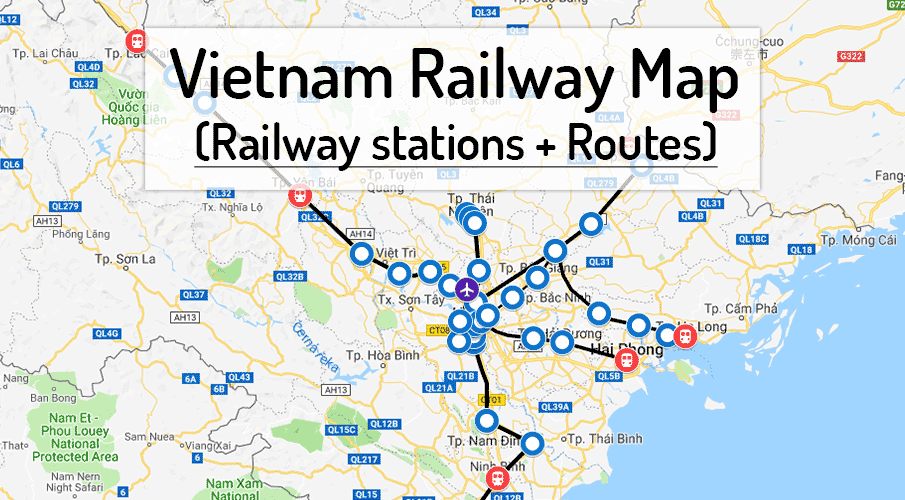
Vietnam Railway Map (2026) – Train Network & Routes (Click for High-Resolution Image)

🚉 Most Popular Train Routes in Vietnam
| Region | Popular Railway Routes |
|---|---|
| Northern Vietnam |
Hanoi → Sapa (Lao Cai) Lao Cai → Hanoi Hanoi → Ninh Binh |
| Central & Southern Vietnam |
Da Nang → Ho Chi Minh City Da Nang → Nha Trang Ho Chi Minh City → Nha Trang |
| North → Central Vietnam |
Hanoi → Dong Hoi Hanoi → Hue Hanoi → Da Nang |
| Central → Northern Vietnam |
Da Nang → Hanoi Hue → Ninh Binh Hue → Hanoi Dong Hoi → Hanoi |
📍 Vietnam Railway Map / Network:
Main railway stations in Vietnam for travelers > Lao Cai, Yen Bai, Dong Dang, Hanoi, Hai Phong, Ha Long, Ninh Binh, Thanh Hoa, Vinh, Dong Hoi, Hue, Da Nang, Quy Nhon, Nha Trang, Phan Thiet, Ho Chi Minh City.
This Vietnam railway map highlights the most important train stations and major tourist destinations. Large stations are marked with red circles. Smaller and less frequently used stations are not included.





❓ Vietnam Train Travel – FAQ + Tips
Are there trains in Vietnam?
- Yes, Vietnam has regular Vietnam Railways trains as well as luxury tourist sleeper trains with seats and sleeper cabins on popular routes.
How to book train tickets in Vietnam?
- You can easily book Vietnam train tickets and sleeper berths online on Baolau ➜ or 12go.asia ➜.
Is there a train from Hanoi to Ho Chi Minh City?
- Yes, trains from Hanoi to Ho Chi Minh City operate daily and the journey takes about 32–36 hours.
What is the most popular train route in Vietnam?
- The most popular railway route is from Hanoi to Sapa (Lao Cai) with tourist sleeper trains and regular overnight trains.
How to travel from Hanoi to Hoi An by train?
- You can travel by train to Da Nang and then continue by bus, minivan, or taxi to Hoi An.
Can you travel by train from Thailand to Vietnam?
- No, there is currently no direct international railway connection between Thailand and Vietnam.
Is there a train from Vietnam to Laos or Cambodia?
- No, Vietnam currently has no direct railway connection to Laos or Cambodia, so travelers use buses or flights.
Is there a train from Vietnam to China?
- Yes, there is an international train from Hanoi to Nanning via Dong Dang and Pingxiang border crossing.
How extensive is the railway network in Vietnam?
- Vietnam Railways connects major cities and tourist destinations from northern Vietnam to Ho Chi Minh City in the south.
What train classes are available in Vietnam?
- Vietnam trains offer hard seats, soft seats, sleeper berths, and also luxury tourist sleeper trains.
BOOK a TOUR / ACTIVITY in Vietnam ➜
