

ℹ️ Useful Information
🚶 How to move there
🚍 How to get there
☀️ Weather Conditions
🏡 Where to stay
🔍 Places + Activities
❓ FAQ + Travel Tips
🎫 Tour in Thailand
🎫 Book Tickets / Car
Quick answer: Kanchanaburi is a deeply historic and naturally beautiful part of western Thailand. It’s known for its World War II legacy—especially the Death Railway and the infamous Bridge over the River Kwai—as well as lush waterfalls, national parks, and quiet spots for reflection.
At a glance:
- 🌉 River Kwai Bridge: The iconic bridge that symbolizes the Death Railway and wartime memory.
- 🏥 JEATH War Museum: Offers a moving look into POW life during WWII.
- 🕊️ Kanchanaburi War Cemetery: Cemetery of Allied soldiers who died building the railway.
- 🛤️ Hellfire Pass Memorial: A challenging railway cut where prisoners worked under brutal conditions.
- 💧 Erawan Waterfall: Seven-tiered falls in a jungle setting, perfect for hiking and swimming.
- 🌿 Sai Yok National Park: Includes Sai Yok Noi waterfall and scenic forest hikes.
- 🌉 Wang Pho Viaduct: A cliff-hugging railway bridge built during the Death Railway construction.
- 🚰 Tha Thung Na Dam: A large hydroelectric dam on the Khwae Yai River, offering interesting views.
Last updated in July 2026.
Exploring Kanchanaburi: A Historical Gem in Thailand.
-
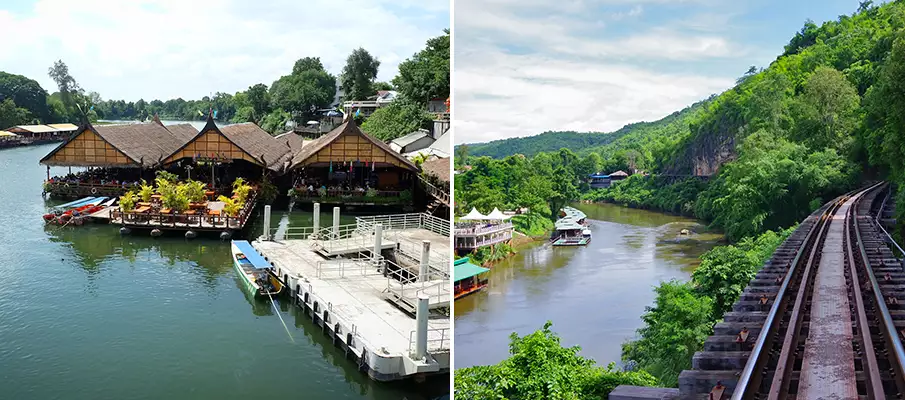
- Kanchanaburi, situated in western Thailand, is a captivating province known for its breathtaking natural beauty, historical significance, and cultural charm. Nestled along the banks of the Kwai Noi and Kwai Yai rivers, Kanchanaburi offers a diverse range of attractions that draw visitors from around the world.
- Geographically, Kanchanaburi spans an area of approximately 19,483 square kilometers and is bordered by Myanmar (Burma) to the west. The province is characterized by its lush landscapes, rugged mountains, and verdant forests, creating an idyllic setting for outdoor enthusiasts and nature lovers.
- One of Kanchanaburi’s most iconic landmarks is the Bridge over the River Kwai, immortalized in literature and film. The bridge is a poignant reminder of the area’s historical significance, as it was constructed during World War II by prisoners of war under Japanese occupation. Visitors can explore the nearby JEATH War Museum and pay tribute to those who sacrificed their lives during that time.
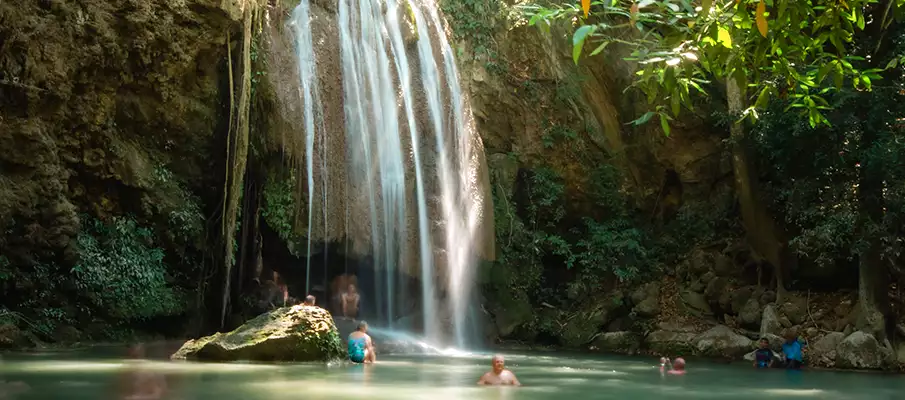
- Nature enthusiasts can venture into Erawan National Park, located a short distance from Kanchanaburi town. The park’s centerpiece is the stunning Erawan Waterfall, a cascading series of seven tiers that form emerald-hued pools. Visitors can hike along well-maintained trails, swim in the crystal-clear waters, and witness an array of wildlife in their natural habitat.
- Another natural wonder worth visiting is the Sai Yok Noi Waterfall, where visitors can enjoy the tranquility of the surroundings while marveling at the cascading waters. Adventure-seekers can also embark on a memorable journey by taking a scenic train ride on the infamous Death Railway, offering breathtaking views of the picturesque countryside.
- Kanchanaburi’s cultural heritage can be explored at the Prasat Muang Singh Historical Park, home to ancient Khmer ruins. The park showcases intricate stone carvings and architectural remnants that reflect the region’s rich history. Visitors can immerse themselves in the fascinating past of the area and gain insights into the ancient Khmer civilization.
Tracing the Historic Roots of Kanchanaburi:
-
- Kanchanaburi, a captivating province in western Thailand, boasts a rich and storied history that spans centuries. From ancient civilizations to World War II, the region’s past has left an indelible mark on its landscape and culture, offering visitors a unique glimpse into its historical heritage.
- The origins of Kanchanaburi can be traced back to the Dvaravati period (6th to 11th centuries), when it served as a flourishing center of the Mon civilization. Remnants of this ancient civilization can still be found in the form of intricate sculptures and architectural relics, which are showcased in the Prasat Muang Singh Historical Park. These artifacts offer a window into the artistic and cultural achievements of the Mon people.
- During the 18th and 19th centuries, Kanchanaburi came under Burmese rule as part of the expanding Burmese Empire. It was during this time that the region experienced significant cultural influences from Burma, which can still be observed in its architecture, cuisine, and traditional customs. The Burmese influence adds a unique flavor to the overall cultural tapestry of Kanchanaburi.
- However, it was the events of World War II that brought Kanchanaburi into the global spotlight. The province became infamous as the site of the construction of the Death Railway, a railway line connecting Thailand to Burma (now Myanmar). Built by prisoners of war, including Allied soldiers, under Japanese occupation, the railway was intended to provide a strategic supply route for the Japanese army.
- The construction of the Death Railway was marked by extreme hardships, with many prisoners losing their lives due to harsh conditions and mistreatment. The most iconic structure associated with the railway is the Bridge over the River Kwai, immortalized in Pierre Boulle’s novel and later a film adaptation. The bridge stands as a somber reminder of the sacrifices made during that dark period of history.
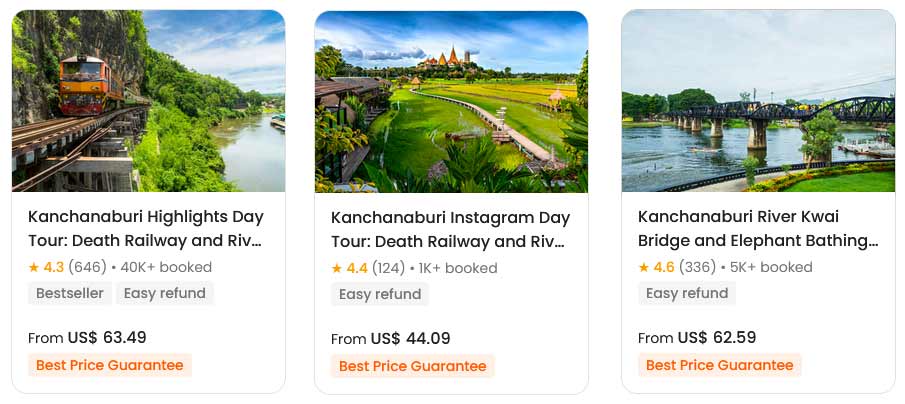
BOOK a TOUR / TRIP in Kanchanaburi ➜


Discover the Allure of Kanchanaburi: A Haven for Travelers.
-
- Nature enthusiasts are drawn to Kanchanaburi’s stunning landscapes, which encompass lush forests, cascading waterfalls, and serene rivers. Erawan National Park is a must-visit, boasting the iconic Erawan Waterfall, a seven-tiered marvel with crystal-clear pools perfect for swimming and unwinding. Sai Yok Noi Waterfall is another gem, offering a tranquil retreat amidst picturesque surroundings.
- History buffs are captivated by the province’s World War II connections. The Bridge over the River Kwai stands as a powerful symbol of the era, and visitors can walk across its historic tracks and reflect on its poignant past. The JEATH War Museum provides an immersive experience, showcasing artifacts and narratives that depict the realities faced by prisoners of war during the construction of the Death Railway.
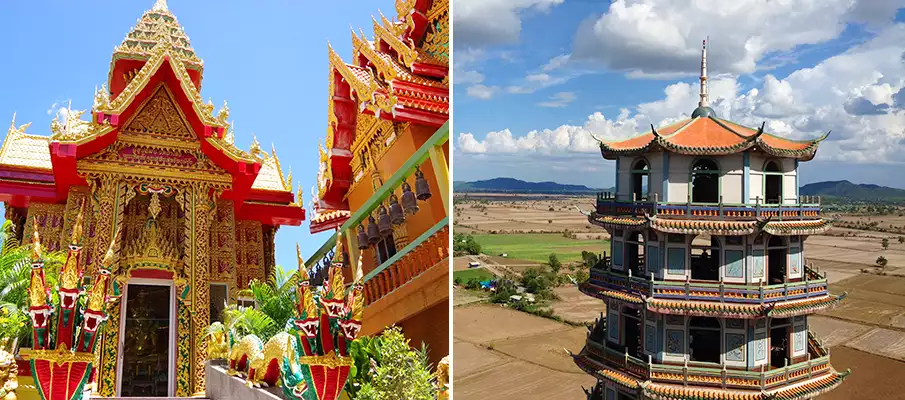
- For a unique cultural immersion, travelers can explore the vibrant local life in Kanchanaburi town. The charming River Kwai Road hosts bustling markets where visitors can savor delicious street food, shop for souvenirs, and interact with friendly locals. The Wat Tham Sua, or Tiger Cave Temple, offers panoramic views of the surrounding countryside and provides a serene spiritual retreat.
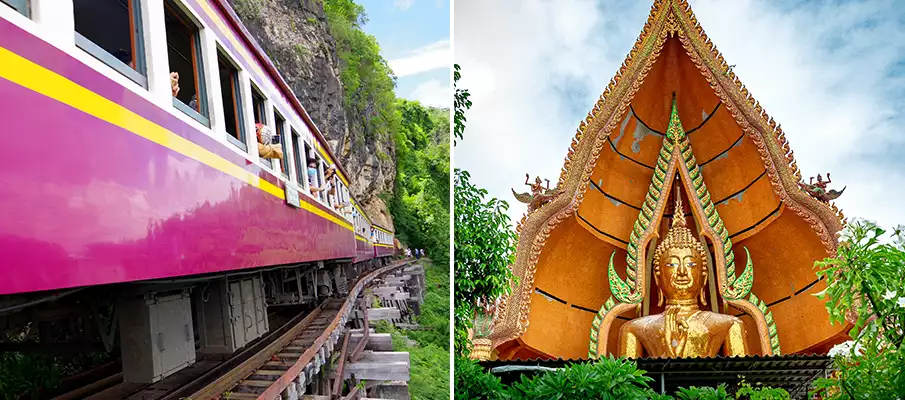
- Adventurous souls can embark on a memorable journey along the Death Railway, taking a scenic train ride through the countryside. The journey offers breathtaking vistas and an opportunity to witness historical remnants along the railway’s route. Outdoor activities such as hiking, river rafting, and cycling are also popular options for those seeking an adrenaline rush. Kanchanaburi’s accommodation options cater to a range of budgets and preferences, from luxury resorts to cozy guesthouses. The province boasts a warm and welcoming hospitality culture, ensuring a comfortable stay for all visitors.
- With its blend of natural beauty, historical significance, and cultural richness, Kanchanaburi has become a haven for travelers seeking a unique and enriching experience. Whether it’s exploring breathtaking waterfalls, delving into the poignant history, or simply immersing oneself in the local way of life, Kanchanaburi offers an unforgettable journey that leaves a lasting impression on all who visit.
Book Your Stay in Kanchanaburi ➜
Celebrating Cultural Delights: Festivals of Kanchanaburi.
-
- One of the most prominent festivals in Kanchanaburi is the Songkran Festival, the Thai New Year celebration held in mid-April. Songkran is a joyful and exuberant event where locals and tourists participate in water fights, symbolizing the washing away of bad luck and welcoming the new year with a fresh start. The streets are filled with laughter, music, and water splashing, creating an atmosphere of pure joy and excitement.
- Another cultural highlight is the Loi Krathong Festival, usually taking place in November. During this enchanting festival, locals gather along the riverbanks to release beautifully decorated krathongs, which are small lotus-shaped floats adorned with candles, incense, and flowers. As the krathongs float downstream, it is believed that they carry away worries and negative energies, bringing good luck and prosperity for the upcoming year.
- In addition to these major festivals, Kanchanaburi hosts various local events that provide insights into the province’s cultural heritage. The Mon Culture Festival showcases the traditions of the Mon ethnic group, featuring traditional dances, music performances, and traditional food stalls. Visitors can witness captivating cultural displays and learn about the Mon people’s rich history and customs.
- For art enthusiasts, the Kanchanaburi Red Cross Fair is a must-visit event. Held annually, the fair showcases local craftsmanship, art exhibitions, and performances. It is an excellent opportunity to appreciate the talents of local artists, explore traditional crafts, and sample delicious local cuisine. During the festivals, visitors can also witness traditional Thai performances, including graceful Thai classical dances and energetic Muay Thai boxing matches. These captivating displays offer a glimpse into the artistic and athletic prowess of the Thai culture.
Erawan National Park: Nature’s Paradise in Kanchanaburi.
-
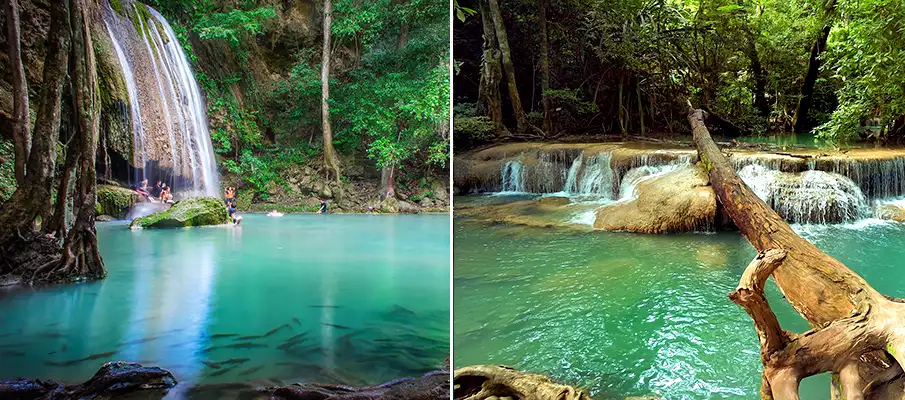
- Erawan National Park, nestled in the enchanting province of Kanchanaburi, Thailand, is a pristine oasis that captivates visitors with its breathtaking natural beauty and serene ambiance. Named after the mythical three-headed white elephant from Hindu mythology, the park offers a wealth of outdoor adventures and stunning landscapes that leave a lasting impression.
- The centerpiece of Erawan National Park is the awe-inspiring Erawan Waterfall. This seven-tiered waterfall is renowned for its emerald-hued pools, which cascade down the limestone cliffs, creating a picturesque spectacle. Each tier has its distinct charm, with crystal-clear waters inviting visitors to take a refreshing dip or simply soak in the tranquil surroundings. Exploring the waterfall’s different levels is an adventure in itself, with hiking trails and wooden walkways that lead to hidden pools and breathtaking viewpoints.
- Aside from the famous Erawan Waterfall, the national park is home to diverse ecosystems and abundant wildlife. Trekking through the lush forests, visitors might spot playful macaques, colorful bird species, and even elusive elephants roaming freely in their natural habitat. The park’s rich biodiversity offers nature enthusiasts a chance to connect with the pristine environment and appreciate the wonders of the natural world.
- For those seeking more outdoor thrills, Erawan National Park provides opportunities for jungle trekking, cave exploration, and camping. Hiking trails meander through the verdant forests, offering glimpses of hidden waterfalls, limestone caves, and panoramic vistas of the surrounding landscapes. Exploring the park’s caves, such as the Phartat Cave and Wang Bahdan Cave, reveals intricate stalactite formations and a sense of mystery.
- To ensure the preservation of this ecological gem, Erawan National Park adheres to sustainable tourism practices. Visitors are encouraged to follow responsible tourism guidelines, such as refraining from littering, respecting wildlife, and staying on designated trails. These efforts aim to protect the park’s natural beauty for future generations to enjoy.
Bridge over the River Kwai and Death Railway:
-
- The Bridge over the River Kwai and the Death Railway hold significant historical importance in Kanchanaburi, Thailand. These landmarks serve as enduring reminders of the sacrifices and hardships endured during World War II.
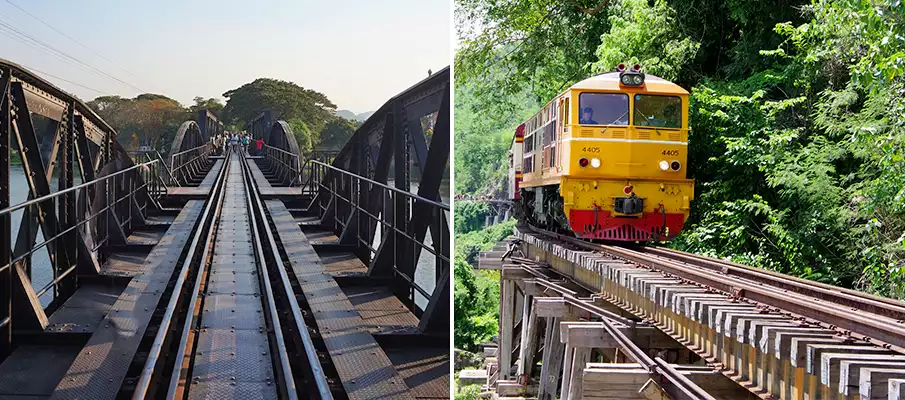
- The Bridge over the River Kwai, immortalized in literature and film, stands as a poignant symbol of the construction of the Death Railway. Built by prisoners of war under Japanese occupation, the railway aimed to establish a strategic supply route between Thailand and Burma (now Myanmar). The bridge, stretching across the scenic River Kwai, served as a vital link in this ambitious project.
- Visitors can walk along the tracks of the bridge and contemplate the immense challenges faced by the prisoners during its construction. The picturesque surroundings add to the bridge’s allure, creating a poignant contrast between the beauty of nature and the tragic history it witnessed.
- The Death Railway, officially known as the Thailand-Burma Railway, stretches over 400 kilometers through rugged terrain, including dense jungles and treacherous mountains. The construction of the railway was marked by extreme hardships and inhumane conditions, resulting in the loss of thousands of lives, including prisoners of war and forced laborers.
- Today, visitors can gain deeper insights into this dark chapter of history by exploring the JEATH War Museum. The museum houses a collection of artifacts, photographs, and documents that depict the arduous conditions endured by those involved in the construction of the railway. It offers a somber glimpse into the lives of prisoners of war and provides a platform for remembrance and reflection.
- A train ride along the Death Railway offers a unique and sobering experience. The scenic journey traverses picturesque landscapes and passes by historical remnants such as wooden trestle bridges and stone cuttings, serving as poignant reminders of the railway’s past. The ride allows visitors to appreciate the engineering challenges faced in building this infamous railway under challenging circumstances.
BOOK a TOUR / TRIP in Kanchanaburi ➜
Kanchanaburi’s Railway Museum: The History of the Death Railway.
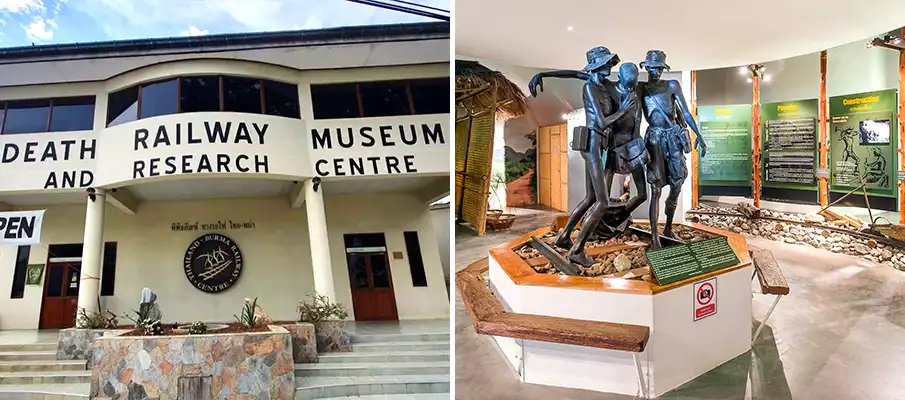
The Railway Museum in Kanchanaburi, Thailand, is a captivating institution that preserves the history and heritage of the infamous Death Railway, also known as the Burma Railway. This museum offers visitors a poignant journey into the past, telling the story of the railway’s construction during World War II and its impact on the lives of those involved.
History of the Railway: The Death Railway was built by forced laborers, primarily prisoners of war and Asian laborers, under harsh and brutal conditions during World War II. The railway’s construction was ordered by the Japanese Imperial Army to connect Thailand to Burma (now Myanmar) in order to provide a direct supply route for the military campaign in Southeast Asia.
The Museum’s Collection: The Railway Museum in Kanchanaburi houses a wide range of exhibits and artifacts that shed light on this dark period in history. Visitors can explore various sections of the museum, each focusing on different aspects of the railway’s history and the human stories connected to it. The collection includes:
-
- Photographs: A compelling array of photographs captures the construction process, the living conditions of the laborers, and the arduous terrain through which the railway was built.
-
- Artifacts: The museum displays original tools, uniforms, and personal belongings of those involved in the construction of the railway. These artifacts provide a tangible connection to the people who suffered during this time.
-
- Diaries and Letters: Personal accounts and letters from prisoners of war and laborers convey their emotions, struggles, and experiences during the construction of the railway. These documents offer a unique perspective on the human aspect of this history.
-
- Replica Train and Bridge: The museum also features a replica of the wooden bridge over the River Kwai, famously depicted in the book and film “The Bridge on the River Kwai.” There is also a replica train, showcasing the conditions in which prisoners and laborers were transported.
-
- Educational Displays: Informational panels and interactive exhibits provide a comprehensive overview of the historical context, construction challenges, and the significance of the railway.
The Surrounding Area: The Railway Museum is located in close proximity to the actual Death Railway, which remains a significant historical site. Visitors can explore the railway’s route, take a ride on the train along the surviving tracks, and visit the Allied War Cemetery, where many of the prisoners of war who perished during the railway’s construction are buried.
Kanchanaburi’s Vibrant Walking Street: A Feast for the Senses.
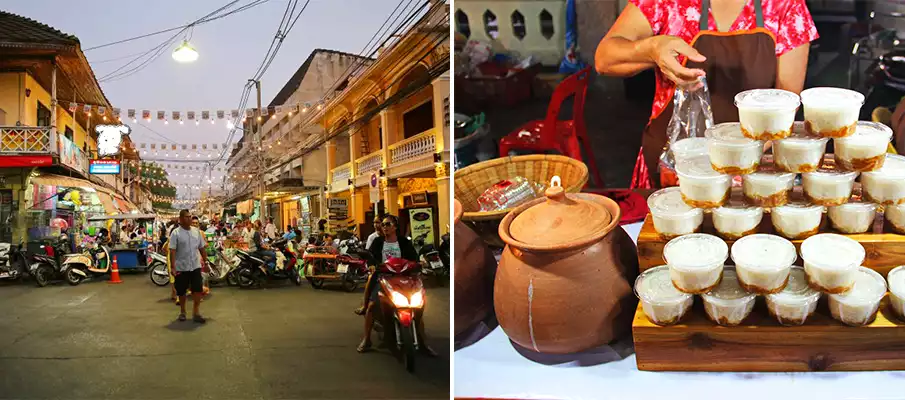
When the sun sets over Kanchanaburi, Thailand, a magical transformation takes place in the heart of the city. The bustling streets give way to a lively and colorful marketplace known as the “Kanchanaburi Walking Street.” This vibrant and culturally immersive experience is a must-visit for anyone exploring the region.
-
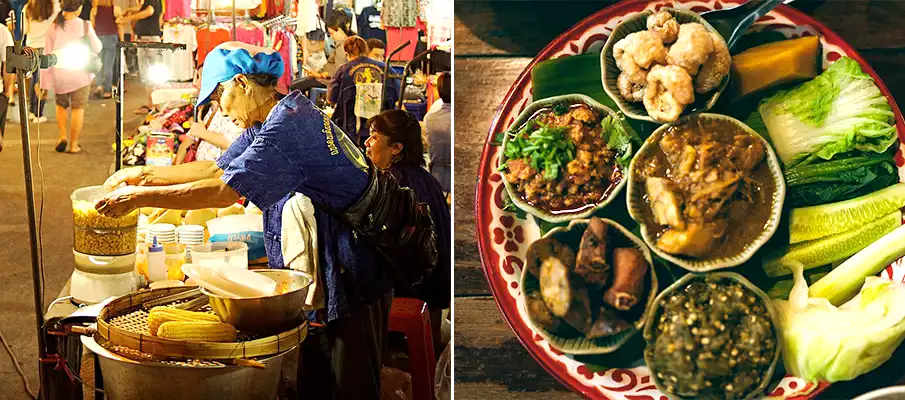
- A Taste of Thailand: Kanchanaburi Walking Street is a feast for the senses, and it all starts with the food. As you wander through the lively market, your nose will lead you to a mouthwatering array of street food stalls. From the savory Pad Thai to the tangy Som Tum (papaya salad), the flavors of Thailand are at your fingertips. Be sure to leave room for sweet treats like coconut ice cream and fresh fruit smoothies.
-
- Handmade Treasures: The market isn’t just about food; it’s also a treasure trove of local craftsmanship. Artisans and vendors proudly display their handmade goods, including clothing, jewelry, and unique souvenirs. Whether you’re looking for a one-of-a-kind gift or a special memento of your trip, you’ll find something to pique your interest.
-
- Cultural Delights: Kanchanaburi Walking Street isn’t just about shopping and dining. The market comes alive with cultural performances, offering a glimpse into the heart of Thailand’s rich traditions. You might find yourself enthralled by traditional Thai dance, music, and even captivating cultural shows.
-
- Art and Ambiance: Art enthusiasts will appreciate the local artists who often showcase their talents here. The street is adorned with vibrant colors, street performers, and musicians, creating an atmosphere that’s as visually stimulating as it is audibly pleasing. It’s a place where art and entertainment intertwine in the most delightful way.
-
- Community Connection: One of the most beautiful aspects of Kanchanaburi Walking Street is the chance to connect with the local community. As you chat with vendors, sample their offerings, and enjoy the performances, you’ll get a taste of Thai hospitality and culture in its purest form. It’s a genuine and heartwarming experience.
Wat Chai Chumphon Chana Songkhram in Kanchanaburi.
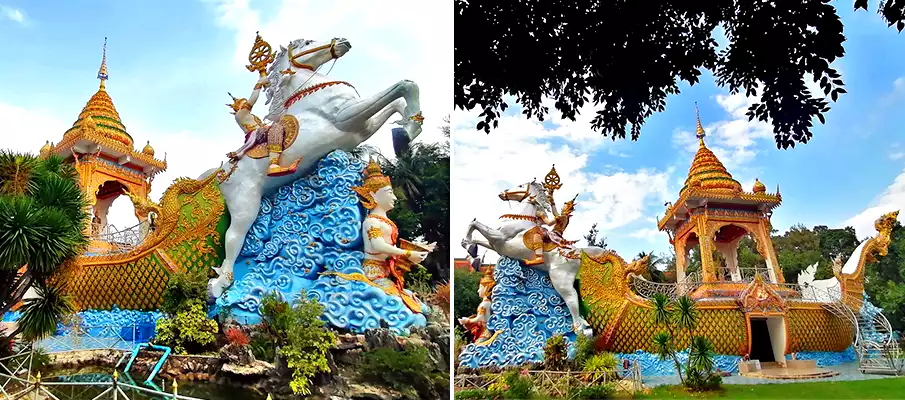
In the town center of Kanchanaburi, a hidden gem awaits those who seek to explore the region’s rich cultural heritage. Nestled among the lush greenery and historical landmarks is the magnificent Wat Chai Chumphon Chana Songkhram, a temple that encapsulates centuries of Thai tradition and spiritual significance.
-
- A Glimpse into the Past: Wat Chai Chumphon Chana Songkhram, often referred to as Wat Chai, is not just a place of worship but also a living testament to the area’s historical roots. Founded during the Ayutthaya period, this sacred site has witnessed the ebb and flow of time, remaining steadfast in its role as a center of devotion and a guardian of Thai culture.
-
- Architectural Splendor: One of the defining features of Wat Chai is its remarkable architecture. The temple boasts intricate detailing, traditional Thai design, and ornate decorations that make it a captivating visual spectacle. The stunning ubosot (ordination hall), with its glistening golden facade and elegant rooflines, beckons visitors to step inside and explore the world of Thai Buddhism.
-
- Cultural Significance: The temple is not merely a place of worship but also a hub for cultural preservation. Visitors can immerse themselves in the rituals and ceremonies that have been practiced here for generations. The serene atmosphere and the devoted monks provide a tranquil setting for spiritual reflection.
-
- The Bodhi Tree: One of the most cherished aspects of Wat Chai is the magnificent Bodhi tree that graces its grounds. This ancient tree is believed to be a descendant of the original Bodhi tree under which the Buddha attained enlightenment. Its presence adds an air of spirituality to the temple and is a revered symbol of Thai Buddhism.
Wat Tham Khao Pun: An Enchanting Cave Temple.
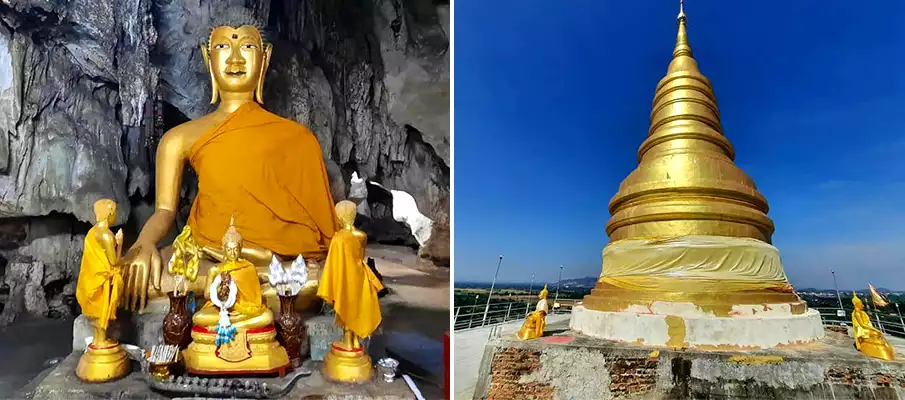
Tucked about 5 km of Kanchanaburi town center, lies the mesmerizing Wat Tham Khao Pun, a unique cave temple that combines natural beauty with spiritual significance. For travelers seeking an off-the-beaten-path adventure that encompasses both culture and nature, this hidden gem is a must-visit.
-
- The Cave’s Mystical Ambiance: Wat Tham Khao Pun in Kanchanaburi, often referred to as Wat Tham, is perched within a limestone cave, lending it an air of mystical enchantment. As you approach the temple, you’ll be greeted by the serene sounds of flowing water and the cool, calming air that emanates from the cave’s entrance.
-
- Spiritual Significance: This cave temple is not only a natural wonder but also a place of spiritual reverence. Within the cave, you’ll discover Buddha images and religious relics. It’s a tranquil space for meditation and reflection, and it’s considered sacred by the local community.
-
- The Hidden Waterfall: As you venture deeper into the cave, you’ll encounter a delightful surprise—a hidden waterfall. The cool waters cascading from the cave’s interior create a serene oasis, inviting you to take a refreshing dip. It’s a truly unique and refreshing experience that sets Wat Tham Khao Pun apart from traditional temples.
-
- Exploring the Surroundings: Wat Tham Khao Pun is set in a picturesque location surrounded by dense forest and limestone formations. Visitors can enjoy short hikes and nature walks in the area. The tranquil atmosphere makes it a perfect place for relaxation and photography.
-
- Respecting the Culture: When visiting this temple, it’s essential to be mindful of the local customs and traditions. Dress modestly and respectfully, and maintain a peaceful demeanor while exploring the temple grounds and cave. This ensures that you fully appreciate the spiritual and cultural significance of this unique site.

Savory Delights of Kanchanaburi: A Culinary Journey.
-
- Kanchanaburi, a captivating province in western Thailand, is not only renowned for its natural beauty and historical landmarks but also for its delectable cuisine. The region offers a delightful array of flavors, blending traditional Thai dishes with unique local specialties that tantalize the taste buds of both locals and visitors alike.
- One of the must-try dishes in Kanchanaburi is the famous “Kaeng Phed Ped Yang”, or Red Curry with Roasted Duck. This rich and aromatic curry is made with succulent roasted duck, simmered in a flavorful blend of red curry paste, coconut milk, and an assortment of herbs and spices. The tender duck meat, combined with the creamy curry sauce, creates a harmonious explosion of flavors that is sure to satisfy any palate.
- For seafood enthusiasts, Kanchanaburi offers an abundance of river prawns, known locally as “Kung Ten.” These freshwater prawns are renowned for their large size and sweet, succulent flesh. Grilled to perfection or stir-fried with garlic and chili, they provide a delightful culinary experience that showcases the province’s proximity to the rivers and their bountiful offerings.
- When it comes to street food, Kanchanaburi’s night markets are a treasure trove of delectable treats. “Kanom Jeen Nam Ya” is a popular dish that consists of thin rice noodles served with a flavorful fish curry sauce. The noodles are typically topped with an array of fresh herbs, vegetables, and condiments, creating a symphony of textures and flavors that is both satisfying and refreshing.
- Another street food favorite is “Moo Ping”, or grilled pork skewers. Marinated in a tantalizing blend of spices and herbs, the skewered pork is grilled over charcoal until tender and slightly charred. The result is a succulent and aromatic delight that is often enjoyed with sticky rice and a tangy dipping sauce.
- To cool down on a hot day, locals and visitors indulge in “Nam Kang Sai”, a traditional Thai dessert made with shaved ice and an assortment of toppings. Drizzled with sweet syrups, the ice is adorned with colorful jellies, beans, fruits, and sweetened coconut milk. It’s a refreshing treat that provides a burst of flavors and textures, perfect for beating the heat.
- Kanchanaburi’s culinary offerings reflect the region’s cultural diversity and geographical advantages. With its blend of traditional Thai flavors, river delicacies, and street food delights, the cuisine of Kanchanaburi promises a gastronomic adventure that will leave visitors craving for more.
What are the transport options in Kanchanaburi?
In Kanchanaburi, there are several transport options available to help you navigate the province and reach its various attractions:
-
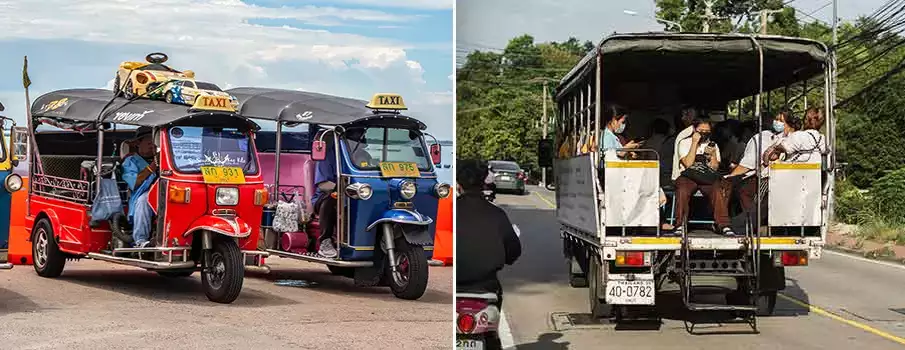
- Taxis and Tuk-tuks: Taxis and tuk-tuks are readily available in Kanchanaburi town. Taxis are a convenient option for private transportation, while tuk-tuks are three-wheeled motorized vehicles that offer a fun and adventurous way to get around shorter distances.
- Songthaews: Songthaews are shared taxis or pickup trucks with two rows of seats in the back. They operate as a shared transport system along set routes and can be flagged down or found at designated stops. They are an economical option for traveling short to medium distances within the town and nearby areas.
- Motorcycle Taxis: Motorcycle taxis are a common mode of transport in Kanchanaburi. These are motorbikes with drivers who offer rides for shorter distances. They are a quick and efficient way to navigate through traffic and reach specific destinations.
- Rental Cars and Motorbikes: Renting a car or motorbike is a popular option for travelers who prefer more flexibility and independence. Several rental agencies operate in Kanchanaburi, offering a range of vehicles to suit different needs. However, it’s important to have a valid driver’s license and be familiar with local traffic regulations.
- Bicycles: Kanchanaburi’s scenic landscapes make it an ideal destination for cycling enthusiasts. Renting a bicycle is a fantastic way to explore the town and its surroundings at a leisurely pace. Many guesthouses and rental shops provide bicycles for daily or hourly rates.
- Trains: Kanchanaburi is accessible by train, and the town has a train station conveniently located near the River Kwai Bridge. Trains connect Kanchanaburi to Bangkok and other major cities in Thailand. Taking a train offers a picturesque journey through scenic countryside, providing a unique travel experience.
It’s worth noting that some popular tourist attractions, such as Erawan National Park and the Death Railway, may require additional transportation options beyond the town itself. Local tour operators and travel agencies often offer organized tours or transportation services to these destinations.
Book Your Stay in Kanchanaburi ➜
Why to visit or not to visit Kanchanaburi?
The decision to visit Kanchanaburi depends on individual interests, preferences, and travel goals. If you have an interest in history, nature, and cultural immersion, Kanchanaburi offers a unique and enriching experience. However, it’s essential to consider personal comfort levels and sensitivities when deciding on a travel destination.
👉 Reasons to visit Kanchanaburi:
-
- Historical Significance: Kanchanaburi is rich in World War II history, particularly the infamous Death Railway and the Bridge over the River Kwai. These landmarks offer a chance to learn about the region’s past and pay tribute to those who sacrificed their lives.
- Natural Beauty: Kanchanaburi boasts stunning natural landscapes, including the picturesque Erawan Waterfall and serene river settings. It’s an excellent destination for nature lovers, with opportunities for hiking, wildlife spotting, and exploring national parks.
- Cultural Immersion: The province provides an authentic Thai cultural experience. Visitors can explore local markets, sample delicious street food, and witness traditional festivals, offering a glimpse into the vibrant local way of life.
- Outdoor Activities: Adventure enthusiasts can enjoy a range of activities in Kanchanaburi, such as river rafting, jungle trekking, and cycling. The diverse landscapes provide ample opportunities for thrilling adventures and adrenaline-pumping experiences.
- Tranquil Retreat: Kanchanaburi’s peaceful ambiance and idyllic countryside make it an ideal place to escape the hustle and bustle of city life. It offers a serene retreat where visitors can relax, rejuvenate, and immerse themselves in nature’s tranquility.
👉 Reasons not to visit Kanchanaburi:
-
- Historical Sensitivity: For some individuals, visiting sites associated with war and tragedy may be emotionally challenging or uncomfortable. It’s important to consider personal preferences and sensitivities when deciding whether to visit Kanchanaburi.
- Remote Location: Kanchanaburi is located approximately 130 kilometers west of Bangkok, which may require additional travel time and logistics for visitors who are primarily focused on exploring the capital city and its immediate surroundings.
- Limited Urban Entertainment: While Kanchanaburi offers natural beauty and historical attractions, it may not provide the same level of urban entertainment and nightlife options as larger cities like Bangkok. Those seeking a vibrant city experience with a multitude of entertainment choices may find other destinations more suitable.
BOOK a TOUR / TRIP in Kanchanaburi ➜
🚍 How to get and travel to Kanchanaburi?
Getting to Kanchanaburi is relatively straightforward, and there are several transportation options available depending on your starting point:
-
- By Air: The nearest major airport to Kanchanaburi is Suvarnabhumi Airport (BKK) in Bangkok. From there, you can take a taxi or public and private transportation to reach Kanchanaburi. The journey by road takes approximately 2-3 hours, depending on traffic conditions.
- By Train: Kanchanaburi has a train station located near the town center. Trains from Bangkok’s Thonburi Station (also known as Bangkok Noi Station) run regularly to Kanchanaburi. The train journey is scenic, passing through the countryside, and takes around 2-3 hours.
- By Bus/Van: Buses from Bangkok’s Southern Bus Terminal (Sai Tai Mai) provide a convenient and affordable option to reach Kanchanaburi. Multiple bus companies operate daily services, and the journey takes approximately 2-3 hours, depending on traffic conditions.
- By Private Car: If you prefer the flexibility and convenience of a private car, you can hire a taxi or arrange for a private transfer service from Bangkok to Kanchanaburi. This option allows you to travel at your own pace and potentially explore other attractions along the way.
- You can book tickets / car to Kanchanaburi on Baolau ➜ or 12go.asia ➜

☀️ Weather in Kanchanaburi + The Best Time to Visit:
Kanchanaburi experiences a tropical savanna climate, characterized by hot and humid weather throughout the year. The region generally has three distinct seasons: the hot season, the rainy season, and the cool season.
-
- Hot Season (March to May): During the hot season, Kanchanaburi experiences scorching temperatures, often exceeding 35°C (95°F). The humidity levels are high, intensifying the heat. It’s important to stay hydrated, seek shade, and take precautions against the sun. Despite the heat, this season can still be enjoyable for travelers who can tolerate hot weather and want to take advantage of fewer crowds and potentially lower accommodation rates.
- Rainy Season (June to October): The rainy season in Kanchanaburi brings frequent rainfall, with July to September being the wettest months. Thunderstorms are common during this time. The temperatures remain warm, but the rain provides relief from the heat. While some outdoor activities may be affected by the rain, the lush green landscapes and fewer tourists can offer a unique and serene experience. It’s advisable to pack a raincoat or umbrella and plan activities accordingly.
- Cool Season (November to February): The cool season is considered the best time to visit Kanchanaburi. Temperatures range from 20°C to 30°C (68°F to 86°F), with lower humidity levels compared to other seasons. The weather is pleasant, making it ideal for outdoor activities, sightseeing, and exploring attractions such as waterfalls and national parks. This period attracts more tourists, so it’s recommended to book accommodations and popular tours in advance to secure availability.
The best time to visit Kanchanaburi is during the cool season, from November to February, when the weather is most comfortable for outdoor activities and exploring the attractions. However, it’s worth noting that the rainy season, especially from June to October, can offer lush green landscapes and fewer crowds. Consider personal preferences and activities planned when choosing the best time to visit.
| Month | Weather | Description |
|---|---|---|
| January | Warm & Dry | Pleasant temperatures and sunny weather make January ideal for sightseeing and national parks. |
| February | Warm & Dry | One of the best months to visit with comfortable weather for waterfalls and historical sites. |
| March | Hot & Dry | Temperatures rise, but conditions remain dry and perfect for outdoor activities. |
| April | Hot & Dry | The hottest month of the year, ideal for waterfalls and celebrating the Songkran festival. |
| May | Hot & Rainy | The rainy season begins with tropical showers and increasingly green landscapes. |
| June | Hot & Rainy | Frequent afternoon rain refreshes the forests and fills waterfalls throughout the region. |
| July | Hot & Rainy | Warm, humid weather with regular showers, perfect for lush scenery and river views. |
| August | Hot & Rainy | Heavy rainfall continues, creating beautiful waterfalls and vibrant tropical nature. |
| September | Hot & Rainy | One of the wettest months, with impressive waterfalls and fewer tourists. |
| October | Warm & Rainy | Rain gradually decreases while temperatures become more comfortable for sightseeing. |
| November | Warm & Dry | Cooler, sunny weather returns, making it one of the best months to visit. |
| December | Warm & Dry | Dry, pleasant conditions are perfect for exploring national parks and historical attractions. |
🏡 Accommodation in Kanchanaburi / Where to Stay:
Kanchanaburi, a charming province in western Thailand known for its historical sites and natural beauty, offers a range of accommodation options to suit different preferences and budgets. Here are some popular accommodation options available in Kanchanaburi:
-
- Riverside Resorts and Hotels: Kanchanaburi is famous for its scenic riverside locations, and many resorts and hotels offer picturesque views of the River Kwai. These accommodations often provide comfortable rooms, swimming pools, riverside dining options, and easy access to popular attractions like the Bridge over the River Kwai.
- Boutique Hotels and Guesthouses: Kanchanaburi has a selection of boutique hotels and guesthouses that provide a cozy and personalized experience. These accommodations often feature unique designs, charming interiors, and friendly service. Staying in a boutique hotel or guesthouse adds a touch of character and authenticity to your stay.
- Luxury Resorts and Spas: For those seeking a luxurious retreat, Kanchanaburi boasts upscale resorts and spas that offer world-class facilities and services. These accommodations provide elegant rooms or villas, indulgent spa treatments, gourmet dining options, and a tranquil ambiance in beautiful natural surroundings.
- Budget Hotels and Hostels: Travelers on a budget can find a variety of affordable hotels and hostels in Kanchanaburi. These accommodations offer clean and comfortable rooms or dormitory-style accommodations with shared facilities. Budget hotels and hostels are ideal for backpackers, solo travelers, and those looking for cost-effective options.
- Floating Raft Houses: Experience a unique stay by choosing floating raft houses along the River Kwai or nearby reservoirs. These traditional-style accommodations provide a rustic yet charming experience, allowing you to immerse yourself in the natural surroundings and enjoy peaceful evenings on the water.
- Nature Resorts and Eco-Lodges: Kanchanaburi’s natural beauty is complemented by nature resorts and eco-lodges that offer an immersive experience in the surrounding environment. These accommodations are often nestled amidst lush greenery and provide a serene and eco-friendly stay.
- Homestays and Farmstays: Experience the local way of life by opting for homestays or farmstays in Kanchanaburi. Stay with local families or at farms to get a firsthand experience of Thai hospitality, participate in farming activities, and enjoy authentic home-cooked meals.
➜ Accommodation in Kanchanaburi – Book Here

🏞️ Best Places to Visit & Things to Do in Kanchanaburi
- Erawan Waterfall – A spectacular seven-tier waterfall with emerald pools inside Erawan National Park.
- Bridge over the River Kwai – Kanchanaburi’s most famous landmark and an important World War II memorial.
- Death Railway – Ride the historic railway through dramatic cliffs, bridges, and beautiful countryside.
- Thailand-Burma Railway Centre – An excellent museum explaining the history of the Death Railway.
- Kanchanaburi Skywalk – A glass walkway offering panoramic views where the Kwae Yai and Kwae Noi rivers meet.
- Kanchanaburi Walking Street – A lively weekend market with Thai food, souvenirs, and local crafts.
- Wat Chai Chumphon – A peaceful riverside Buddhist temple in the center of Kanchanaburi.
- Wat Tham Khao Pun – A fascinating cave temple filled with Buddhist shrines and limestone chambers.
- Hellfire Pass Memorial Museum – A moving museum and walking trail dedicated to POWs who built the Death Railway.
- Sai Yok National Park – A beautiful park featuring waterfalls, caves, rivers, and jungle hiking trails.
- Prasat Muang Singh Historical Park – Ancient Khmer temple ruins surrounded by peaceful gardens.
- Krasae Cave – A historic cave temple overlooking one of the most scenic sections of the Death Railway.
- Chong Kai War Cemetery – A peaceful memorial honoring Allied prisoners of war.
- JEATH War Museum – Learn more about World War II and the construction of the Burma Railway.
❓ Frequently Asked Questions About Kanchanaburi
How can I book tickets from Bangkok to Kanchanaburi?
What is Kanchanaburi famous for?
Kanchanaburi is best known for the Bridge over the River Kwai, the Death Railway, World War II memorials, and Erawan National Park.
How do I get to Kanchanaburi from Bangkok?
You can travel from Bangkok by train, bus, minivan, or private car. The journey usually takes around 2–3 hours. See our Kanchanaburi Travel Guide.
What are the top attractions in Kanchanaburi?
Highlights include the Bridge over the River Kwai, Erawan Waterfall, Hellfire Pass, Sai Yok National Park, and the Death Railway.
When is the best time to visit Kanchanaburi?
The best time is from November to February when temperatures are cooler and ideal for sightseeing and hiking.
What outdoor activities are available?
Popular activities include hiking, waterfall visits, rafting, kayaking, cave exploration, train rides, and wildlife watching.
Can I stay in floating raft houses?
Yes. Several floating resorts on the River Kwai offer unique overnight stays surrounded by nature.
Can I ride the Death Railway?
Yes. The train ride is one of Thailand’s most scenic railway journeys and passes across the famous River Kwai Bridge.
Can I visit Hellfire Pass independently?
Yes. The museum and walking trail can easily be visited without joining an organized tour.
What local food should I try?
Try grilled river fish, Khao Chae, Kanom Jeen, fresh tropical fruit, and authentic Thai street food.
Where can I travel from Kanchanaburi?
You can continue to Hua Hin, Chiang Mai, or return to Bangkok.
What souvenirs should I buy in Thailand?
Find the best gift ideas in our guide: What to Bring from Thailand.
Is Thailand expensive to travel?
Thailand is generally affordable for most travelers. Learn more in Prices in Thailand.
What currency is used in Thailand?
The official currency is the Thai Baht (THB). Read more in Money & Currency in Thailand.
What is Thai cuisine like?
Thai cuisine is famous for its balance of sweet, sour, salty, and spicy flavors. Discover more in our Thai Food & Cuisine Guide.
BOOK a TOUR / TRIP in Kanchanaburi ➜


Ubon Ratchathani – Travel Guide|Chiang Rai – Travel Guide|Chiang Mai – Travel Guide|Koh Kood – Travel Guide|Koh Chang – Travel Guide|Pattaya