Quick answer: Religion in Vietnam is a diverse mix of Buddhism, folk beliefs, ancestor worship, Christianity and uniquely Vietnamese religions such as Cao Dai and Hoa Hao. Many people combine different traditions in everyday spiritual life.
At a glance:
- 🛕 Buddhism: One of Vietnam’s most influential religious traditions.
- 🧠 Folk Religion: Ancestor worship and local spiritual traditions are widespread.
- ✝️ Christianity: Catholic and Protestant communities are found across the country.
- 🔯 Cao Dai: A uniquely Vietnamese religion combining several religious traditions.
- ☸️ Hoa Hao: A Vietnamese Buddhist reform movement originating in southern Vietnam.
- 🕌 Islam: Mainly practiced by Cham communities, especially in southern Vietnam.
Last updated in August 2026
Religion in Vietnam: Faith, Beliefs and Spiritual Traditions
Religion in Vietnam is a fascinating mix of traditional beliefs, Buddhism, ancestor worship and different world religions. Spiritual practices are closely connected with family life, culture, festivals and everyday traditions.
🛕 Buddhism & Spirituality
Buddhism has strongly influenced Vietnamese culture, philosophy and daily life, with pagodas found throughout the country.
🙏 Ancestor Worship
Honoring ancestors remains an important tradition, often practiced at home altars alongside other religious beliefs.
☯️ Chinese Influences
Confucianism and Taoism have shaped Vietnamese values, family traditions, education and spiritual practices over centuries.
✝️ Diverse Religious Life
Christianity, Islam and uniquely Vietnamese religions such as Cao Dai and Hoa Hao are also part of the country’s spiritual landscape.
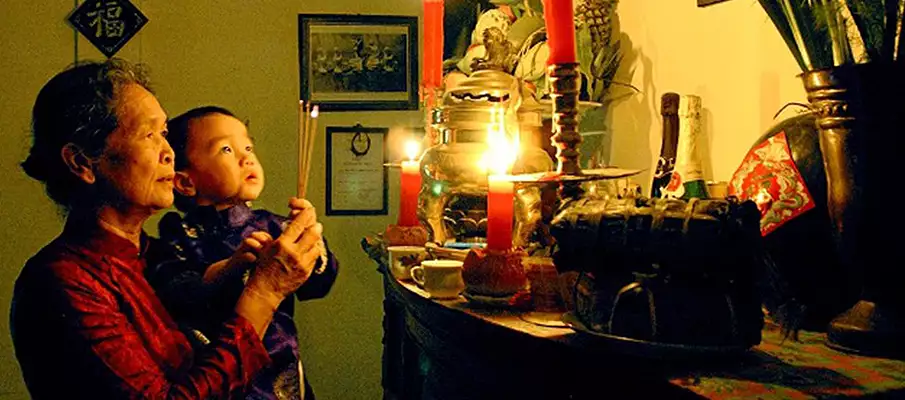
1. Folk Religion and Ancestor Worship (Đạo ông bà)
Folk religion is one of the most widespread forms of spirituality in Vietnam. It combines ancestor worship with respect for local deities, nature spirits and important figures from Vietnamese history and tradition.
🙏 Ancestor Worship
Many Vietnamese families maintain a home altar with photographs, offerings and incense to honor deceased relatives.
🏠 Family Tradition
Ancestor worship connects generations and remains an important part of family and cultural life.
🌿 Local Spirits & Deities
Traditional beliefs may include reverence for village deities, nature spirits and legendary historical figures.
☯️ Blended Beliefs
Folk practices are often combined with elements of Buddhism, Taoism and other Vietnamese spiritual traditions.
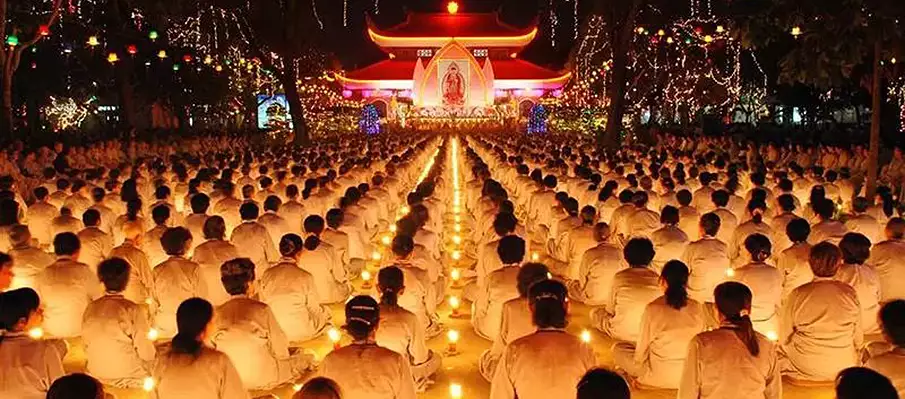
2. Buddhism (Phật giáo)
Buddhism is one of the most important religious and philosophical traditions in Vietnam. Mahayana Buddhism is dominant in the north and central regions, while Theravāda Buddhism is especially important among the Khmer minority in southern Vietnam.
☸️ Mahayana Buddhism
Mahayana Buddhism is the dominant tradition in northern and central Vietnam and has strongly influenced Vietnamese spirituality.
🛕 Theravāda Buddhism
Theravāda Buddhism is particularly significant among the Khmer community in the Mekong Delta and southern Vietnam.
🏯 Buddhist Pagodas
Important Buddhist landmarks include Thiên Mụ Pagoda, Bái Đính Pagoda and Trấn Quốc Pagoda.
🌿 Culture & Daily Life
Buddhist ideas have influenced Vietnamese culture, ethics, traditions and everyday spiritual practices.
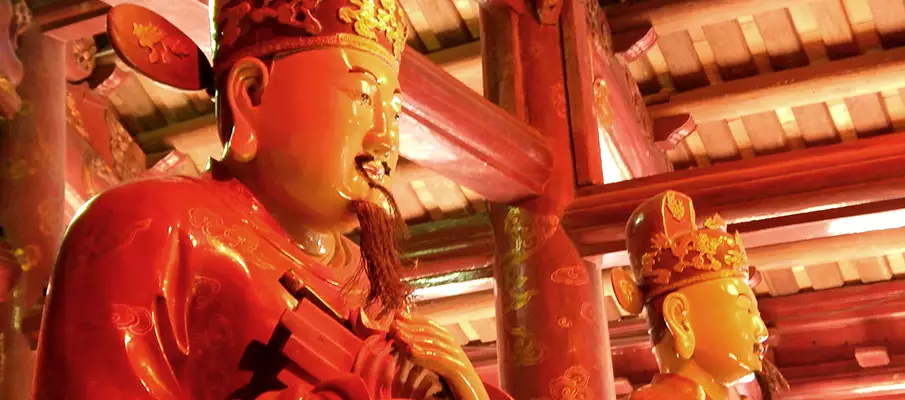
3. Confucianism (Nho giáo) and Taoism (Đạo giáo)
Confucianism and Taoism were introduced from China and have had a lasting influence on Vietnamese culture, family values, education and spiritual traditions. Over time, both became closely connected with local beliefs and practices.
📚 Confucianism
Confucianism emphasizes education, morality, family relationships, respect for elders and social responsibility.
☯️ Taoism
Taoism is associated with harmony with nature, spirituality, mysticism and traditional ideas about balance.
🏛️ Temple of Literature
The Temple of Literature in Hanoi is one of Vietnam’s best-known symbols of Confucian educational traditions.
🌿 Local Traditions
Both traditions have blended with Vietnamese folk beliefs and remain visible in rituals, values and spiritual practices.
4. Christianity in Vietnam
Christianity arrived in Vietnam in the 16th century and later expanded during the French colonial period. Today, Catholicism is the largest Christian tradition, while Protestant communities are also present, particularly among some ethnic minorities.
✝️ Catholicism
Catholic communities are found throughout Vietnam, with particularly strong communities in several northern and southern provinces.
⛪ Protestantism
Protestant churches are especially present among some ethnic minority communities in mountainous areas.
🏛️ Churches & Cathedrals
Notable landmarks include Phát Diệm Cathedral, Notre-Dame Cathedral in Ho Chi Minh City and many local churches.
📖 Cultural Influence
Christianity has become an established part of religious and cultural life in many Vietnamese communities.
5. Islam (Hồi giáo)
Islam is a minority religion in Vietnam, practiced mainly by the Cham community. Cham Muslims have preserved their religious traditions and distinctive cultural identity, particularly in southern Vietnam.
🕌 Cham Muslims
Most Vietnamese Muslims belong to Cham communities with a long history in southern Vietnam.
📍 Southern Vietnam
Important Muslim communities can be found in areas including Ninh Thuận and An Giang.
🌙 Religious Traditions
Cham Muslim communities maintain mosques, religious practices and traditional celebrations such as Hari Raya.
🤝 Community Life
Islamic traditions are closely connected with Cham culture, family life and local community activities.
6. Hoa Hao and Cao Dai – Religions Originating in Vietnam
Vietnam is also home to two distinctive religious movements that developed in the country: Hòa Hảo and Cao Đài. Both originated in southern Vietnam and reflect the country’s diverse spiritual landscape.
☸️ Hoa Hao
Hòa Hảo developed in southern Vietnam as a reform Buddhist movement emphasizing simple religious practice, morality and family values.
🔯 Cao Dai
Cao Đài is a Vietnamese syncretic religion combining elements of Buddhism, Christianity, Taoism, Confucianism and Islam.
🌾 Southern Roots
Both traditions have strong historical and cultural connections with southern Vietnam, especially the Mekong Delta.
🛕 Unique Traditions
Cao Dai is known for its distinctive temples and rituals, while Hòa Hảo emphasizes personal faith and a simple way of life.
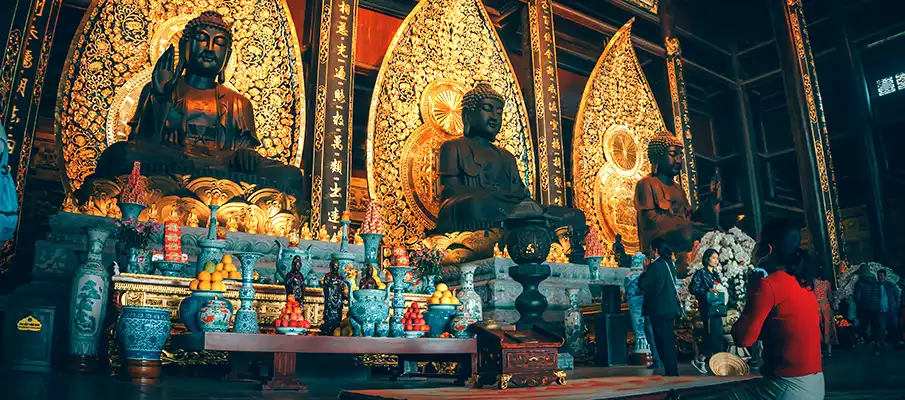
Religious Holidays and Celebrations in Vietnam
Vietnamese religious celebrations often overlap with traditional culture and family customs. Some are closely connected with Buddhism and ancestor worship, while others, such as Christmas, are also widely enjoyed as cultural celebrations.
🧧 Tết Nguyên Đán
Vietnamese Lunar New Year is the country’s most important celebration and includes family gatherings, ancestor worship and traditional rituals.
🙏 Vu Lan
This Buddhist observance honors parents and ancestors through prayers, offerings and visits to pagodas.
🛕 Perfume Pagoda Festival
This popular pilgrimage leads visitors to the Perfume Pagoda, around 60 km from Hanoi.
🎄 Christmas
Christmas is celebrated by Christian communities and is also popular as a festive social event.
Interesting Facts About Religion and Spiritual Life in Vietnam
☯️ Three Traditions
Buddhism, Confucianism and Taoism have long influenced Vietnamese culture and are often described together as tam giáo đồng nguyên.
🛕 Pagodas & Culture
Pagodas are not only religious places but also important cultural, historical and community landmarks.
🙏 Blended Beliefs
Many people combine Buddhism, ancestor worship, folk beliefs and other traditions rather than following only one faith.
🌿 Everyday Spirituality
Religion and traditional beliefs remain visible in family rituals, festivals, offerings, temples and everyday life.
Religion in Vietnam: Why It Matters to Travelers
Religion in Vietnam is closely connected with family, culture, traditions and everyday life. Visiting a pagoda, observing an ancestor altar or experiencing a traditional festival can offer travelers a deeper understanding of Vietnamese society.
When visiting religious sites, dress respectfully, keep noise low and follow local customs. Even a short visit to a pagoda or temple can reveal how closely spiritual traditions are connected with Vietnamese culture.
| Region | Main Religious Traditions |
|---|---|
| Northern Vietnam | Mahayana Buddhism, Confucian influences and ancestor worship. |
| Central Vietnam | Mahayana Buddhism, Catholicism and traditional folk beliefs. |
| Southern Vietnam | Catholicism, Cao Dai, Hoa Hao and Protestant Christianity. |
| Mekong Delta | Theravada Buddhism, Hoa Hao Buddhism and Cham Islam. |
| Mountainous Areas | Protestant Christianity alongside traditional beliefs among some ethnic minorities. |
❓ Religion in Vietnam – Frequently Asked Questions
What is the main religion in Vietnam?
Buddhism is highly influential, while ancestor worship and folk beliefs are also widespread.
Do Vietnamese people worship their ancestors?
Yes. Ancestor worship is a widespread Vietnamese family tradition.
Is Buddhism popular in Vietnam?
Yes. Mahayana Buddhism is especially influential in the north and central regions.
What religions are practiced in Vietnam?
Vietnam has Buddhist, Christian, Muslim, Cao Dai and Hoa Hao communities.
What is Cao Dai in Vietnam?
Cao Dai is a uniquely Vietnamese religion combining several religious traditions.
What is Hoa Hao Buddhism?
Hoa Hao is a Vietnamese Buddhist reform movement focused on simple religious practice and morality.
Are there Christians in Vietnam?
Yes. Catholic and Protestant communities are found throughout Vietnam.
Where is Islam practiced in Vietnam?
Islam is mainly practiced by Cham communities in southern Vietnam.
Can Vietnamese people follow more than one religious tradition?
Yes. Many people combine Buddhism, ancestor worship and folk beliefs.
Can tourists visit religious sites in Vietnam?
Yes. Visitors can explore many pagodas, temples and churches while respecting local customs.