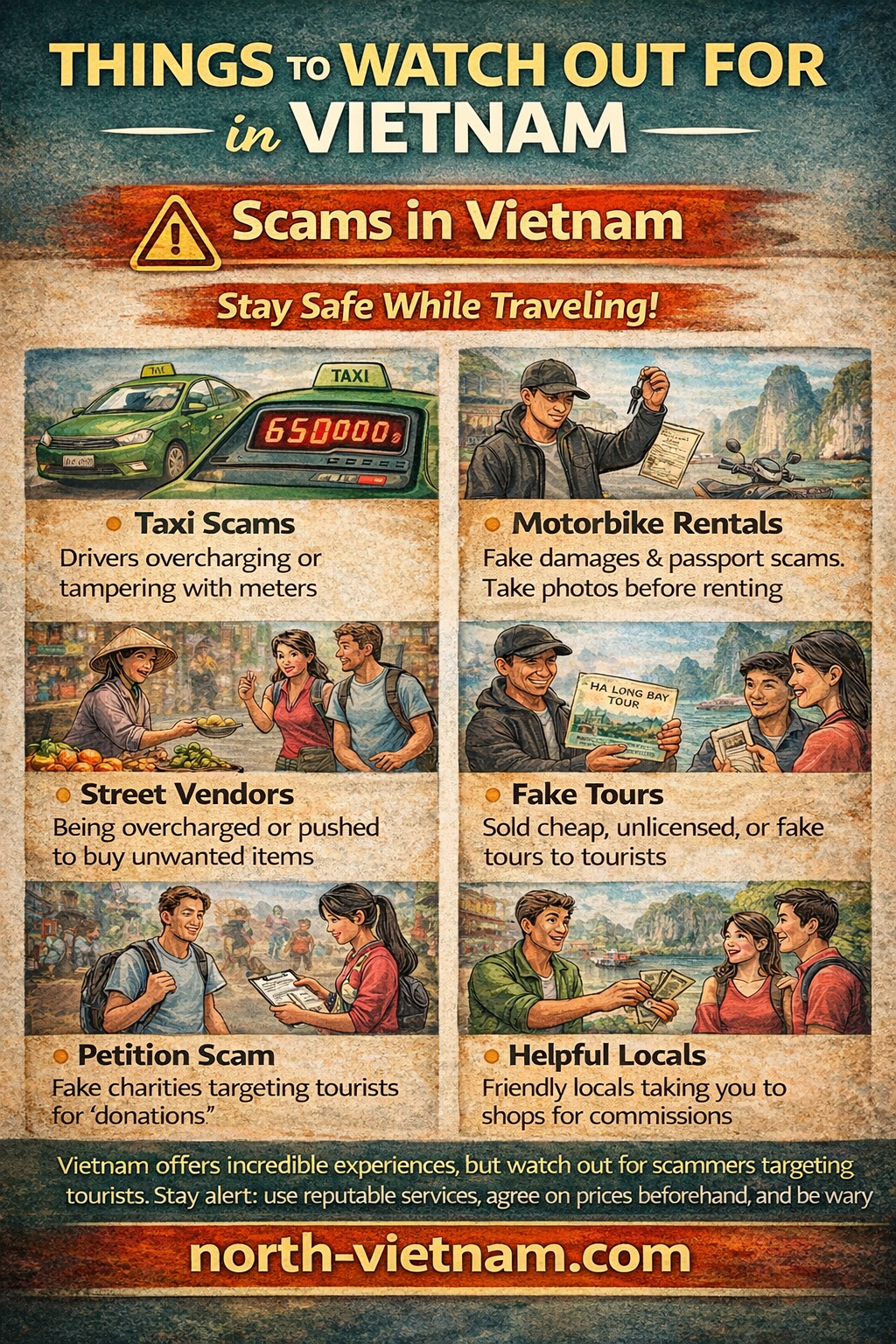
Overcharging & fake services
Taxi scams, fake tours and inflated prices are common, always confirm costs and use trusted services
Pickpocketing & snatch theft
Phones and bags can be grabbed quickly, especially in busy cities and tourist areas
Motorbikes & crossings
Chaotic traffic and motorbikes everywhere require caution when crossing streets or driving yourself
Payments & ATMs
ATM fraud, card skimming and confusing banknotes can lead to mistakes or extra costs
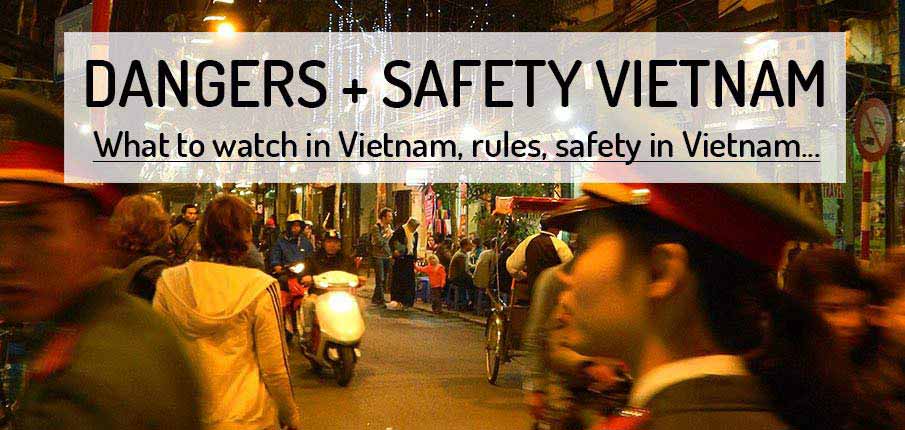
Quick answer: Vietnam is generally a safe country for tourists, but travelers should still watch out for scams, petty theft, chaotic traffic, food and water hygiene, mosquitoes, and severe weather during the rainy season.
At a glance – Main Dangers & Warnings:
- 🛵 Traffic: Roads can be chaotic; always wear a helmet.
- 🎒 Theft & Scams: Watch out for pickpockets and avoid taxi scams.
- 🐜 Insects & Illness: Use insect repellent and be aware of diseases like dengue and malaria.
- 💧 Food & Water: Drink bottled water and eat at busy, clean places to avoid stomach problems.
- 🌪️ Weather: Typhoons and floods can happen, mainly from May to November.
- 👮 Landmines: Avoid remote rural areas near old conflict zones.
- 🍻 Alcohol Safety: Be careful with street alcohol to avoid poisoning.
- 🚑 Health Care: Medical care quality varies — travel insurance is recommended.
Last updated in May 2026
Is Vietnam Safe for Tourists?
Vietnam is considered one of the safest countries in Southeast Asia for tourists and independent travelers. Violent crime is rare, but visitors should still stay careful in busy tourist areas where petty theft, scams, and overcharging can occur. Traffic in Vietnam can also be chaotic, especially in large cities such as Hanoi or Ho Chi Minh City.
Travelers can move freely across most parts of Vietnam, including popular tourist destinations, beaches, mountain regions, and national parks. However, some military areas and border zones are restricted, and photography may be prohibited near government or military buildings.
Traveling in Ha Giang Province: Some remote areas near the Chinese border require a permit for foreign visitors. These permits can be arranged in Ha Giang, Meo Vac, or through selected hotels and local travel agencies.
Is Vietnam safe for tourists in 2026?
Yes, Vietnam is considered one of the safest countries in Southeast Asia for tourists. Violent crime is rare, but travelers should watch out for traffic accidents, petty theft, tourist scams, and overcharging in busy tourist areas.

Important Rules and Safety Tips for Tourists in Vietnam
Traveling in Vietnam is generally safe, but tourists should still follow local laws, respect Vietnamese culture, and pay attention to personal safety while traveling around the country.
- Protect your valuables – avoid showing expensive phones, cameras, jewelry, or large amounts of cash in crowded tourist areas.
- Use hotel safes for passports, money, electronics, and other important belongings.
- Watch your credit card payments and never let your card leave your sight in restaurants or shops.
- Use trusted taxis or ride apps and always check that the taximeter is working correctly.
- Avoid political discussions and do not participate in demonstrations or political activities in Vietnam.
- Be careful at night, especially in poorly lit streets or isolated areas in large cities.
- Respect local customs and ethnic minorities when visiting villages, temples, or rural communities.
- Drugs are strictly illegal in Vietnam and penalties can be very severe.
- Try to avoid conflicts or aggressive behavior, especially after traffic accidents or misunderstandings.
- Respect religious places by dressing appropriately and avoiding inappropriate photography.
- Pornographic materials are illegal under Vietnamese law.
Watch this video, the most common scams in Vietnam:
Common Tourist Scams and Safety Tips in Hanoi
Hanoi is generally safe for tourists, but like in many large cities, visitors should be aware of common tourist scams, overcharging, and petty theft. The capital of Hanoi is busy, crowded, and full of motorbike traffic, so staying alert is important.
If you experience serious problems, contact the Vietnamese police (113) or the tourist information center in Hanoi.
- Watch your belongings in crowded streets, markets, and around Hoan Kiem Lake. Phone and bag snatching from motorbikes can happen.
- Use trusted taxis or ride-hailing apps and make sure the taximeter is running correctly.
- Check restaurant prices in advance, especially in tourist areas where foreigners may be overcharged.
- Never accept drugs from strangers in clubs, bars, or on the street.
- Be careful when crossing roads because Hanoi traffic can be chaotic for first-time visitors.
- Book tours and transport carefully to avoid fake travel agencies or copied company names.
- Inspect your hotel room after arrival, including minibar items or damaged equipment.
- Avoid street shoe cleaning scams or unsolicited repair services that later demand high payments.
- Be cautious with street photo offers, such as fruit basket photos, because unexpected charges may follow.
- Buy train and bus tickets online via trusted websites or stations to avoid fake or invalid tickets.
Fake Cops in Vietnam:
Yes they exists and they can stop you. If this happens eg. when traveling on a motorcycle, try and stop somewhere on the main street where there are most people about.
• put the keys of the motorcycle in your pocket so they can‘t take them out of the ignition
• watch how they behave, whether they are in a hurry, or seem nervous or behave suspiciously
• check their ID > ask for an official badge and see they are wearing their name
• in case of a problem, call the police, telephone number 113
• they are supposed to say hello to you, introduce themselves and treat you politely
Traffic and Road Safety in Vietnam
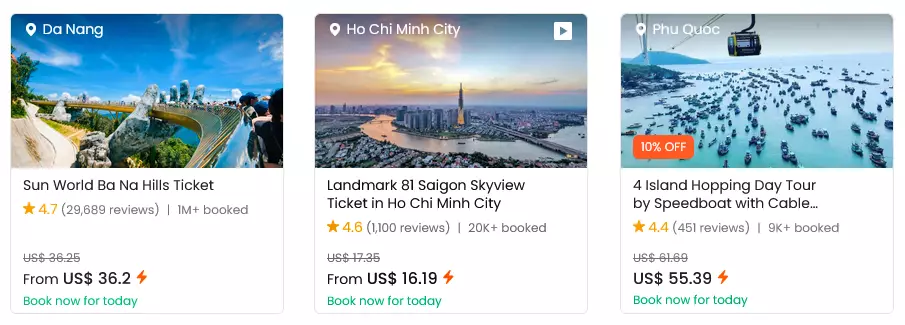
Traffic in Vietnam can be overwhelming for first-time visitors, especially in large cities such as Hanoi or Ho Chi Minh City. Roads are crowded with motorbikes, buses, taxis, and cars, and local driving habits may seem chaotic to foreign travelers.
Although traffic often looks disorganized, most local drivers are experienced in navigating busy streets. Still, tourists should stay careful when walking, crossing roads, or renting a motorbike in Vietnam. More information about transportation and traffic in Vietnam is available in this guide.
- Drive carefully and slowly, especially on unfamiliar roads or in busy city traffic.
- Do not rent a motorbike in Vietnam if you have little riding experience.
- Road conditions in Vietnam vary, and mountain roads may be damaged or slippery during rain.
- Be careful when crossing roads because vehicles often do not stop for pedestrians.
- Walk steadily when crossing the street and avoid sudden stops or changes of direction.
- Follow local pedestrians if you are unsure how to cross busy roads safely.
- Larger vehicles usually expect priority, especially buses and trucks.
- Bus drivers in Vietnam can drive aggressively, so always stay alert near buses.
How to Respect Local Culture in Ethnic Villages in Vietnam
When visiting ethnic minority villages in northern Vietnam, travelers should respect local traditions, customs, and daily life. Responsible tourism helps protect local culture and creates a better experience for both visitors and local communities.
- Drugs are illegal in Vietnam and should never be used or carried during your trip.
- Respect sacred places and objects in homes, temples, and village areas.
- Dress modestly when visiting rural villages or local families.
- Avoid loud behavior and excessive drinking in the village environment.
- Public displays of affection may be considered inappropriate in traditional communities.
- Always ask before taking photos, especially of elderly people or children.
- Enter local homes only when invited by the family or host.
- Avoid giving money or sweets to children, as this may encourage begging.
- Support local communities by buying handmade products or local crafts.
- If you stay in a homestay or join a local meal, it is polite to pay fairly for the service and hospitality.
What to Do if Your Passport Is Lost or Stolen in Vietnam
Losing your passport in Vietnam can be stressful, but the situation can usually be solved by contacting the local police and your embassy or consulate in Hanoi or Ho Chi Minh City.
If your passport is lost or stolen during your trip in Vietnam, follow these basic steps:
- Contact your embassy or consulate immediately and ask for instructions about emergency travel documents.
- Report the loss to the local police and request an official police report.
- Prepare passport photos for a replacement passport or emergency travel document.
- Bring a copy of your lost passport if available, together with other identification documents.
- Be prepared to pay administrative fees for issuing new travel documents.
You will usually need:
- 2 color passport photos (3.5 × 4.5 cm)
- official police report from Vietnam police
- copy of the lost or stolen passport (if available)
- cash or payment card for embassy fees
Important Emergency Numbers and Tourist Contacts in Vietnam
Save these important phone numbers before traveling in Vietnam. Emergency services, tourist assistance, and transportation hotlines can be very helpful during your trip.
| Service | Phone Number | Description |
|---|---|---|
| Police | 113 | Emergency police assistance and reporting crimes or theft. |
| Ambulance / First Aid | 115 | Medical emergencies and ambulance services in Vietnam. |
| Fire Department | 114 | Fire emergencies and rescue services. |
| Directory Assistance | 1080 | General phone information and local assistance services. |
| International Directory Assistance | 116 | Telephone information for international calls and services. |
| Tourist Support Hotline | +84 24 3825 5500 | Tourist information support in Hanoi and northern Vietnam. |
| Vietnam Search & Rescue | 112 | National emergency rescue hotline. |
| Traffic Police Hotline | 069 234 2608 | Traffic incidents and road-related emergencies. |
Tip: Save your embassy or consulate phone number in Vietnam before traveling, especially if you plan to stay longer or travel by motorbike.

Is Vietnam Safe for Solo Female Travelers?
Vietnam is considered one of the safest countries in Southeast Asia for solo female travelers. Many women travel independently across Vietnam without major problems, especially in popular tourist destinations such as Hanoi, Hoi An, Da Nang, Ninh Binh, or Ho Chi Minh City.
However, like in any other country, it is important to stay careful in crowded tourist areas, at night, or when using unofficial transport services.
- Use trusted transportation apps such as Grab instead of unofficial taxis or motorbike drivers.
- Avoid isolated streets at night, especially in large cities and nightlife areas.
- Keep your valuables secure in busy markets, train stations, and tourist streets.
- Book accommodation through trusted websites and check recent guest reviews before arrival.
- Dress respectfully when visiting temples, rural villages, or religious sites.
- Be cautious with alcohol and never leave drinks unattended in bars or clubs.
- Use common sense when meeting strangers or accepting invitations from unknown people.
- Carry a local SIM card or eSIM with mobile internet for maps, translation, and emergency contact.
- Travel insurance is recommended for medical emergencies, theft, or transportation problems.
Common Emergency Situations for Tourists in Vietnam
Most trips to Vietnam are trouble-free, but travelers should know how to react in common emergency situations such as theft, traffic accidents, health problems, or lost documents.
- If your passport is lost or stolen, contact the local police and your embassy or consulate immediately.
- In case of a motorbike accident, avoid arguments, contact the police if necessary, and call your travel insurance provider.
- If your bank card is blocked by an ATM, contact your bank and avoid using isolated or damaged ATMs.
- For food poisoning or stomach problems, stay hydrated and visit a pharmacy or international clinic if symptoms worsen.
- If your phone is stolen, block your SIM card and banking apps as soon as possible.
- During floods or typhoons, follow local weather warnings and avoid unnecessary travel.
- If you feel unsafe, move to busy public areas such as hotels, restaurants, or shopping centers.
- Save emergency numbers in advance, including police (113), ambulance (115), and your embassy contact.
Best Apps for Safe Travel in Vietnam
These mobile apps can make traveling in Vietnam easier, safer, and more comfortable for tourists.
- Grab – the most popular app for taxis, private cars, and food delivery in Vietnam.
- Google Maps – useful for navigation, offline maps, and public transport directions.
- Google Translate – helps with communication and Vietnamese translations.
- XE Currency – useful for checking Vietnamese dong exchange rates and avoiding overcharging.
- Zalo – the most common messaging app in Vietnam for local communication.
- Booking / Agoda – trusted apps for hotel and accommodation reservations.
- AirVisual – useful for checking air quality in large Vietnamese cities.
eSIM and Internet Safety in Vietnam
Mobile internet in Vietnam is fast, affordable, and widely available. Using a local SIM card or eSIM is recommended for navigation, bookings, translation apps, and safe communication while traveling.
- Use a local SIM card or eSIM for reliable mobile internet across Vietnam.
- Avoid unsecured public WiFi in airports, cafes, or public places when using banking apps.
- Use a VPN service for extra privacy and safer internet access on public networks.
- Download offline maps before visiting remote mountain areas or islands.
- Keep your phone charged during long bus, train, or motorbike trips.
- Enable phone tracking and screen lock in case your device is lost or stolen.
- Major operators like Viettel, Vinaphone, and Mobifone offer good 4G/5G coverage in most tourist destinations.
What Tourists Should Avoid in Vietnam
Most visits to Vietnam are smooth and enjoyable, but tourists can avoid unnecessary problems by following a few simple recommendations.
- Avoid carrying your passport everywhere — keep it safely stored and carry only a copy when possible.
- Do not exchange money with unofficial street dealers because counterfeit banknotes and unfair rates can occur.
- Avoid drinking tap water and use bottled or filtered water instead.
- Do not book unusually cheap tours or transportation without checking reviews and company details.
- Avoid feeding or touching wild animals in tourist areas or national parks.
- Do not underestimate the weather, especially during typhoon or flood season in central Vietnam.
- Avoid carrying large amounts of cash in crowded markets or nightlife areas.
- Do not ignore local customs and dress codes when visiting temples or rural communities.
Quick Safety Checklist Before Traveling to Vietnam
Before traveling to Vietnam, make sure you prepare these important things for a safer and more comfortable trip.
- ✓ Travel insurance covering medical treatment and motorbike accidents
- ✓ Passport copies stored online and offline
- ✓ Local SIM card or eSIM with mobile internet access
- ✓ Offline maps and translation apps installed on your phone
- ✓ Emergency contact numbers and embassy information saved
- ✓ Mosquito repellent and basic medicine for tropical conditions
- ✓ Cash in Vietnamese dong plus an international payment card
- ✓ Hotel and transport bookings confirmed before arrival
- ✓ Secure backpack or anti-theft bag for crowded tourist areas
- ✓ Weather forecast check during typhoon or rainy season
❓ FAQ – What to watch out for and Scams in Vietnam:
Are there common scams in Vietnam?
Vietnam is generally safe, but common scams include overpricing, fake taxis, and pickpocketing. Use trusted services and stay alert.
Is counterfeit money a problem in Vietnam?
Fake money can occur, especially with large notes. Exchange cash at banks and check bills carefully.
How to use taxis safely in Vietnam?
Use reputable taxis or apps like Grab, and make sure the meter is on or agree on the price in advance.
Are street markets safe for tourists?
Yes, but prices may be higher for tourists. Compare prices and bargain politely.
How to protect your belongings in Vietnam?
Keep valuables secure, especially in crowded areas, and avoid leaving bags unattended.
Can I trust tour agencies in Vietnam?
Most agencies are reliable, but check reviews and avoid unusually cheap offers.
Are there accommodation scams in Vietnam?
Rare, but possible. Book via trusted websites and confirm your reservation.
Is it safe to use ATMs in Vietnam?
Yes, but use ATMs in secure locations and cover your PIN when entering it.
Are fake tour guides common?
They can appear in tourist areas. Use licensed tour guides and avoid unsolicited offers.
Is Vietnam safe for solo travelers?
Yes, Vietnam is generally safe, but follow basic precautions and avoid isolated areas at night.