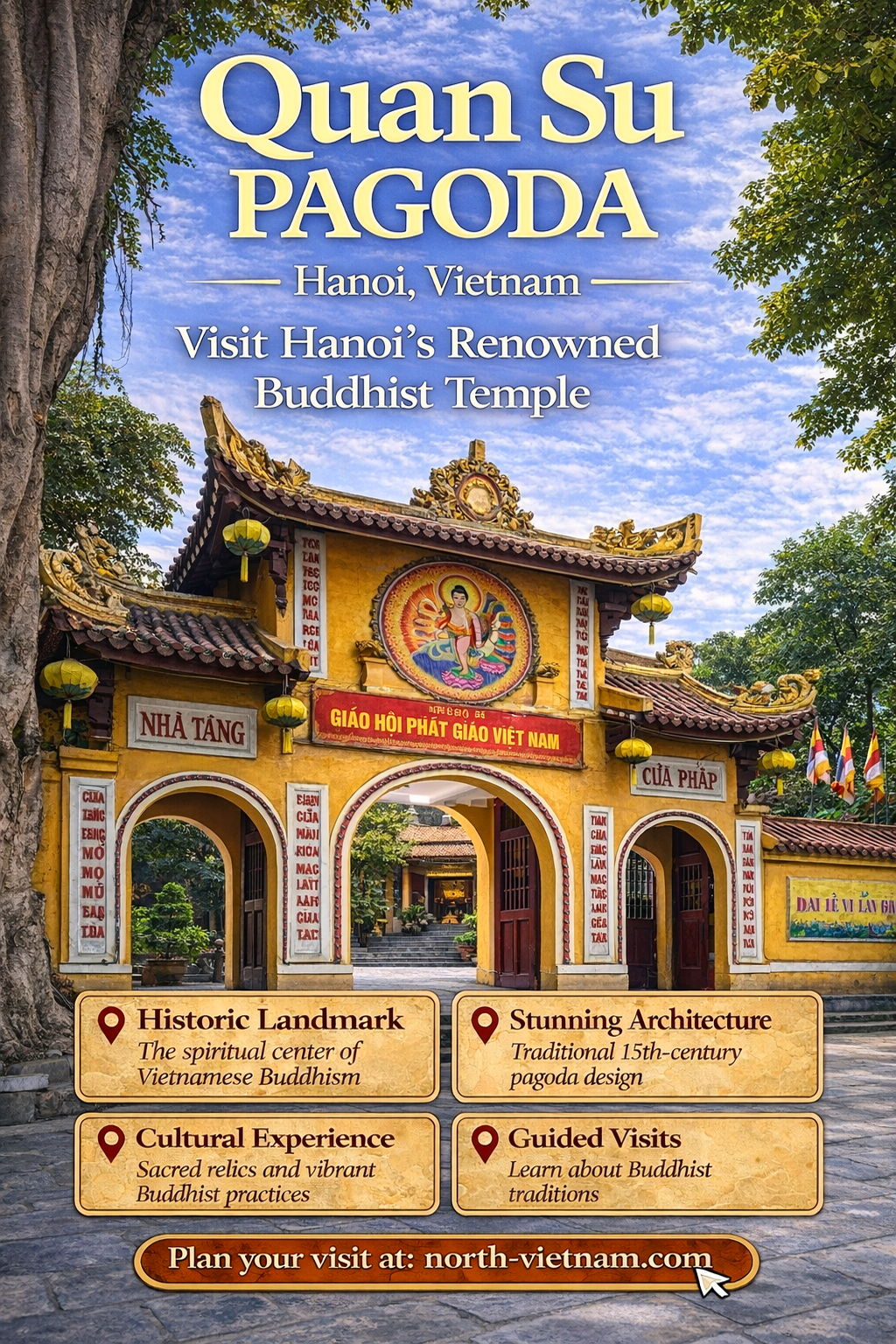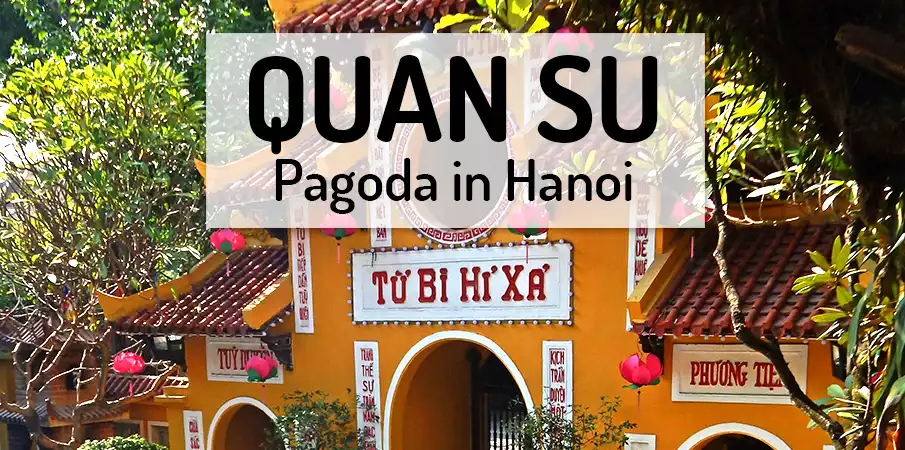
Quick answer: Quan Sứ Pagoda, also known as the Ambassadors’ Pagoda, is a historic Buddhist temple in the heart of Hanoi. It dates back to the 15th century and originally served to welcome foreign envoys. Today, it’s the headquarters of the Vietnam Buddhist Sangha and a peaceful spiritual retreat amid urban chaos.
At a glance:
- 📍 Location: 73 Quan Su Street, Hoàn Kiếm District, Hanoi.
- 🕰️ History: Built in the 15th century under the Lê dynasty to host ambassadors from Buddhist regions.
- 🏛️ Role: Since 1958, it has served as the central office of the Vietnam Buddhist Association.
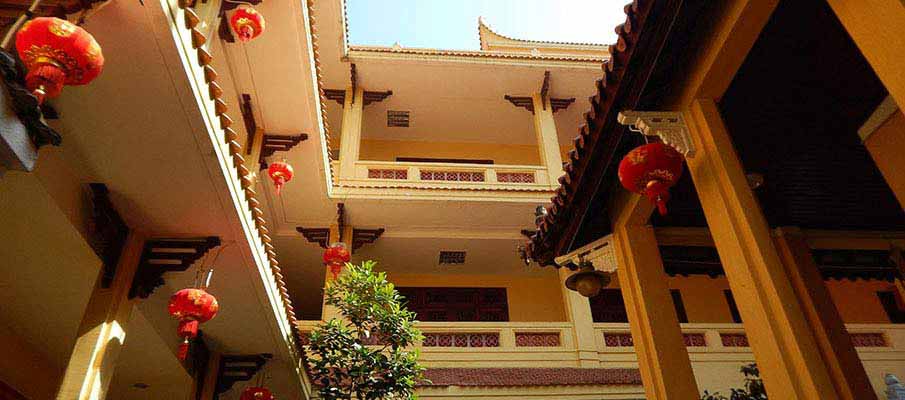
- 🧱 Architecture: Features a triple‑gate entrance, a bell tower, lecture halls, and a large courtyard.
- 📚 Education: Houses a Buddhist library, classrooms, and a place for monastic life.
- 🕯️ Visiting: Open daily from about 7:30 AM to 11:30 AM and 1:30 PM to 5:30 PM.
Last updated in November 2025
Quan Su Pagoda – very important buddhist site in Hanoi.
-
- Quan Su Pagoda, also known as the Truc Lam Quan Su Temple, is a renowned Buddhist temple situated in the heart of Hanoi, Vietnam. This pagoda is known for its tranquil atmosphere, stunning architecture, and rich history. It’s a must-visit attraction for anyone interested in exploring the cultural heritage of Vietnam.
History of Quan Su Pagoda in Hanoi:
-
- Quan Su Pagoda dates back to the 15th century when it was established as a place of worship for Buddhist monks. It has undergone several transformations over the centuries, including renovation work during the Ly and Tran Dynasties.
- During the 17th century, the pagoda was converted into a military warehouse and was used for storing weapons and ammunition. In the early 20th century, the temple was restored and turned into the headquarters of the Vietnamese Buddhist Association. Since then, it has been a significant religious and cultural site in Hanoi.
Architecture and Design of Quan Su Pagoda:
-
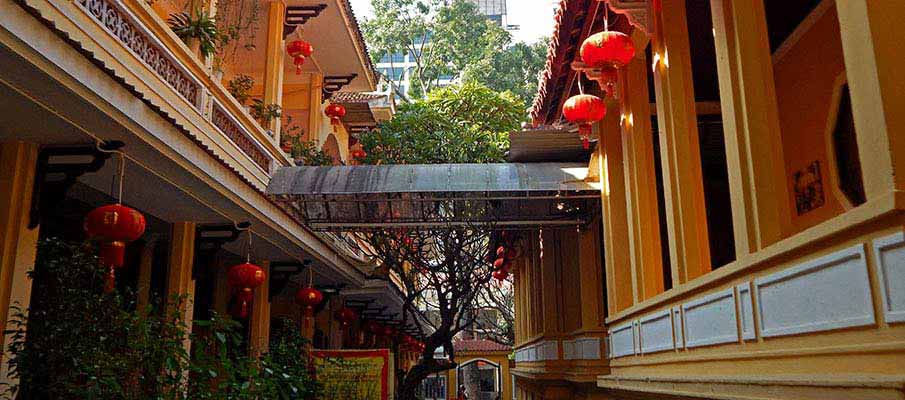
- The architecture of Quan Su Pagoda is a blend of traditional Vietnamese and Chinese styles. It features a multi-tiered pagoda, which is adorned with intricate carvings and elaborate ornaments. The temple’s facade is painted in vibrant hues of red and gold, which symbolize prosperity, good luck, and happiness.
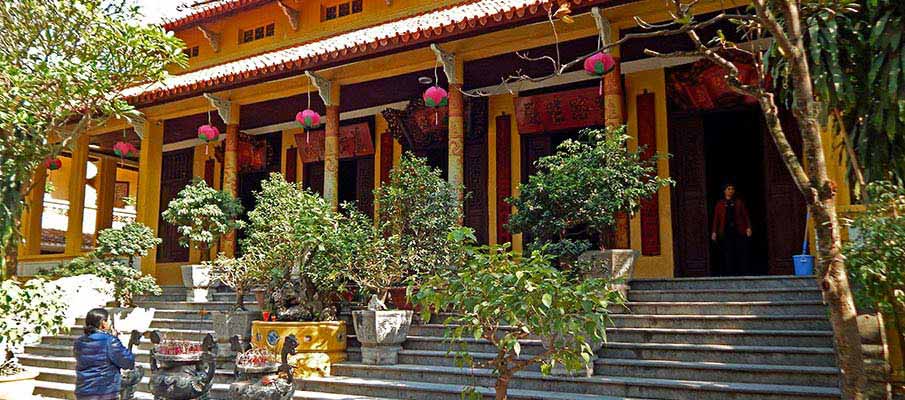
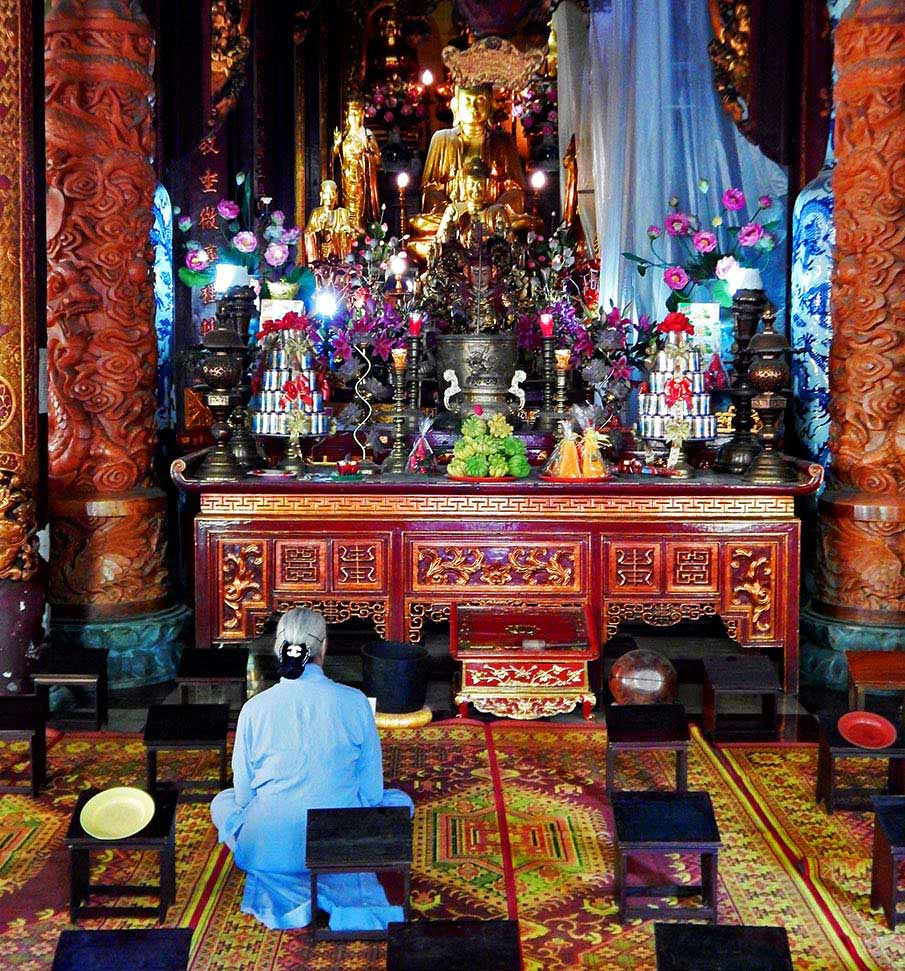
- The interiors of the pagoda are equally impressive, with a central hall dedicated to the Buddha. The hall features a statue of the Buddha, which is surrounded by images of his disciples and other revered figures from Buddhist mythology. Visitors can also see ancient relics and artifacts, including intricate carvings and beautiful calligraphy.
BOOK a TOUR / TICKETS in Hanoi ➜

Visiting Quan Su Pagoda:
-
- Quan Su Pagoda is located in the center of Hanoi and is easily accessible by public transport. Visitors can take a taxi, bus, or motorbike to reach the temple. The pagoda is open to visitors every day, and there is no admission fee to enter. Visitors are required to dress modestly and remove their shoes before entering the temple. It’s also important to maintain silence and respect the temple’s peaceful atmosphere.
- The best time to visit Quan Su Pagoda is during the early morning or late afternoon when the temple is less crowded, and visitors can experience the serene ambiance of the temple. Visitors can also attend Buddhist ceremonies and rituals, which are held on special occasions throughout the year.
Conclusion:
-
- Quan Su Pagoda is an important cultural and religious site in Hanoi, Vietnam, and is a must-visit attraction for anyone interested in exploring the country’s cultural heritage. The temple’s stunning architecture, tranquil atmosphere, and rich history make it an ideal place to meditate and reflect on life’s deeper questions. Visitors can enjoy the temple’s serene ambiance, attend Buddhist ceremonies, and explore the ancient relics and artifacts on display.
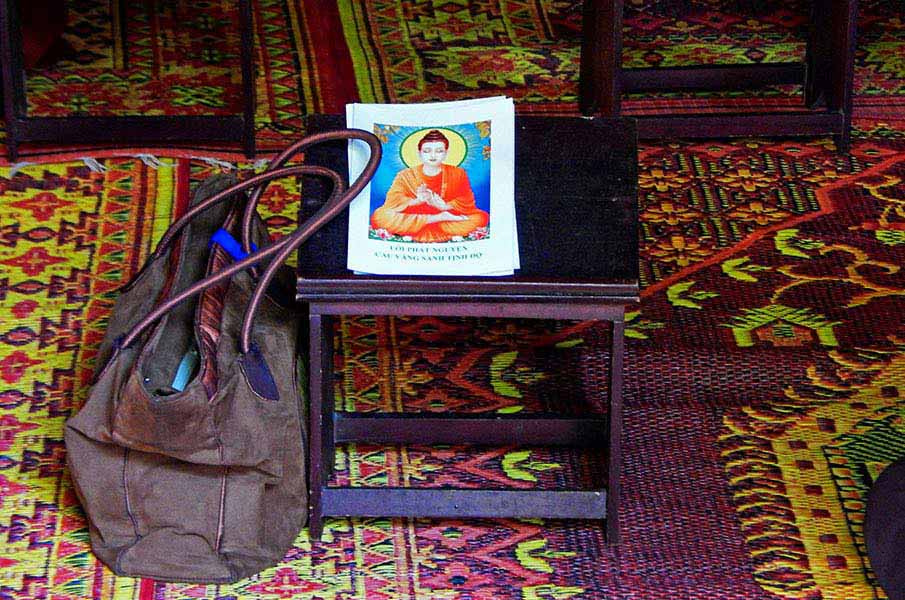
Here are other interesting facts about Quan Su Pagoda:
-
- Quan Su Pagoda is one of the most important Buddhist temples in Vietnam and is the headquarters of the Vietnam Buddhist Sangha, the country’s largest Buddhist organization.
-
- The temple’s name, “Quan Su,” translates to “Military Mandarin,” reflecting its history as a military warehouse during the 17th century.
-
- In 2010, the pagoda underwent extensive renovation work, which included restoring the temple’s ornate roof and repairing the intricate wood carvings on the temple’s facade.
-
- The pagoda is home to a large collection of Buddhist scriptures, which are kept in a special room on the temple’s premises. These scriptures are an essential part of Vietnam’s Buddhist heritage and are used in Buddhist ceremonies and rituals.
-
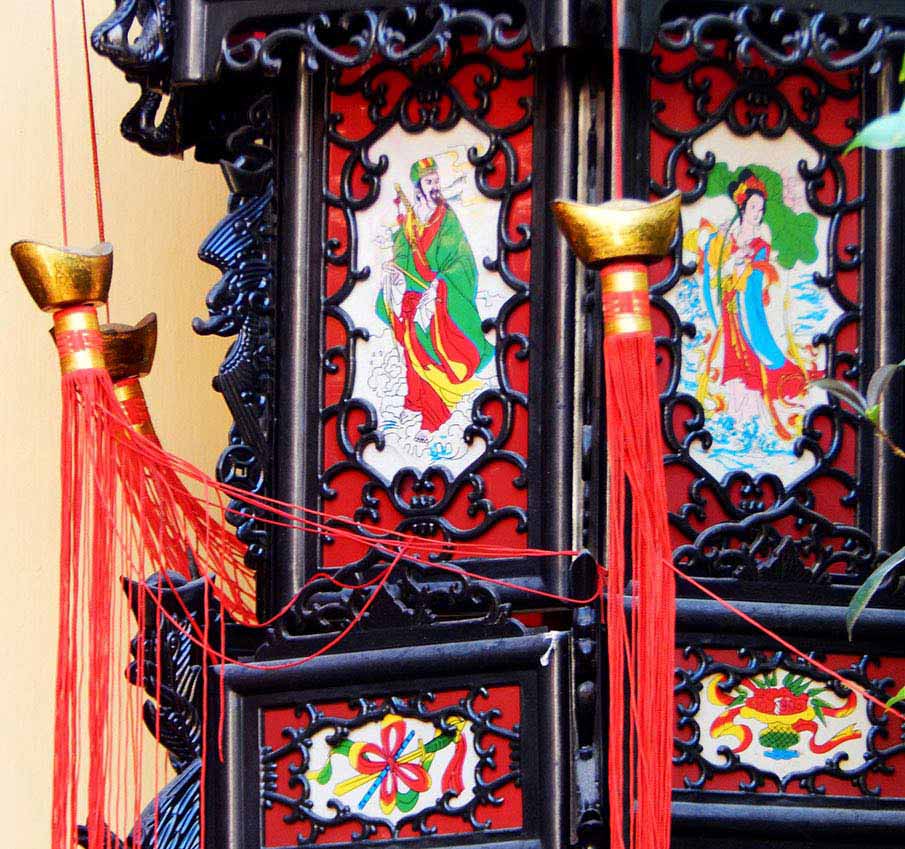
- Quan Su Pagoda is famous for its annual lantern festival, which takes place on the 15th day of the Lunar New Year. During this festival, the temple is decorated with hundreds of colorful lanterns, and visitors can participate in traditional Vietnamese games and activities.
-
- The temple’s central hall houses a statue of the Buddha, which is made of bronze and is believed to date back to the 17th century.
-
- In addition to being a place of worship, Quan Su Pagoda also serves as a community center, offering various social services to the local community, including education and healthcare programs.
-
- Quan Su Pagoda is only about 300m from Hoa Lo Prison Museum, another interesting museum in Hanoi center.
Opening time of Quan Su Pagoda:
All the week – 7:30 – 11:30, 13:30 – 17:30
Official website: www.chuaquansu.net
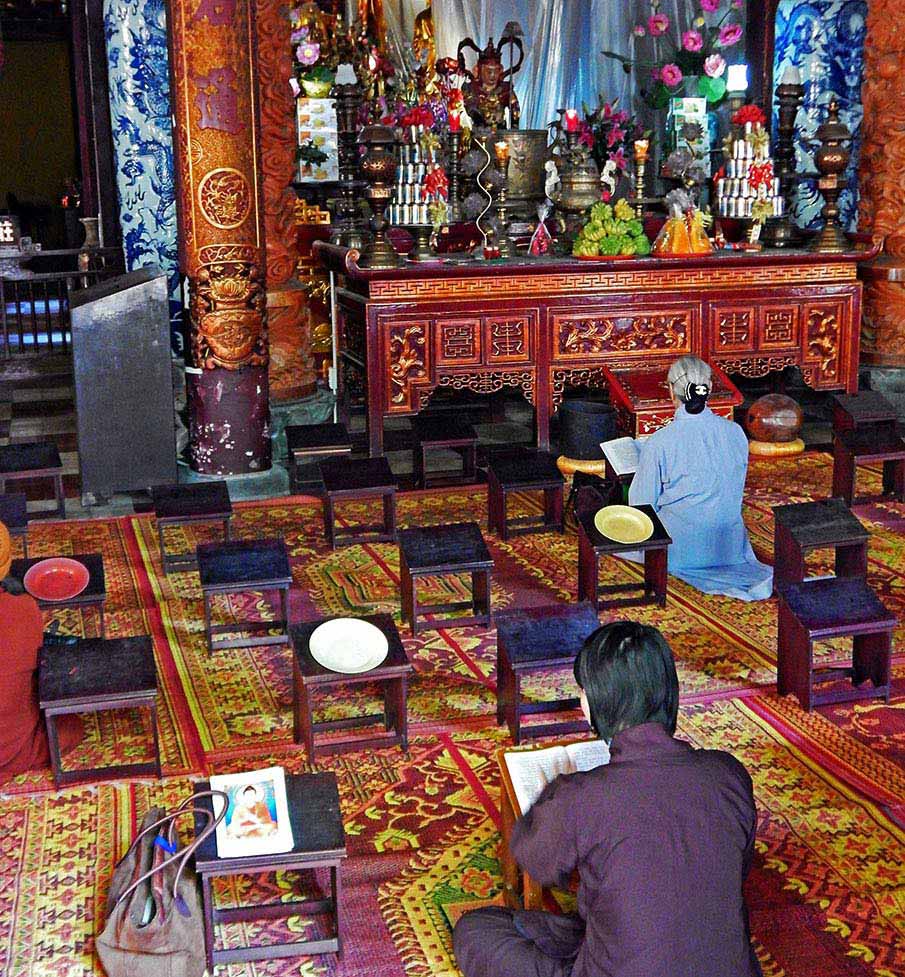
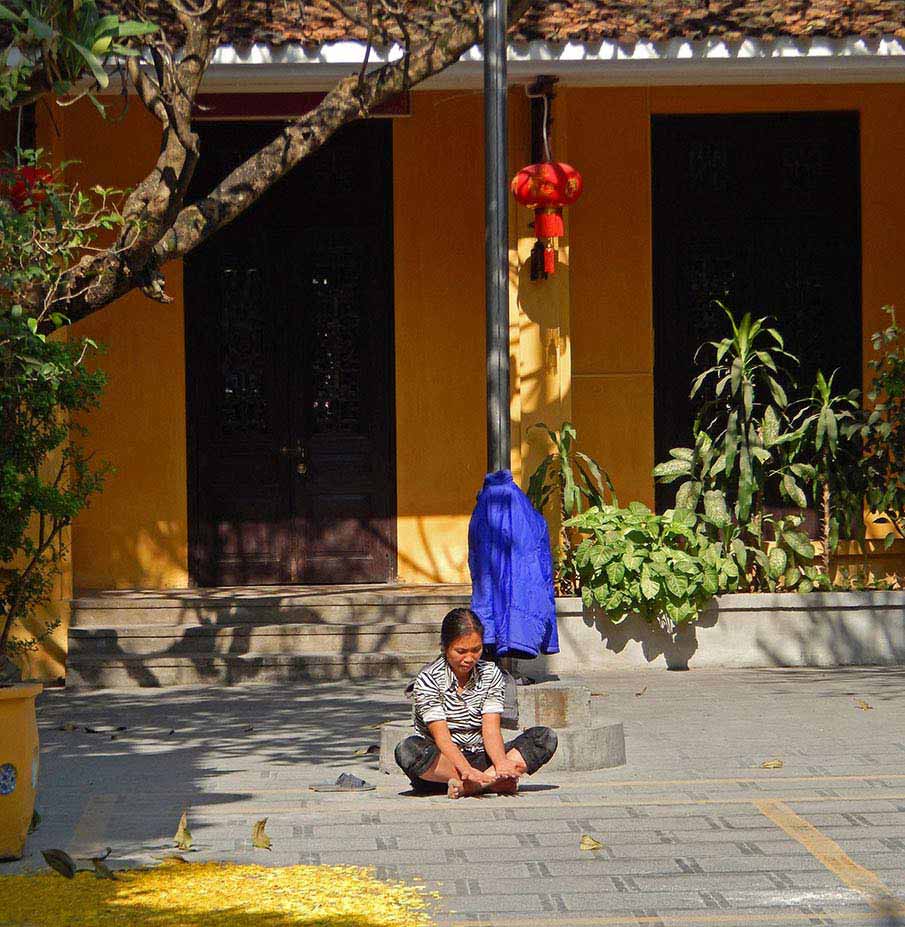
Photos of Quan Su Pagoda in Hanoi:
❓ Quan Su Pagoda: FAQ & Visitor Tips
What is Quan Su Pagoda?
Quan Su Pagoda is one of Hanoi’s most important Buddhist temples and the headquarters of the Vietnam Buddhist Sangha.
How do you get to Quan Su Pagoda?
The pagoda is located in central Hanoi and is easily reached by taxi, Grab, bus or on foot from Hoan Kiem Lake.
Is there an entrance fee?
No. Quan Su Pagoda is free to visit, although donations are welcome.
When is the best time to visit?
Visit early in the morning or late afternoon for a quieter atmosphere and cooler temperatures.
What should you wear?
Dress modestly by covering your shoulders and knees, and remove hats inside the prayer halls.
What are the highlights of Quan Su Pagoda?
Visitors admire the peaceful courtyards, elegant Buddhist architecture, large Buddha statues and traditional ceremonies.
Can visitors attend Buddhist ceremonies?
Yes. Visitors may quietly observe or respectfully participate in public Buddhist ceremonies and prayers.
Are there visitor rules?
Keep noise low, respect worshippers, avoid touching religious objects and ask before photographing ceremonies.
Can you join meditation sessions?
Occasional meditation sessions and religious activities are available, depending on the temple’s schedule.
Is Quan Su Pagoda wheelchair accessible?
Some areas are accessible, although steps and uneven surfaces may limit access to certain sections.
What attractions are nearby?
Nearby attractions include Hoa Lo Prison Museum, Hoan Kiem Lake, the Old Quarter and the Temple of Literature.
Is Vietnam a good destination for solo travelers?
Read our guide to solo travel in Vietnam for practical travel tips.
What should first-time visitors expect from Vietnamese culture?
Learn about local traditions and hospitality in our guide to Vietnamese culture.
BOOK a TOUR / ACTIVITY in Hanoi ➜