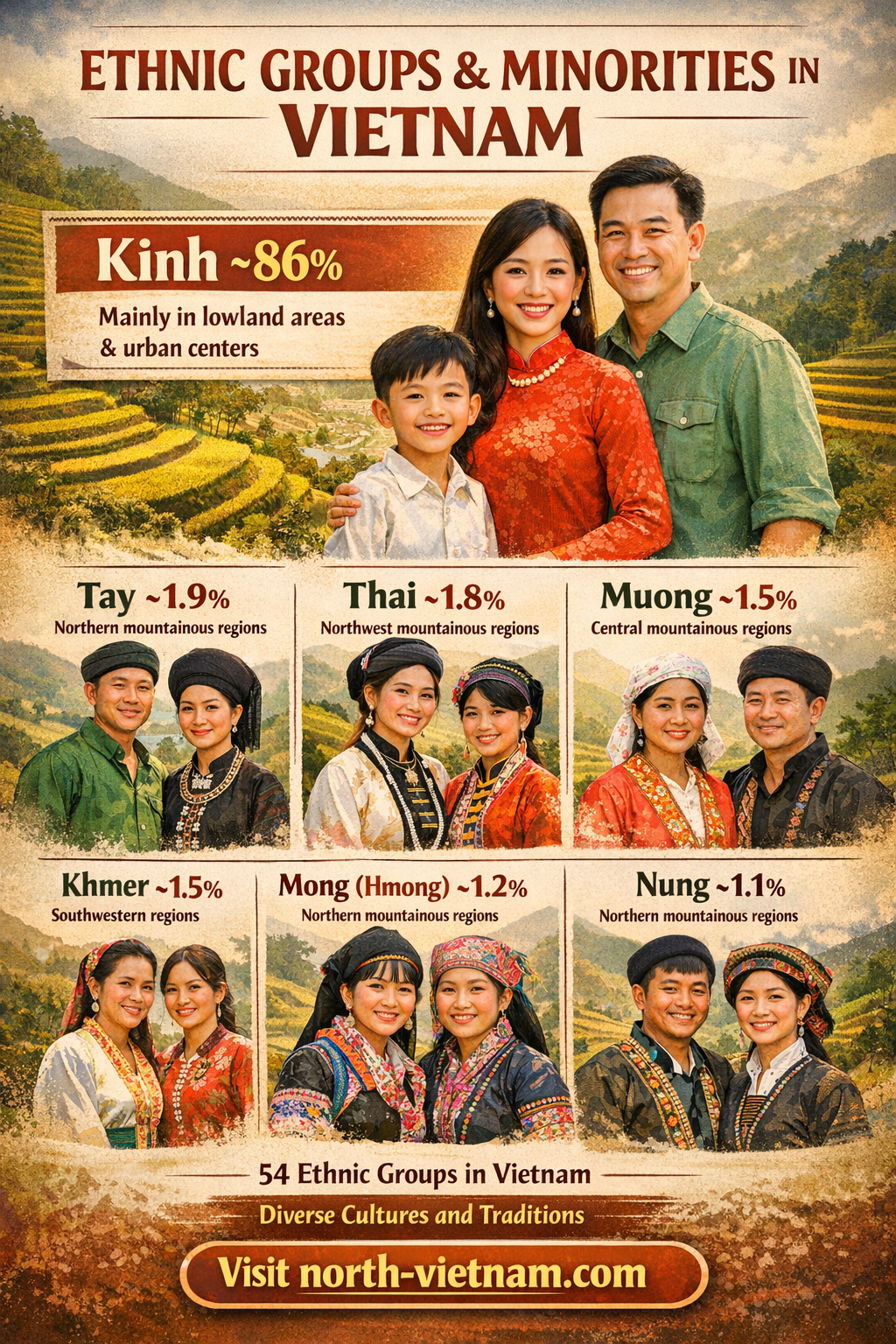
54 ethnic groups
Highly diverse cultures and languages
Northern minorities
Hmong, Dao, Tay and Thai groups
Traditional life
Farming, crafts and unique customs
Remote areas
Mostly live in mountains and rural regions
Quick answer: Vietnam has 54 officially recognised ethnic groups. The majority Kinh make up about 85–88% of the population, while ethnic minorities account for roughly 8–15% (around 9 million people). Most minority communities live in northern mountains and central highlands, preserving distinct languages, traditions and lifestyles.
Key facts:
- Total groups: 54 ethnic groups
- Majority: Kinh (≈85–88%)
- Minorities: ≈8–15% (~9 million people)
- Main regions: Northern mountains, Central Highlands
- Largest minorities: Tày, Thái, Mường, Khmer, Hmong, Nùng
- Culture: Unique languages, clothing, festivals and traditional crafts
- Travel tip: Respect local customs, ask before photos, support local products
Last updated: March 2026
Ethnic Groups in Vietnam: Major Minorities and Culture
Vietnam is home to 54 officially recognised ethnic groups, making it one of the most diverse countries in Southeast Asia. The majority Kinh people account for about 85–88% of the population and live mainly in lowland and coastal areas. Ethnic minorities form a smaller share but are spread across northern mountains and the Central Highlands.
Among the largest minority groups are the Tay, who live in northern Vietnam and are known for rice farming, stilt houses and traditional clothing. The Hmong people inhabit high mountain regions and are recognised for colourful textiles, handicrafts and distinctive cultural traditions.
In southern Vietnam, the Khmer Krom community lives mainly in the Mekong Delta. They share cultural roots with Cambodia and follow Theravada Buddhism, with their own language, temples and festivals.

Ethnic Minorities in Vietnam: Population Overview
Ethnic minorities in Vietnam make up roughly 8–15% of the population (around 9 million people). The Kinh majority represents about 85–88% and lives mainly in lowland areas.
👥 Largest minority groups
Tay, Thai, Muong, Hoa, Khmer and Nung are among the most populous groups, each with around one million people.
🔍 Smallest groups
Some communities such as Brau, Ro Mam and O Du have only a few hundred to a few thousand members.
Most ethnic minorities live in mountainous areas of northern Vietnam and along the Truong Son range in central Vietnam. These regions are often remote, where communities maintain traditional lifestyles, languages and crafts.
Homes are usually simple wooden houses, sometimes built on stilts. Many groups can be recognised by their distinctive clothing, local languages and cultural traditions.
Ethnic Groups in Vietnam by Language Families
Ethnic groups in Vietnam are often classified by language families. Linguists divide the population into 8 major language groups, which together include all 54 officially recognised ethnic groups.
List of ethnic groups by language group
1. Vietic
Chut, Kinh, Muong, Tho
2. Austroasiatic
Ba Na, Brau, Bru Van Kieu, Cho Ro, Co, Co Ho, Co Tu, Gie Trieng, Hre, Khang, Khmer, Kho Mu, Ma, Mang, M’nong, O Du, Ro Mam, Ta Oi, Xinh Mun, Xo Dang, Xtieng
3. Tay – Thai
Bo Y, Giay, Lao, Lu, Nung, San Chay, Tay, Thai
4. Tibeto – Burman
Cong, Ha Nhi, La Hu, Lo Lo, Phu La, La Si
5. Malayo – Polynesian
Cham, Chu Ru, E De, Gia Rai, Ra Glai
6. Kadai
Co, Lao, La Chi, Ha La, Pu Peo
7. Mong – Dao
Dao, Hmong, Pa Then
8. Han
Hoa, Ngai, San Diu
Subgroups by clothing and traditions
Some ethnic groups can be further divided into smaller subgroups, often based on traditional clothing and local customs.
Hmong: Red, White, Black, Green, Flower Hmong
Dao: Red Dao, Black Dao, Dao with white trousers, Dao with blue clothing and other variations
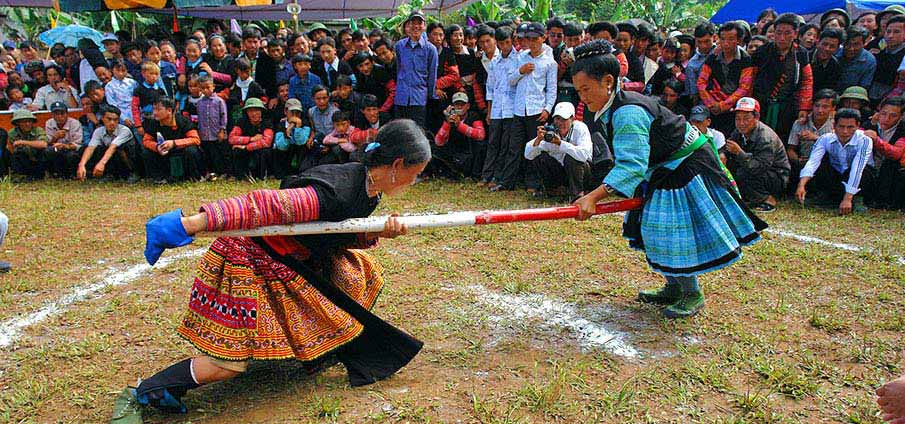
Shared traditions and lifestyle of ethnic minorities in Vietnam
Despite their diversity, many ethnic minority groups in Vietnam share similar elements in daily life, shaped by rural environments and long-standing traditions.
- Rural lifestyle based on farming and local resources
- Village communities with traditional wooden or stilt houses
- Customs and rituals linked to family life and spiritual beliefs
- Strong traditions of ancestor worship and protection against spirits
- Historical roots in tribal conflicts and migration
- Some groups maintain semi-nomadic or shifting cultivation practices
- Rice wine is commonly shared during festivals and community gatherings
These shared features create a strong sense of identity and community, even as each ethnic group maintains its own language, clothing and cultural practices.

Experience daily life in ethnic minority villages
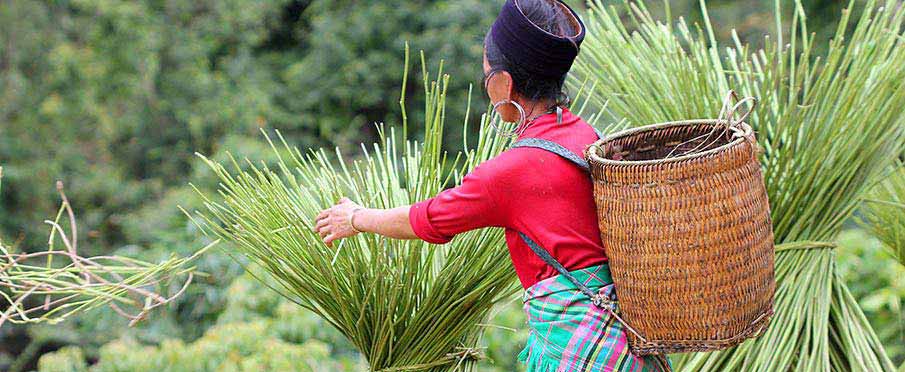
In many parts of northern Vietnam, daily life in ethnic minority villages is easy to observe. Local people work in rice fields, collect firewood, gather herbs and produce handmade goods such as textiles and traditional clothing.
By staying in a homestay, visitors can take part in these everyday activities. You may walk through rice terraces, help with simple farming tasks or join locals on short trips into the surrounding countryside.
This hands-on experience offers a closer look at traditional lifestyles and creates a more meaningful connection with local communities.
The history of ethnic minorities in Vietnam
The origins of Vietnam’s ethnic minorities go back thousands of years, although historical records are often limited. Many groups lived in the region long before the ancestors of the Kinh (Viet) people arrived from southern China around 4,000–5,000 years ago.
Over time, the Kinh population settled in fertile lowland areas such as the Red River Delta and gradually became the dominant group. In contrast, many ethnic minorities remained in more remote regions or moved into the mountains, where they preserved their independence, languages and traditional ways of life.
Some groups have lived in Vietnam for many centuries, while others arrived more recently. For example, the Hmong migrated to northern Vietnam around 300 years ago and continue to maintain a strong cultural identity in the highlands today.
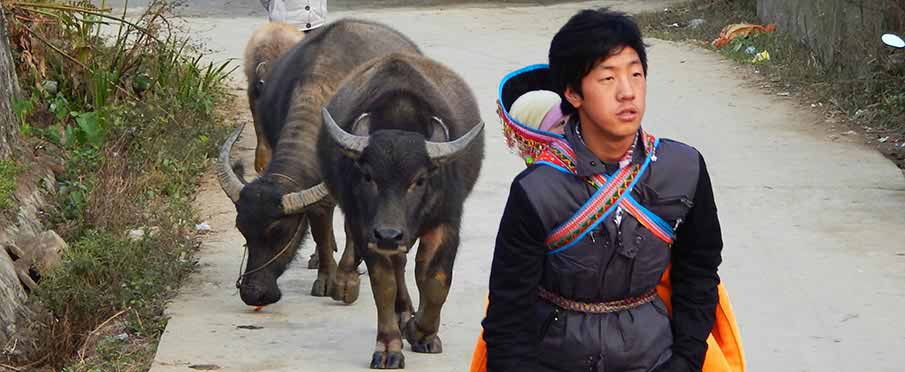
Tay people – largest ethnic minority in Vietnam
The Tay are the largest ethnic minority in Vietnam, making up around 1.5–2% of the population (about 1.7 million people). They mainly live in the north-east of the country, especially in provinces such as Cao Bang, Lang Son and Ha Giang.
Historically, the Tay have been present in Vietnam for many centuries. They are traditionally wet-rice farmers and are known for irrigation techniques and stable village communities in fertile valleys.
Tay culture includes folk songs, poetry and festivals. One of the best-known traditions is Hat Luon, a form of duet singing between men and women. Handwoven brocade textiles are also an important part of their cultural heritage.
Clothing is simple compared to other ethnic groups. Most garments are made from indigo-dyed cotton, with minimal decoration. Women typically wear skirts or trousers with a dark blouse and headscarf.
Traditional Tay houses are built on stilts using wood and bamboo, with roofs made from tiles or palm leaves. Villages are often located at the foot of mountains and near rivers or rice fields.
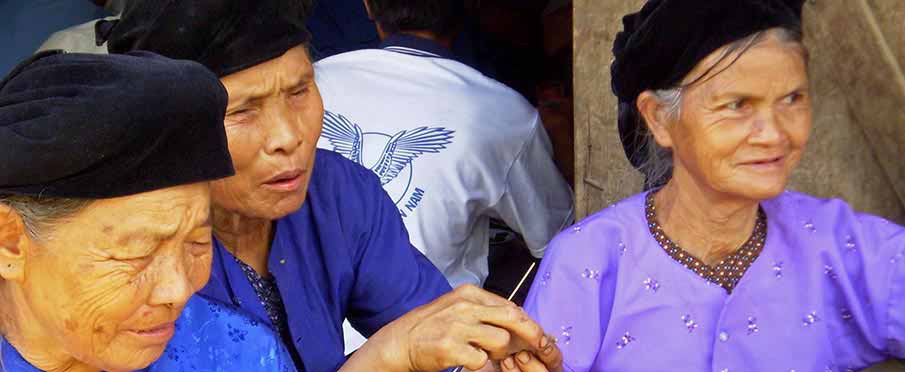
Thai people – second largest ethnic minority in Vietnam
The Thai are the second largest ethnic minority in Vietnam, making up around 1.5–2% of the population (about 1.5 million people). They mainly live in northern regions such as Son La, Mai Chau, Lai Chau and Lao Cai.
There are two main subgroups: Black Thai and White Thai, each with distinct clothing and traditions. Both groups are known for their strong cultural identity and long history in the region.
- Housing: stilt houses built to protect against floods and animals
- Clothing: women wear fitted blouses, long skirts and headscarves
- Crafts: traditional weaving and decorative textiles
- Culture: rich folklore, legends and oral traditions
- Dances: Xoe, Sap and other traditional performances
Thai culture is closely tied to community life and celebrations. Music and dance play an important role, especially during festivals and social gatherings.
A traditional custom is that a husband may live with his wife’s family after marriage before moving to his own household.
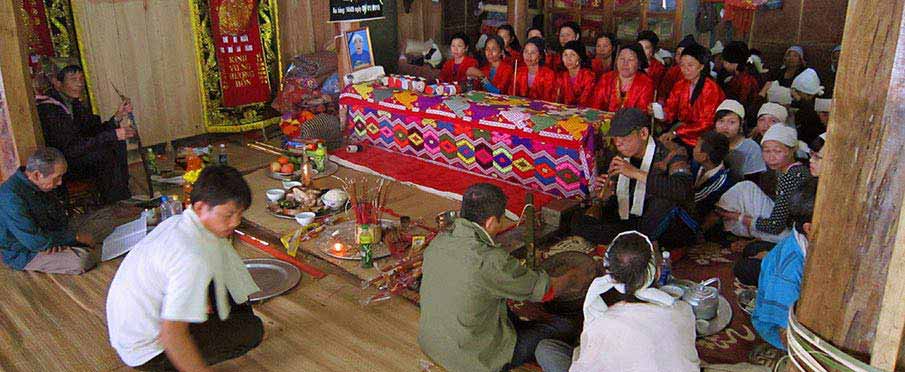
HMONG people – one of the largest ethnic group in the north.
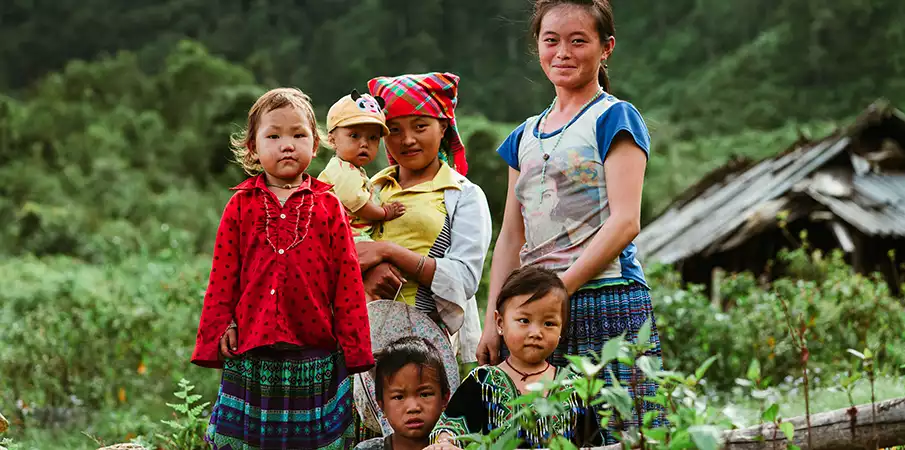
The Hmong is one of the largest ethnic group in Vietnam (about 1 mil. people). They inhabit mainly the mountainous area in the north near the chinese border. There are different ethnic subgroups and they can be easily identified by the clothes and according to tradition they comply.
The Black Hmong are known for their craft and their traditional indigo blue clothes. The Flower Hmong wear expressive colorful clothes, and it is not difficult to meet them at the marketplaces such in Bac Ha and Coc Ly in Lao Cai province. The Other subgroups of Hmong are White Hmong, Red Hmong, Green Hmong and also Chinese Hmong.
The Hmong came to Vietnam fom South China about 300 years ago, during the reign of Ming and Qing dynasties. This departure comes from their rebellion against Chinese imperialism. The large number of Black Hmong can be found just in Sapa or Lao Cai province.

Husband´s obligation consist in the care of the whole family, he gives a major decisions about the safety and welfare of the family. He is also seen as a major provider of money. His wife must be mainly a good housewife caring for children and preparing meals. Part of the work of women are also handicraft such handmade traditional clothing or jewelry.
For the manufacture of clothes it is used also hemp and indigo color. The Hmong use traditional method for coloring and decorating – batik. Hmong are very well known by this creating of clothes and cultivation of hemp for making clothing. Watch interesting video – Hmong and batiks.
BOOK a TOUR / ACTIVITY in Vietnam ➜
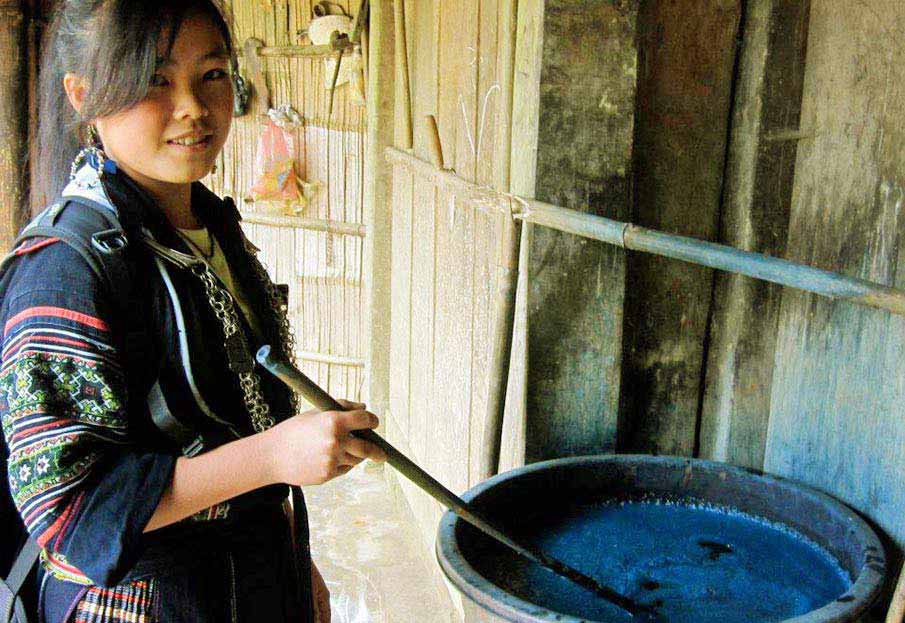
The situation is also slowly changing with the arrival of tourists in Vietnam. Lots of Hmong in Vietnam has left many of their traditions and customs. They adapt to new customs and culture, change clothes or make a business and ride a motorcycle. Hmong live mainly in northern Vietnam and there you can see their simple and difficult life in beautiful natural areas.
DAO people (“Jungle people”)
Dao is another large group of ethnic population of Hmong language groups but the group of Dao, which can be seen in northern Vietnam. The history of this minority is not fully known. They came from China. Immigrating began between the 12th or 13th century and the early 20th century.
Religion of Dao people has elements of Confucianism, Buddhism and Taoism. Ban House (Ban Vuong) was the legendary holy man and the oldest ancestor of the Dao minority group. The Dao group has population of around 600 000 in Vietnam and is divided into another subgroups (Dao with white trousers, Dao with narrow trousers, Dao with coins, Dao with blue clothes…).
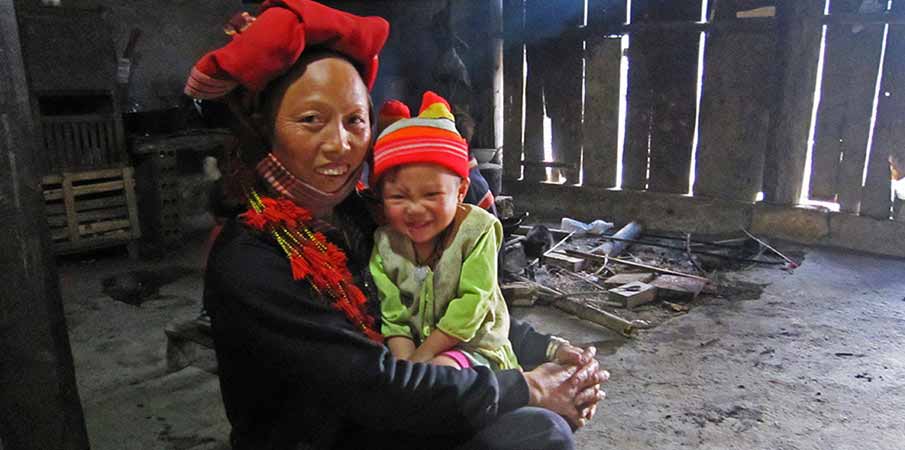
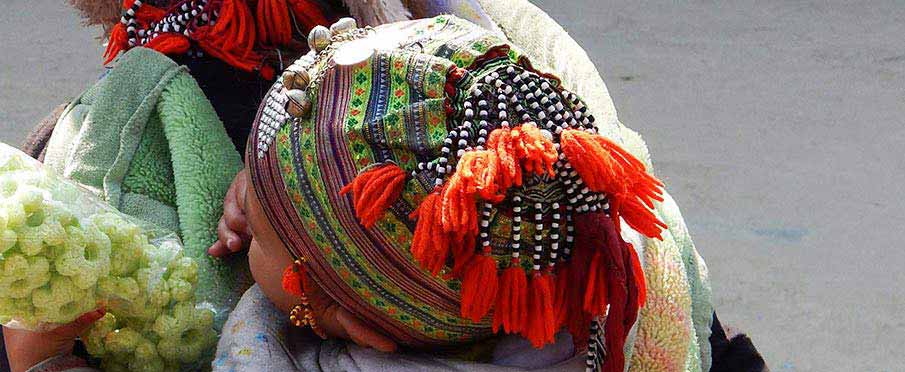
Women in this group are easily identifiable through a triangular red turban / scarf decorated with silver coins and red tassels. Men wear mostly long pants and a shirt and a scarf on head. Family roles is similar to the Hmong. A man has a dominant role in the family, community, and he is also a major economic factor. Woman takes care of the household, their children and the associated work.
Very important is also choose the place where the family will live. Customary of this choice is fulfillment bowl of rice for whole night on this place. It represents the richness of the area, the number of cows, buffaloes, money and property. They follow their dream and when the rice is on this place, family stay here or move to another location. Check out the video about the life of Red Dao people.

Challenges and changes in traditional lifestyles
Modern development has brought both opportunities and challenges to ethnic minorities in Vietnam. Access to electricity, education and healthcare has improved living standards, but it has also led to gradual changes in traditional cultures.
🌍 Cultural change
Traditional clothing, customs and lifestyles are slowly being replaced by modern influences.
🏙️ Integration
Many ethnic minorities are gradually integrating into mainstream Vietnamese society.
🏗️ Land changes
Infrastructure projects and development can lead to relocation or loss of traditional land.
🛕 Traditions & religion
Some cultural and religious practices are changing under modern regulations and social shifts.
📸 Tourism impact
Growing tourism influences local lifestyles, especially in areas like Sapa and Bac Ha.
💰 New opportunities
Tourism also creates income through handicrafts, trekking and homestays.
In popular destinations such as Sapa, many communities have adapted quickly, offering handmade products, guiding services and cultural experiences for visitors.

Rules to follow when visiting ethnic minority villages
When trekking in northern Vietnam, you will often visit ethnic minority villages. Respecting local customs helps preserve traditions and ensures a positive experience for everyone.
👕 Dress modestly
Wear long trousers or skirts and avoid revealing clothing.
📸 Ask before photos
Always ask permission, especially when photographing children or elderly people.
🏠 Enter by invitation
Only enter homes when invited. A small gift is appreciated.
🙏 Respect sacred places
Do not touch altars or religious objects.
🔇 Keep noise low
Behave calmly and avoid loud or disruptive behaviour.
🚫 No drugs
Drug use is illegal and strictly prohibited in Vietnam.
🎁 Give responsibly
Avoid giving money or sweets to children. Support locals in other ways.
🛍️ Support locals
Buy handmade products directly from local artisans.
Ethnic Groups in Vietnam:
| Ethnic Group | Population | Region |
|---|---|---|
| Kinh | Approximately 86% | Mainly in the lowland areas and urban centers |
| Tay | Approximately 1.9% | Northern mountainous regions |
| Thai | Approximately 1.8% | Northwest mountainous regions |
| Muong | Approximately 1.5% | Central mountainous regions |
| Khmer | Approximately 1.5% | Southwestern regions |
| Mong | Approximately 1.2% | Northern mountainous regions |
| Nung | Approximately 1.1% | Northern mountainous regions |
The Smallest Ethnic Minorities in Vietnam:
| Ethnic Minority | Population | Region |
|---|---|---|
| Ra Glai | Approximately 77,000 | Mainly in the Central Highlands |
| La Hu | Approximately 50,000 | Mainly in the northern mountainous regions |
| O Du | Approximately 2,000 | Mainly in the Central Highlands |
| Man Ta Pan | Approximately 1,000 | Mainly in the northern mountainous regions |
| Brau | Approximately 700 | Mainly in the Central Highlands |
| Ru Khom | Approximately 500 | Mainly in the Central Highlands |
| Ro Mam | Approximately 400 | Mainly in the Central Highlands |
❓ FAQ + Tips – Ethnic Groups + Minorities in Vietnam:
How many ethnic groups are there in Vietnam?
Vietnam officially recognizes 54 ethnic groups, each with its own traditions, language, culture, and traditional clothing.
What is the largest ethnic group in Vietnam?
The Kinh (Viet) people are the largest ethnic group in Vietnam and make up most of the country’s population.
Which ethnic minority groups are common in Vietnam?
Common ethnic minority groups in Vietnam include the Hmong, Dao, Tay, Thai, Muong, Khmer, Cham, and Hoa communities.
Why are ethnic minorities important in Vietnam?
Ethnic minorities in Vietnam help preserve traditional culture, handicrafts, festivals, music, architecture, and local customs across the country.
Do ethnic groups in Vietnam have traditional clothing?
Yes, many ethnic groups in Vietnam wear colorful handmade traditional clothing during festivals, markets, weddings, and cultural celebrations.
What festivals do ethnic groups celebrate in Vietnam?
Popular ethnic festivals in Vietnam include Tet Holiday, Gau Tao Festival of the Hmong people, Long Tong Festival of the Tay community, and Khmer New Year.
Can tourists visit ethnic minority villages in Vietnam?
Yes, many ethnic minority villages in northern Vietnam welcome tourists and offer homestays, local guides, handicrafts, and cultural experiences.
How can tourists learn about ethnic groups in Vietnam?
Travelers can learn about ethnic cultures by visiting villages, local markets, museums, and mountain regions with experienced local guides.
What etiquette should tourists follow in ethnic villages?
Tourists should dress respectfully, ask before taking photos, avoid loud behavior, and follow local customs in ethnic minority communities.
Can you buy traditional handicrafts in ethnic villages?
Yes, local markets and villages often sell handmade textiles, embroidery, baskets, jewelry, and other traditional ethnic handicrafts.

| Facts About Ethnic Groups in Vietnam | Description |
|---|---|
| 1. Tay Ethnic Group: | One of the largest groups in northern Vietnam, known for stilt houses, agriculture, and traditional Then singing (UNESCO). |
| 2. H’Mong Ethnic Group: | Mountain communities famous for colorful clothing, embroidery, and traditional festivals like Gau Tao. |
| 3. Ede Ethnic Group: | Central Highlands group with matriarchal culture, longhouses, and strong spiritual traditions. |
| 4. Cham Ethnic Group: | Historic coastal group influenced by Hindu culture, known for Cham towers and Apsara dance. |
| 5. Dao Ethnic Group: | Recognized by red clothing and silver jewelry, with strong traditions in embroidery and rituals. |
| 6. Khmer Krom Ethnic Group: | Mekong Delta minority with strong Buddhist traditions and colorful New Year celebrations. |
| 7. Muong Ethnic Group: | Closely related to the Kinh, known for stilt houses, rice farming, and traditional festivals. |
| 8. Gia Rai Ethnic Group: | Central Highlands group with longhouses, gong culture, and rich spiritual traditions. |
| 9. Ba Na Ethnic Group: | Known for gong festivals, traditional clothing, and strong connection to nature. |
| 10. Raglai Ethnic Group: | Coastal highland group with agricultural traditions, festivals, and nature-based beliefs. |